This oven troubleshooting guide helps you find out why your oven isn't working and what to do about it. Pick your symptom below to see the likely causes, safe DIY checks, and when it's time to call a technician, for both gas and electric ovens.
- Smell gas? Don't use the oven, light switches or flames. Leave the house and call your gas company or 911 from outside.
- Before any inspection, turn the oven off, let it cool fully, and switch off power at the breaker (and the gas supply valve for gas ovens).
- Repairs that involve gas lines, wiring or control boards should be done by a qualified technician.
Find Your Oven Problem
Oven Problems at a Glance
| Symptom | Most likely cause (electric) | Most likely cause (gas) | DIY? |
|---|---|---|---|
| Won't turn on | Tripped breaker, blown thermal fuse, control lock | No power to igniter/controls, gas valve closed | Partly |
| Not heating | Failed bake element | Weak igniter | Yes, with care |
| Temperature off | Temperature sensor or calibration | Sensor or calibration | Yes |
| Cooks unevenly | Element, pans or rack position | Burner, igniter or blocked vents | Mostly |
| Smoking | Food residue, cleaner residue | Food residue, burner issue | Yes |
| Gas smell | Not applicable | Leak or delayed ignition | No: leave and call |
| Trips breaker | Shorted element, wiring, wrong breaker | Rare: igniter or control fault | Call a pro |
| Error code | Sensor, control board, door lock | Sensor, control board | Reset first |
Oven Won't Turn On
DIY checks + proCommon causes
- Tripped circuit breaker or blown household fuse
- Control or child lock is on
- Clock not set after a power outage (some ovens won't start until it is)
- Blown thermal fuse or failed control board
- Loose power cord or plug
What to try
- Check the breaker panel. Electric ovens usually use a double-pole breaker; reset it fully off, then on.
- Look for a lock icon (see oven symbols and meanings) and hold the lock button (often for 3 seconds) to unlock.
- Set the clock and try a simple Bake cycle.
- Do a power reset: switch off the breaker for 1–5 minutes, then turn it back on.
If nothing works, the thermal fuse or control board may have failed, which is a job for a technician.
Full guide: oven not turning on →Oven Not Heating or Slow to Preheat
Often DIYCommon causes
- Electric: burned-out bake element (look for a break, blister or dark spot), failed broil element, faulty temperature sensor
- Gas: weak igniter that glows but doesn't open the gas valve, closed gas valve, dirty burner
- Wrong mode selected (for example, Warm or Proof)
- Partial power from a tripped half of a double breaker
What to try
- Confirm the mode and temperature, then watch the bake element: it should glow red within a few minutes.
- On electric ovens, inspect the bake element for visible damage. Elements can be tested with a multimeter for continuity.
- On gas ovens, watch the igniter. A healthy one glows and the burner lights within about 60–90 seconds; a weak one glows but never lights the gas.
- Expect 10–15 minutes to reach 350°F on most ovens; much longer suggests a weak element or igniter.
Oven Temperature Is Wrong (Too Hot or Too Cold)
DIYCommon causes
- Oven needs calibration (many drift by 10–25°F over time)
- Faulty temperature sensor
- Worn door gasket letting heat escape
- Opening the door often during cooking
What to try
- Place a reliable oven thermometer in the center of the oven, preheat to 350°F, and read it after 20 minutes and again 10 minutes later.
- If it's consistently off, use your oven's calibration (offset) setting, found in the manual, to adjust it by up to about 35°F on many models.
- Check the door gasket for gaps, tears or flattened sections.
- If readings swing widely, the temperature sensor may need replacing.
Oven Cooks Unevenly or Burns Food
DIYCommon causes
- Natural hot spots, especially at the back and top
- Dark or oversized pans blocking airflow
- Wrong rack position
- A weak element or burner, or a broken convection fan
What to try
- Bake in the center of the oven and rotate pans halfway through.
- Use light-colored metal pans and leave at least an inch of space around them.
- Do a bread test: cover a rack with slices of bread and bake at 350°F for a few minutes to map hot spots.
- Use convection for multi-rack baking. Our guide to using a convection oven explains how.
Oven Is Smoking
DIYCommon causes
- Food spills and grease burning on the oven floor or element
- Leftover oven cleaner residue
- Protective coating burning off a brand-new oven (normal for the first uses)
- Broiling fatty food too close to the element
What to try
- Turn the oven off, ventilate, and let it cool. Never use water on a grease fire; keep the door closed and turn off the oven.
- Clean up spills once the oven is cool. Our guide to the best oven cleaners covers what to use.
- If you recently used a cleaner, rinse the interior again with water and heat it empty with a window open.
- For new ovens, run a burn-in cycle per the manual.
Oven Smells Like Gas
Call a proA faint, brief gas smell when a gas oven first lights can be normal, as a little gas releases before the igniter lights it. A strong, persistent smell, or any smell when the oven is off, is not normal.
What to do
- If the smell is strong or continues: don't touch switches, don't light anything, leave the home and call your gas company or 911 from outside.
- If it's faint and only at ignition: ventilate, and have the igniter checked, as a weak igniter can cause delayed ignition.
- Install a carbon monoxide detector near the kitchen if you have gas appliances.
Gas Oven Clicks or Glows but Won't Light
DIY checks + proCommon causes
- Weak hot-surface (glow bar) igniter, the most common gas oven failure
- Closed or partly closed gas supply valve
- Clogged burner ports
- On ranges with spark ignition, a dirty or wet electrode
What to try
- Confirm the gas valve behind the range is open and other gas burners light.
- Watch the igniter: if it glows orange but the burner doesn't light after about 90 seconds, the igniter is likely too weak to open the safety valve.
- Clean the burner ports with a soft brush once the oven is cool and the gas is off.
Replacing an igniter is a common repair, but because it involves gas components, many owners have a technician do it.
Oven Keeps Tripping the Breaker
Call a proCommon causes
- Shorted bake or broil element
- Damaged wiring or a loose terminal block connection
- Moisture in the element after cleaning
- An undersized or worn breaker
What to try
- Note when it trips: on startup, during preheat or only with certain modes. This helps a technician.
- Inspect elements for visible damage once the power is off.
- Don't keep resetting a breaker that trips repeatedly. Call an electrician or appliance technician.
Oven Error Codes and Beeping
Reset firstError codes (often shown as F followed by a number, or letters and numbers) point to a fault the control board has detected, such as a temperature sensor, door lock or keypad problem. Codes differ by brand and model, so always check your manual or the maker's website for the exact meaning. For GE, Café and Profile models, see our GE oven error codes guide.
What to try
- Write down the exact code.
- Do a power reset: switch off the breaker for 5 minutes, then turn it back on.
- If the code returns, look it up in your manual. Sensor and door-lock codes are common and often fixable; control board codes usually need a technician.
Oven Door Locked or Won't Close Properly
DIY checks + proCommon causes
- Door lock stays engaged until the oven cools after self-clean
- Failed door lock motor or switch
- Bent hinges or a worn door gasket
What to try
- After self-clean, wait until the oven is fully cool, often an hour or more; the lock releases on its own.
- Try a power reset at the breaker.
- Inspect the gasket and hinges. A torn gasket is an easy, inexpensive part to replace on many models.
Broiler Not Working
Often DIYCommon causes
- Electric: burned-out broil element (top of the oven)
- Gas: weak broil igniter or clogged broil burner
- Door must be open or closed for broiling, depending on the model
What to try
- Check the manual for the correct door position when broiling.
- Inspect the top element for damage, or watch the broil igniter on gas models.
- If Bake works but Broil doesn't, the broil element or igniter is the most likely culprit.
Convection Fan Noisy or Not Working
Usually a proCommon causes
- Fan pauses during preheat or when the door is open (normal on many ovens)
- Worn fan motor bearings (squealing or grinding)
- Loose fan blade or obstruction
What to try
- Close the door and wait for preheat to finish, then listen for the fan.
- With the power off and the oven cool, check that nothing is touching the fan cover.
- A grinding or squealing fan usually needs a new motor, which a technician can replace.
Oven Light Not Working
DIYMost of the time, the bulb has simply burned out. With the power off and the oven cool, remove the glass cover, replace the bulb with an appliance bulb of the same type and wattage, and refit the cover. If a new bulb doesn't work, the socket, door switch or control may be at fault.
Full guide: oven light not working →Self-Clean Problems
DIY checks + proCommon issues
- Won't start: door not fully closed or the lock can't engage
- Stops early or blows a fuse: very high heat can stress the thermal fuse or control board
- Heavy smoke and smell: large food deposits burning off
What to try
- Wipe out loose debris and large spills before starting a self-clean cycle.
- Remove racks unless your manual says they can stay in.
- Ventilate well, and keep pets, especially birds, away from the kitchen during self-clean.
- If the oven stops working after self-clean, the thermal fuse is a common culprit.
Oven Parts That Fail Most Often
| Part | Symptoms when it fails | Oven type | DIY difficulty |
|---|---|---|---|
| Bake element | Oven won't heat, visible break or blister | Electric | Easy–moderate |
| Broil element | Broiler doesn't work, slow preheat | Electric | Easy–moderate |
| Igniter | Glows but no flame, slow preheat | Gas | Moderate (pro recommended) |
| Temperature sensor | Wrong temperature, error codes | Both | Easy–moderate |
| Thermal fuse | Oven dead, often after self-clean | Both | Moderate |
| Door gasket | Heat escaping, uneven cooking | Both | Easy |
| Control board | Error codes, unresponsive keypad | Both | Pro |
| Convection fan motor | Noise, uneven convection cooking | Both | Pro |
Always order parts by your oven's exact model number, found on a label inside the door frame, the storage drawer or the back of the range.
Handy Tools for Oven Troubleshooting
A few inexpensive tools make diagnosing oven problems much easier. These are highly rated on Amazon:
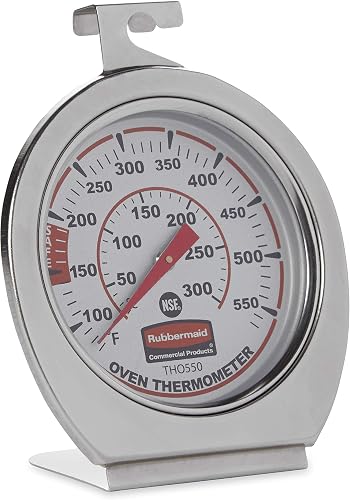


For more options, see our guide to the most accurate oven thermometers.
Repair or Replace Your Oven?
Most oven problems are worth repairing, especially simple parts like elements, igniters, sensors and gaskets. Consider replacing the oven if:
- It's around 13–15 years old or older, which is the typical lifespan for most ranges.
- The repair is a major one, such as a control board on an older model, and costs a large share of a new oven.
- It has needed several repairs in a short time.
- You want features it lacks, such as convection, air fry or induction.
- Parts are no longer available for your model.
If you decide to replace it, timing matters: see the best time to buy an oven and our picks for the best ovens of 2026 and best induction ranges.
Oven Troubleshooting FAQs
Why is my oven not heating but the stovetop works?
On an electric range, the bake element has most likely failed, or the temperature sensor or control board has a fault. On a gas range, a weak oven igniter is the most common cause, since the stovetop burners use a separate ignition system.
How do I reset my oven?
Turn off the oven's circuit breaker for 1–5 minutes, then switch it back on. Set the clock if needed. This clears many temporary errors, especially after a power outage.
How long should an oven take to preheat?
Most ovens reach 350°F in about 10–15 minutes. Much longer preheat times can point to a weak bake element, a failing igniter or a temperature sensor problem.
How do I know if my oven element is bad?
A failed electric element often has a visible break, blister or bulge, and it won't glow red when the oven is on. You can confirm it with a multimeter continuity test with the power off.
How do I know if my gas oven igniter is bad?
If the igniter glows orange but the burner doesn't light within about 90 seconds, it's probably too weak to open the gas safety valve. Igniters wear out over time and are a common replacement part.
Why does my oven smell like burning plastic?
A new oven's protective coating can smell when first heated, which fades after a few uses. Otherwise, check for plastic utensils or packaging left inside, or melted items on the element. If the smell persists, have the wiring checked.
Is it safe to use an oven that smells like gas?
No. A faint smell for a second at ignition can be normal, but a strong or ongoing smell is not. Turn off the oven, don't use switches or flames, leave the home and call your gas company from outside.
Why is my oven door locked after self-clean?
The lock stays engaged until the oven cools to a safe temperature, which can take an hour or more after the cycle ends. If it stays locked when cool, try a power reset at the breaker.
How do I calibrate my oven temperature?
Check the real temperature with an oven thermometer, then use the calibration or offset setting in your oven's menu (see the manual) to adjust it, often by up to about 35°F.
When should I call a repair technician?
Call a pro for any gas smell, gas line or igniter work, repeated breaker trips, control board errors or wiring problems. Simple fixes like resetting the oven, replacing a bulb, cleaning, calibrating or swapping a door gasket are usually safe to do yourself.
The Bottom Line
Most oven problems come down to a few parts: the bake element or igniter, the temperature sensor, the thermal fuse or the control board. Start with the simple checks (breaker, settings, a power reset and an oven thermometer) before calling for service. If you ever smell gas, stop and get help right away.
Bookmark this page and use the symptom finder whenever your oven acts up.
TopOvenPicks is reader-supported. When you buy through links on our site, we may earn an affiliate commission at no extra cost to you. Prices and availability change often, so always confirm details on Amazon.