The main difference in induction vs electric range cooking is how the heat is made: an induction cooktop uses magnetism to heat the pan directly, while a standard electric (radiant) range heats an element under the glass that then heats the pan. Induction is faster, more precise and safer; radiant electric is cheaper and works with any cookware. Here's the full comparison.
Electric (radiant) range
Smooth glass top with glowing elements, or exposed coils
- Element heats up, then heats the glass and pan
- Works with any flat-bottomed cookware
- Slower to heat and slower to cool down
- Glass stays very hot after cooking
- Lower price, widely available
Induction range
Glass top with copper coils and a magnetic field
- Magnetic field heats the pan itself
- Needs magnetic (induction-ready) cookware
- Very fast boiling and instant response
- Glass stays much cooler; spills don't burn on
- Higher price, but prices keep falling
Quick Answer: Induction or Electric?
- Choose induction if you want the fastest boiling, precise low-heat control, a cooler and safer cooktop and the easiest cleanup, and your pans are magnetic (or you're ready to replace a few).
- Choose a radiant electric range if budget is the priority, you have lots of non-magnetic cookware (aluminum, copper, glass) or you want the simplest, most familiar option.
- Switching is easy: both usually use the same 240V circuit, so replacing an electric range with induction rarely needs new wiring. Check your circuit size first.
- How each cooktop works
- 12-point scorecard
- Coil vs smoothtop vs induction
- Which is better for each task
- Speed and control
- Cookware compatibility
- Safety
- Cleaning and durability
- Cost to buy and run
- Installation and electrical
- What about the oven?
- Features to look for
- What changes when you switch
- Induction myths
- Which should you buy
- Switching checklist
- Ranges and gear worth a look
- FAQs
How Induction and Electric Cooktops Work
A radiant electric cooktop has metal heating elements under a smooth ceramic-glass surface (older ranges have exposed coils). When you turn on a burner, electricity heats the element until it glows, the element heats the glass, and the glass heats the pan. Because heat has to pass through several layers, it takes longer to warm up and a long time to cool down.
An induction cooktop has copper coils under the glass. When you turn on a zone, an alternating current creates a magnetic field that causes the bottom of a magnetic pan to heat itself. The glass only gets warm from contact with the hot pan. When you lift the pan or turn the zone off, heating stops almost instantly.
Induction vs Electric Range: 12-Point Scorecard
| Factor | Radiant electric | Induction | Winner |
|---|---|---|---|
| Boiling speed | Slow to moderate | Very fast | Induction |
| Heat control and response | Slow to change | Instant, precise | Induction |
| Low-heat simmering | Cycles on and off | Steady, gentle | Induction |
| Energy efficiency | Good | Better (heat goes into the pan) | Induction |
| Surface temperature and safety | Glass stays very hot | Much cooler, pan detection | Induction |
| Cleaning | Spills burn on | Spills rarely burn on | Induction |
| Kitchen heat | Warms the kitchen | Keeps the kitchen cooler | Induction |
| Cookware compatibility | Any flat pan | Magnetic pans only | Electric |
| Purchase price | Lower | Higher | Electric |
| Noise | Silent | Can hum or buzz; cooling fan | Electric |
| Repairs | Simpler, cheaper parts | More electronics | Electric |
| Electrical hookup | 240V circuit | 240V circuit (similar) | Tie |
Speed and Cooking Control
Speed is induction's biggest advantage. Because the pan heats directly, induction brings water to a boil much faster than a radiant element, often in about half the time according to manufacturers. Many induction ranges also have a Boost or Power setting for short bursts of extra power.
Control is just as important. When you turn an induction zone down, the pan stops getting hotter almost immediately, much like gas. On a radiant cooktop, the element and glass stay hot, so a boiling pot keeps bubbling until they cool. Induction also holds very low settings steadily, which is ideal for melting chocolate, simmering sauces and keeping rice from scorching. Radiant elements maintain low heat by cycling on and off, which can cause uneven simmering.
If you're comparing with gas as well, read gas vs electric ovens; induction gives you gas-like responsiveness without an open flame. Our induction vs gas range guide compares the two in detail.
Coil vs Smoothtop vs Induction
"Electric range" can mean two different cooktops. Here's how all three compare:
| Electric coil | Radiant smoothtop | Induction | |
|---|---|---|---|
| Heating | Exposed metal coils | Elements under glass | Magnetic field heats the pan |
| Speed | Moderate | Moderate | Fastest |
| Control | Slow | Slow | Instant |
| Cleaning | Hardest (drip pans) | Easy, but spills burn on | Easiest |
| Cookware | Any | Flat-bottomed | Magnetic, flat-bottomed |
| Price | Lowest | Low to mid | Mid to high |
| Best for | Rentals, tight budgets | Most budget kitchens | Frequent cooks |
Which Is Better for Each Cooking Task?
| Task | Better choice | Why |
|---|---|---|
| Boiling pasta water | Induction | Much faster, especially with Boost |
| Searing steak | Induction | High, fast heat; cast iron heats quickly |
| Simmering sauces and melting chocolate | Induction | Steady low power without cycling |
| Stir-frying | Depends | Induction needs a flat-bottomed wok; round woks lose contact |
| Charring peppers or tortillas over a flame | Neither | Both lack an open flame; use the broiler instead |
| Canning | Check the manual | Both work with flat, compatible canners; follow the maker's limits |
| Using any old pan | Electric | Works with aluminum, copper and glass |
Cookware: What Works on Each
| Cookware | Radiant electric | Induction |
|---|---|---|
| Cast iron, enameled cast iron | Yes (lift, don't slide) | Yes |
| Magnetic stainless steel | Yes | Yes |
| Carbon steel | Yes | Yes |
| Aluminum (plain) | Yes | No, unless it has a magnetic base |
| Copper (plain) | Yes | No, unless induction-ready |
| Glass, ceramic | Yes | No |
| Non-stick with steel base | Yes | Yes (look for "induction compatible") |
The magnet test: hold a fridge magnet to the bottom of each pan. If it sticks firmly, the pan works on induction. Many households find most of their pans already work, especially cast iron and stainless steel. For the rest, an induction converter disc lets you use non-magnetic pans, though it's slower and less efficient.
Safety Comparison
- Burn risk: radiant glass stays hot for a long time after cooking, which is a common cause of burns. Induction glass only gets warm from the pan and cools quickly, and residual-heat lights on both types warn you.
- Pan detection: induction zones won't heat without a compatible pan, and most switch off automatically when the pan is removed.
- Fire risk: because induction doesn't heat the surface, a dish towel or paper near the zone is much less likely to catch fire.
- Child safety: both usually have control locks. Induction's cooler surface is a big advantage for families.
- Medical devices: if you have a pacemaker or other implanted device, ask your doctor and follow the range maker's guidance about safe distance from induction zones.
Cleaning and Durability
Both have smooth glass tops that wipe clean, but induction is easier day to day. Because the glass doesn't get as hot, spills and boil-overs rarely burn on, so a damp cloth is usually enough. On a radiant cooktop, sugary spills can bake onto the hot glass and need a cooktop cleaner and scraper. Our guide to the best oven cleaners includes cooktop creams that are safe on both.
Both glass types can scratch if you slide heavy pans like cast iron, so lift them instead. Radiant ranges have simpler parts that are cheaper to repair, while induction ranges rely on electronics such as power boards and cooling fans, which can cost more to fix. A longer warranty is worth having on an induction range.
Cost to Buy and Run
Purchase price: radiant electric ranges are the most affordable full-size ranges. Induction ranges cost more, though the gap has narrowed, and more budget-friendly induction models are available every year. See our best induction ranges for options across budgets.
Running cost: induction is more energy efficient because less heat escapes into the room, so it uses somewhat less electricity for the same cooking. In most homes the monthly difference is small, because cooktops use a small share of household energy. You may also save a little on cooling in summer, since induction keeps the kitchen cooler.
Rebates: some utilities and state energy programs offer rebates for switching to induction. Check your utility's website before you buy. If timing matters, our guide to the best time to buy an oven covers sale seasons.
Installation and Electrical Requirements
Most full-size radiant and induction ranges both use a dedicated 240V circuit, usually 40–50 amps, and plug in with a 3- or 4-prong cord or are hardwired. In many kitchens, replacing a radiant range with an induction range is a straight swap with no new wiring. Still:
- Check the circuit size in the induction range's installation manual; some high-power models need a 50-amp circuit.
- Look at your outlet type (NEMA 14-50 or 10-50) and buy the matching cord if one isn't included.
- If you're switching from gas, you'll need a 240V circuit installed by a licensed electrician.
Not sure what you have now? Our guide on how to tell if your oven is gas or electric helps you check.
What About the Oven?
The "induction vs electric" difference is only about the cooktop. Under the cooktop, induction ranges and radiant electric ranges both use a standard electric oven with bake and broil elements. Features like true convection, air fry and self-clean depend on the model, not the cooktop type. If you bake a lot, compare the ovens as carefully as the cooktops; our guide to convection vs conventional ovens explains what to look for.
Features to Look For in Each
Induction range features
- Boost or Power Boost: a short burst of extra power for fast boiling. Some ranges offer it on every zone, others on one or two.
- Bridge zone: links two zones into one long area for griddles and oval roasters.
- Zone sizes: look for at least one large zone (about 11 inches) for big pots and skillets.
- Controls: knobs are easier to adjust by feel; touch controls are sleeker and easier to clean.
- Pan detection and auto-off: standard on most models and great for safety.
- Warranty: because induction relies on electronics, 2–3 years of coverage is worth looking for.
Radiant electric range features
- Dual or triple elements: one burner with rings you can switch on for small or large pans.
- Power or rapid-boil element: a higher-wattage burner for faster boiling.
- Warming zone: a low-power area to keep food warm.
- Hot-surface indicator lights: essential, since the glass stays hot long after cooking.
- Bridge element: available on some models for griddles.
What Changes When You Switch to Induction
Most people adjust to induction within a week or two. The biggest change is speed: oil heats and water boils so fast that it's best to prep your ingredients before you turn the zone on. Start one or two settings lower than you would on a radiant cooktop, then adjust.
You'll also notice that pans need to sit on the zone to heat; lifting a pan to toss food pauses the heating, which is normal. Pans smaller than the zone's minimum size may not be detected, so match the pan to the ring markings. Finally, cleanup gets easier: a quick wipe after cooking usually keeps the glass spotless, because spills don't bake on.
Indoor Air Quality and the Environment
Both induction and radiant electric ranges burn no fuel indoors, so neither produces the combustion byproducts that come from gas burners. That's one reason many people switching away from gas choose either type of electric cooking. Induction has a slight edge in efficiency, which means a little less electricity for the same cooking. Whichever you choose, run your range hood when cooking at high heat to clear smoke and cooking fumes.
6 Common Induction Myths
- "Induction needs all-new cookware." Most cast iron and stainless steel already works. Use the magnet test before you buy anything.
- "Induction is dangerous radiation." Induction uses a low-frequency magnetic field that's concentrated right at the cooking surface. It's not the same as microwave or X-ray radiation. Follow the manufacturer's guidance if you have an implanted medical device.
- "Induction can't sear." Induction sears very well, especially with cast iron, because the pan heats quickly and strongly.
- "The glass breaks easily." Induction and radiant cooktops use similar tough ceramic glass. Avoid dropping heavy items and lift rather than slide pans.
- "Induction is only for luxury kitchens." Prices have fallen, and many mainstream brands now sell induction ranges at mid-range prices.
- "Induction cooks food differently." Food tastes the same; only the speed and control change. You'll simply cook a little faster and with more precision.
Which Should You Buy?
Choose induction if you
- Cook on the stove most days
- Want fast boiling and precise control
- Have kids or want a cooler, safer cooktop
- Hate scrubbing burnt-on spills
- Mostly use cast iron and stainless steel
Choose radiant electric if you
- Want the lowest purchase price
- Own lots of aluminum, copper or glass cookware
- Cook occasionally and don't need speed
- Prefer simpler parts and repairs
- Are buying for a rental property
Switching From Electric to Induction: Checklist
- Test your cookware with a magnet and list what you'll need to replace.
- Check your circuit and outlet against the new range's installation manual.
- Measure the space: most ranges are 30 inches wide; check depth and height too.
- Try induction first with a portable induction burner if you're unsure.
- Learn the controls: induction responds faster, so start a step lower than you're used to.
- Expect some sounds: a light hum and a cooling fan are normal.
- Check for rebates from your utility or state.
Induction Ranges and Gear Worth a Look
Not ready for a full range? A portable induction burner is a low-cost way to try induction. These are highly rated on Amazon:


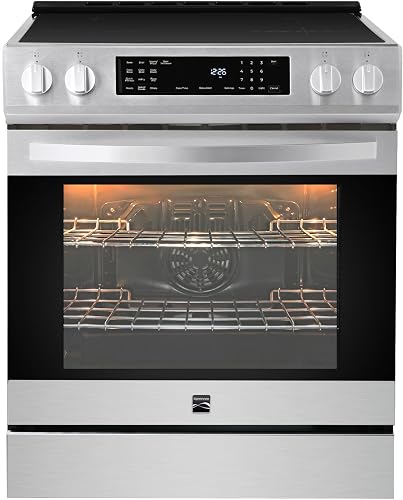
For full reviews of seven induction ranges, see our best induction ranges guide, and for other range types, our best oven ranges.
Induction vs Electric Range FAQs
Is induction better than an electric range?
For most cooks, yes. Induction is faster, more precise, more energy efficient, safer and easier to clean. A radiant electric range costs less and works with any cookware, so it's still a good choice on a budget.
Is induction the same as electric?
Both run on electricity, but they heat differently. A standard electric cooktop heats an element that heats the glass and pan. Induction uses a magnetic field to heat the pan directly.
Do I need new pots and pans for induction?
Only for non-magnetic pieces. If a magnet sticks to the bottom of a pan, it works on induction. Cast iron and most stainless steel are fine; plain aluminum, copper and glass are not.
Does an induction range need special wiring?
Usually not if you're replacing an electric range. Both typically use a 240V, 40–50-amp circuit. Check the induction range's manual for the exact requirement.
Is induction cooking safe?
Yes. Induction has no open flame, the glass stays much cooler, and zones turn off when no pan is detected. People with pacemakers or implanted medical devices should ask their doctor and follow the manufacturer's guidance.
Why does my induction cooktop make noise?
A light hum or buzz is normal, especially on high settings or with lightweight or multi-layer pans. A cooling fan may also run. Heavier, flat-bottomed pans are usually quieter.
Does induction use less electricity than electric?
Generally, yes. Induction puts more of its energy directly into the pan and loses less to the air, so it uses somewhat less electricity for the same task.
Can you use cast iron on induction?
Yes, cast iron works very well. Lift it instead of sliding it to avoid scratching the glass, and heat it gradually.
Is induction worth the extra cost?
If you cook often, most owners say yes. The speed, control, safety and easy cleaning make daily cooking noticeably better. If you rarely cook, a radiant electric range is a sensible way to save money.
Which lasts longer, induction or electric?
Both typically last 10–15 years. Radiant ranges have simpler, cheaper parts. Induction ranges have more electronics, so a longer warranty adds peace of mind.
Final Verdict
Induction wins on almost everything that matters while cooking: speed, control, safety, efficiency and cleanup. A radiant electric range is still a good value if you want the lowest price or rely on non-magnetic cookware.
If you're replacing an electric range, switching to induction is usually simple. Start with the magnet test, check your circuit, then compare models in our best induction ranges guide.
TopOvenPicks is reader-supported. When you buy through links on our site, we may earn an affiliate commission at no extra cost to you. Prices and availability change often, so always confirm details on Amazon.