The difference between a convection vs conventional oven is airflow: a convection oven uses a fan to circulate hot air, so food cooks about 25% faster and browns more evenly, while a conventional oven heats with still air from top and bottom elements. Here's how they compare and which one is right for your cooking.
Conventional oven
Also called a regular, standard or thermal oven
- Heating elements at the top and bottom
- Still air, with natural hot and cool spots
- Best for cakes, custards and delicate bakes
- Recipes work exactly as written
- Simpler, with fewer parts to fail
Convection oven
Fan bake, fan-forced or true/European convection
- Fan (and often a third element) circulates hot air
- Cooks about 25% faster, more evenly
- Best for roasting, crisping and multi-rack baking
- Lower recipe temperatures by about 25°F
- Usually switchable to regular bake
Quick Answer: Convection or Conventional?
- Choose convection if you roast meats and vegetables, bake cookies in batches, love crispy food or want faster cooking. Most modern ovens with convection also have a regular bake mode, so you get both.
- A conventional oven is fine if you mostly bake cakes, breads and casseroles, want the simplest oven, or are on a tight budget.
- Best of both: buy an oven with true convection (a third heating element around the fan) and use regular bake for delicate recipes.
How Convection and Conventional Ovens Work
A conventional oven has a bake element at the bottom (or a gas burner under the floor) and a broil element at the top. Heat radiates from these elements and rises, while the air inside stays mostly still. A thin layer of cooler air clings to the surface of the food and slows cooking. The top and back of the oven usually run hotter, so you rotate pans for even results.
A convection oven adds a fan, usually at the back of the oven. The fan pushes hot air around the food, stripping away that cooler layer so heat reaches the surface faster. Food browns more evenly, moisture on the surface evaporates quickly for crispier skin and crusts, and the temperature stays more even from top to bottom. Most convection ovens let you turn the fan off and use regular bake.
Convection vs Conventional Oven: 10-Point Scorecard
| Factor | Conventional | Convection | Winner |
|---|---|---|---|
| Cooking speed | Standard times | About 25% faster | Convection |
| Even heat | Hot and cool spots | More even throughout | Convection |
| Multi-rack baking | Needs rotating pans | Even on 2–3 racks | Convection |
| Browning and crisping | Good | Excellent | Convection |
| Energy use | Standard | Often lower (shorter, cooler cooking) | Convection |
| Cakes, custards, soufflés | Gentle, still heat | Can dome, crack or dry | Conventional |
| Following recipes | Works as written | Needs temperature or time adjustment | Conventional |
| Purchase price | Lower | Usually higher | Conventional |
| Simplicity and repairs | Fewer parts | Fan motor can fail | Conventional |
| Covered braises and casseroles | Works well | No real advantage | Tie |
Convection wins on performance; conventional wins on simplicity, price and delicate baking. Because most convection ovens can switch to regular bake, a convection oven gives you the best of both.
Which Is Better for Each Food?
| Food | Better choice | Why |
|---|---|---|
| Roast chicken and turkey | Convection | Crispier skin, juicier meat, faster cooking |
| Beef and pork roasts | Convection | Better crust and more even doneness |
| Roasted vegetables | Convection | Caramelized edges without burning |
| Cookies (several trays) | Convection | Bake evenly on multiple racks |
| Pie crust and puff pastry | Convection | Flakier, more evenly browned layers |
| Frozen fries and nuggets | Convection | Air-fryer-style crisping |
| Layer cakes and sponge | Conventional | Even rise without doming |
| Cheesecake and custards | Conventional | Gentle heat prevents cracks |
| Quick breads and muffins | Conventional | Taller rise, more tender crumb |
| Bread loaves | Both | Start on regular bake, finish on convection for crust |
| Covered casseroles and braises | Either | The lid blocks airflow, so the fan adds little |
Baking bread at home? See our picks for the best ovens for baking bread and best ovens for baking cakes.
Fan Convection vs True (European) Convection
Not all convection ovens are the same. The type makes a real difference in how even your results are.
| Fan convection | True / European convection | |
|---|---|---|
| How it works | A fan moves heat from the top and bottom elements | A third heating element surrounds the fan, so the moving air is heated directly |
| Evenness | Better than conventional | The most even, especially on multiple racks |
| Best for | Roasting and general cooking | Serious bakers and multi-rack baking |
| Found in | Many budget and mid-range ovens | Mid- to high-end ranges and wall ovens |
When shopping, look for "true convection", "European convection" or "third-element convection" in the specifications. Several ranges in our best induction ranges guide have true convection.
Pros and Cons
Convection oven
- Pro: cooks about 25% faster
- Pro: even multi-rack baking
- Pro: crispier skin and better browning
- Pro: often uses less energy
- Con: recipes need adjusting
- Con: can dry out or crack delicate bakes
- Con: costs more; fan adds a part that can fail
Conventional oven
- Pro: recipes work exactly as written
- Pro: ideal for cakes, custards and soufflés
- Pro: lower price and simpler repairs
- Pro: quieter, with no fan
- Con: hot and cool spots
- Con: slower cooking
- Con: must rotate pans for even results
Energy Use and Running Cost
A convection oven usually uses less energy for the same dish, because it cooks at a lower temperature for a shorter time. The savings per meal are small, but they add up if you roast and bake often, especially with large meals like a holiday turkey. The fan itself uses very little power compared with the heating elements.
The bigger cost difference is the purchase price: ovens and ranges with convection, especially true convection, usually cost more than basic models. A countertop convection oven is the cheapest way to add convection to your kitchen, and it heats a much smaller space, which saves energy for small meals.
How to Convert Recipes Between the Two
- Regular recipe in a convection oven: lower the temperature by 25°F (about 15°C) and start checking at about 75% of the cook time.
- Convection recipe in a regular oven: raise the temperature by 25°F, or keep it and add about 25% more time, checking as you go.
- Auto conversion: many convection ovens lower the temperature automatically in Convection Bake. Check the display so you don't adjust twice.
Our full guide on how to use a convection oven includes a recipe converter, a temperature chart and a food-by-food cooking guide.
5 Convection Oven Myths
- "Convection is only for professionals." Most home ranges and many countertop ovens now include convection, and using it is as simple as pressing a button and lowering the temperature.
- "Convection dries out food." Only when the temperature or time isn't adjusted. Roasts cooked with convection are often juicier because they spend less time in the oven.
- "You can't bake with convection." Cookies, pastry, pies and rolls bake beautifully with convection. Only delicate cakes, custards and soufflés do better without the fan.
- "Convection and air fry are completely different." Air fry is a convection setting with a faster fan and higher heat. The principle is the same.
- "A convection oven can't work like a regular oven." Nearly all convection ovens let you turn the fan off and bake conventionally.
Convection in Different Types of Ovens
| Appliance | Convection available? | What to know |
|---|---|---|
| Freestanding and slide-in ranges | Common on mid-range and up | Look for true convection for the best baking |
| Wall ovens | Very common | Double wall ovens often have convection in one or both cavities |
| Countertop and toaster ovens | Very common | Smaller space heats fast; great for small meals |
| Air fryer ovens | Always (that's how they work) | Strong fan for crisping; less ideal for delicate baking |
| Convection microwaves | Combo models | Microwave plus a convection element for browning and baking |
| Steam ovens | Combi-steam models | Combine steam with convection for moist, browned results |
Explore more: our guides to the best wall ovens, best air fryer ovens, best microwave oven combos and best steam ovens. Comparing countertop options? Read convection oven vs toaster oven.
Tips to Get the Best Results From Each
Conventional oven tips
- Bake on the center rack whenever possible, where heat is most even.
- Rotate pans front to back halfway through baking.
- When using two racks, swap the pans halfway through.
- Check the real temperature with an oven thermometer; many ovens run hot or cold. See how to test oven temperature.
Convection oven tips
- Lower the temperature by 25°F, or shorten the time by about 25%, not both at full strength.
- Use low-sided pans so the moving air reaches the food.
- Don't overcrowd: leave space between pans and around the food.
- Keep the door closed; opening it stops the fan on many ovens.
Which Should You Buy?
Buy convection if you
- Roast meat, poultry or vegetables often
- Bake cookies or rolls in big batches
- Cook large holiday meals
- Love crispy, air-fried textures
- Want faster weeknight cooking
A conventional oven is fine if you
- Mostly bake cakes, breads and casseroles
- Want the simplest, lowest-cost oven
- Rarely cook on more than one rack
- Prefer recipes to work exactly as written
- Already own a countertop convection oven
For most people, the best choice is a range or wall oven with convection that you can switch off. You lose nothing, and you gain speed and better results for roasting and multi-rack baking. Comparing fuel types too? Read gas vs electric ovens.
Convection Ovens Worth a Look
Want to add convection to your kitchen? These highly rated options cover a full-size range and two countertop ovens:
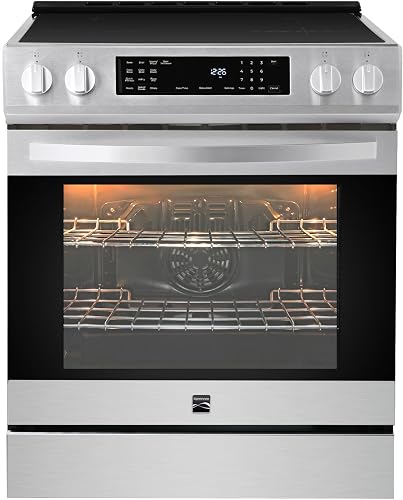


See all our picks for the best countertop convection ovens, best convection ovens for baking and best ovens of 2026.
Convection vs Conventional Oven FAQs
What is the main difference between a convection and a conventional oven?
A convection oven uses a fan to circulate hot air around the food, so it cooks faster and more evenly. A conventional oven relies on still air heated by elements at the top and bottom.
Is a convection oven better than a regular oven?
For roasting, crisping and multi-rack baking, yes. For cakes, custards and soufflés, a regular oven is better. Since most convection ovens can switch to regular bake, they offer the best of both.
Can you use a convection oven like a regular oven?
Yes. Most convection ovens have a regular Bake setting that turns the fan off, so they work exactly like a conventional oven when you need gentle, still heat.
Do convection ovens cook faster?
Yes, usually about 25% faster at the same temperature. That's why recipes are adjusted by lowering the temperature about 25°F or shortening the cook time.
Is a convection oven worth the extra money?
For most home cooks, yes. Faster cooking, crispier results and even multi-rack baking make a noticeable difference, especially for roasting and holiday cooking. If you mostly bake cakes and rarely roast, a conventional oven is fine.
Does convection use less electricity?
Usually, yes. Because convection cooks at a lower temperature for a shorter time, it often uses less energy per dish. The fan itself uses little power.
What is true convection?
True convection, also called European or third-element convection, adds a heating element around the fan so the circulating air is heated directly. It gives the most even results, especially on multiple racks.
Is an air fryer a convection oven?
An air fryer is essentially a small convection oven with a stronger fan in a smaller space, which is why it crisps food so quickly. Many full-size and countertop ovens now include an Air Fry mode.
Why did my cake sink or crack in a convection oven?
Moving air can set the outside of the batter before the cake finishes rising, causing domes, cracks or sinking. Bake cakes on regular bake, or lower the temperature by 25°F and check early.
How do I know if my oven has convection?
Look for a fan symbol or a Convection, Convect Bake or Fan Bake setting on the control panel, and a fan cover on the back wall inside the oven. Your manual will confirm the type.
Final Verdict
A convection oven is the better all-round choice for most kitchens: it cooks faster, browns better and bakes evenly on multiple racks, and you can switch it to regular bake for cakes and custards. A conventional oven still makes sense if you want simplicity, a lower price, or you mostly bake delicate recipes.
If you can, choose true convection, and learn the simple 25°F rule in our convection cooking guide.
TopOvenPicks is reader-supported. When you buy through links on our site, we may earn an affiliate commission at no extra cost to you. Prices and availability change often, so always confirm details on Amazon.