Quick Summary – TL;DR
If your oven not heating up properly, the most common causes include a faulty heating element, a broken igniter (for gas ovens), a malfunctioning temperature sensor, or simple issues like tripped breakers or incorrect settings. Quick fixes often involve checking power supply, inspecting elements, and resetting controls.
When to stop and call a pro: If you detect gas leaks, sparking, or damaged wiring, or if your DIY checks don’t resolve the problem, contact a certified technician to avoid safety risks.
Introduction
Experiencing an oven not heating up properly can be frustrating, especially when you’re trying to cook dinner or bake your favorite recipes. This guide is designed for beginners, renters, and homeowners who want to diagnose and fix common oven issues safely and effectively.
By following this guide, you’ll learn how to identify the most frequent causes of heating problems, perform simple inspections, test key components, and decide when a DIY fix is possible—or when it’s time to call a professional. After reading, you’ll be able to troubleshoot both electric and gas ovens with confidence and keep your kitchen running smoothly.
Safety First — Before You Start
Before you try to fix an oven not heating up properly, safety should always be your top priority. Ovens involve electricity, gas, and hot surfaces, so taking the right precautions prevents accidents and keeps you safe during troubleshooting.
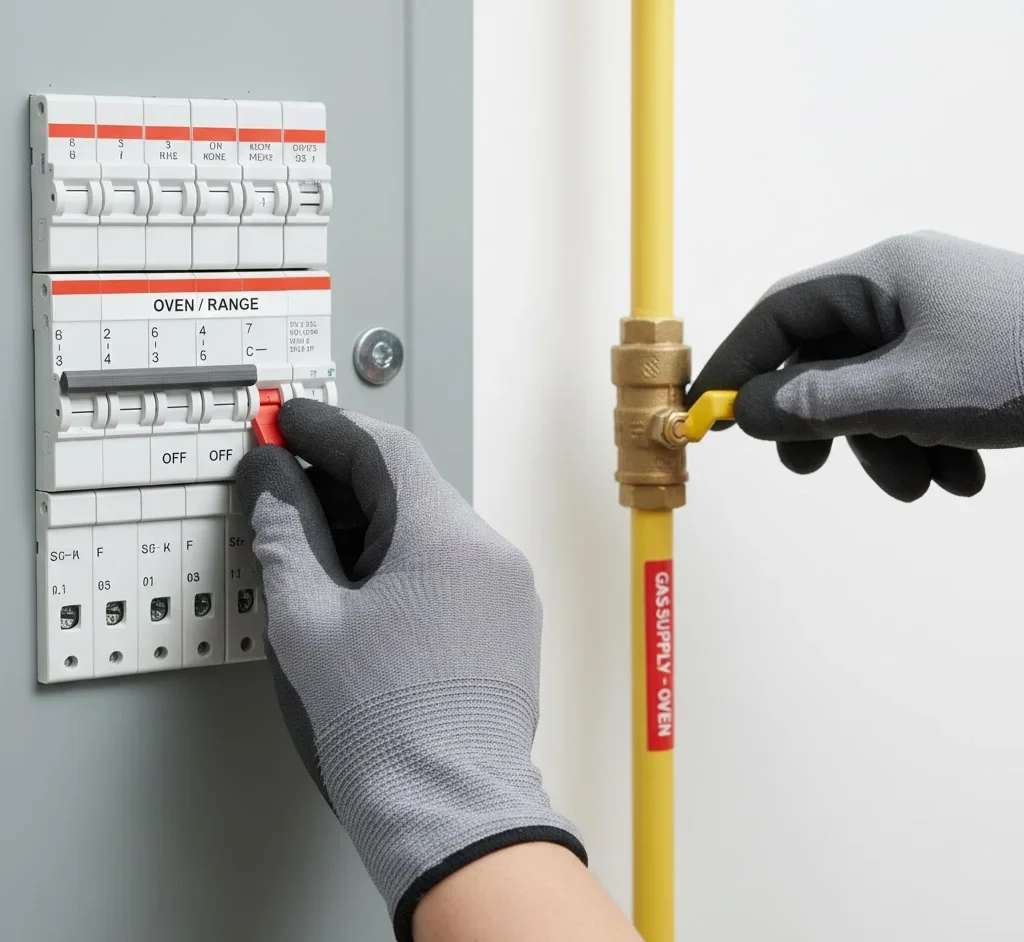
Basic Safety Rules
- Turn off power or unplug the oven: Always disconnect the appliance from electricity before inspecting or touching internal components.
- Shut off the gas supply (for gas ovens): Ensure the gas valve is fully closed to prevent leaks.
- Wear protective gloves and eye protection: Heating elements, sharp edges, or tools can cause injury.
- Ensure proper ventilation: Work in a well-ventilated space, especially if there’s any chance of gas fumes.
- Avoid water near electrical parts: Moisture can cause shocks or short circuits.
By following these rules, you reduce the risk of injury while attempting to fix an oven not heating up properly.
When It’s Unsafe to Proceed
Even with precautions, some situations require professional help:
- Smell of gas or suspected leaks: Do not attempt DIY fixes—evacuate the area and call a certified technician.
- Sparking, smoke, or burning smells: These are signs of serious electrical issues.
- Visible damage: Cracked heating elements, melted wires, or broken control panels indicate unsafe conditions.
- Unusual noises: Buzzing, popping, or hissing can signal internal faults that are dangerous to handle without training.
If any of these conditions exist, stop and contact a professional rather than risking injury while trying to repair your oven.
Tools & Materials You’ll Need
Having the right tools makes troubleshooting an oven not heating up properly safer and more efficient. Here’s a list of essential items:
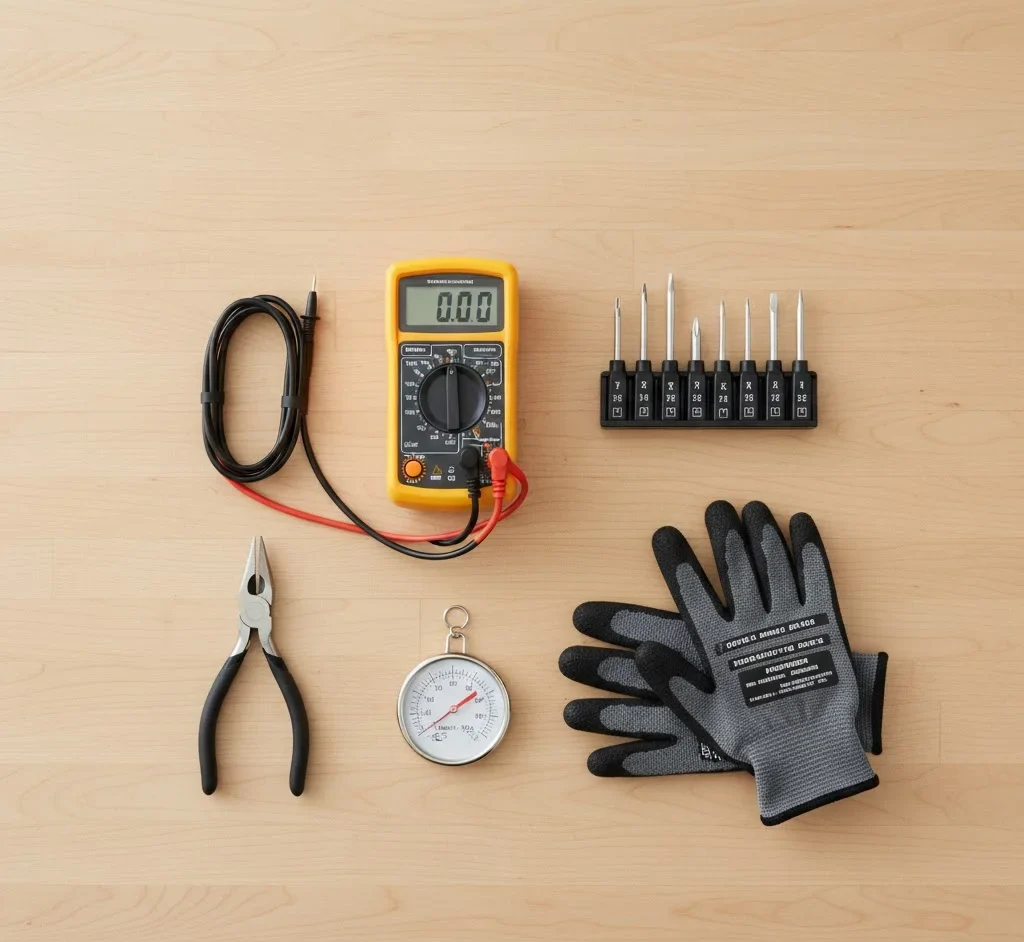
- Multimeter – to test electrical continuity of elements, fuses, and sensors.
- Screwdriver set – flathead and Phillips for removing panels and elements.
- Work light or flashlight – to see inside the oven cavity clearly.
- Protective gloves – for handling hot or sharp components.
- Needle-nose pliers – useful for gripping wires or connectors.
- Oven thermometer – to verify actual oven temperature versus settings.
- Replacement parts – such as heating elements, sensors, or igniters, depending on the fault.
Quick multimeter tip: Always set the multimeter to the correct mode (ohms for continuity) and double-check that the oven is unplugged before testing. This ensures safe and accurate readings while diagnosing why your oven is not heating up properly.
Quick Checklist — Fast Things to Check First (5–10 Minute Check)
If your oven is not heating up properly, there are a few quick checks you can perform before diving into deeper troubleshooting. These fast steps often reveal simple fixes and save you time.
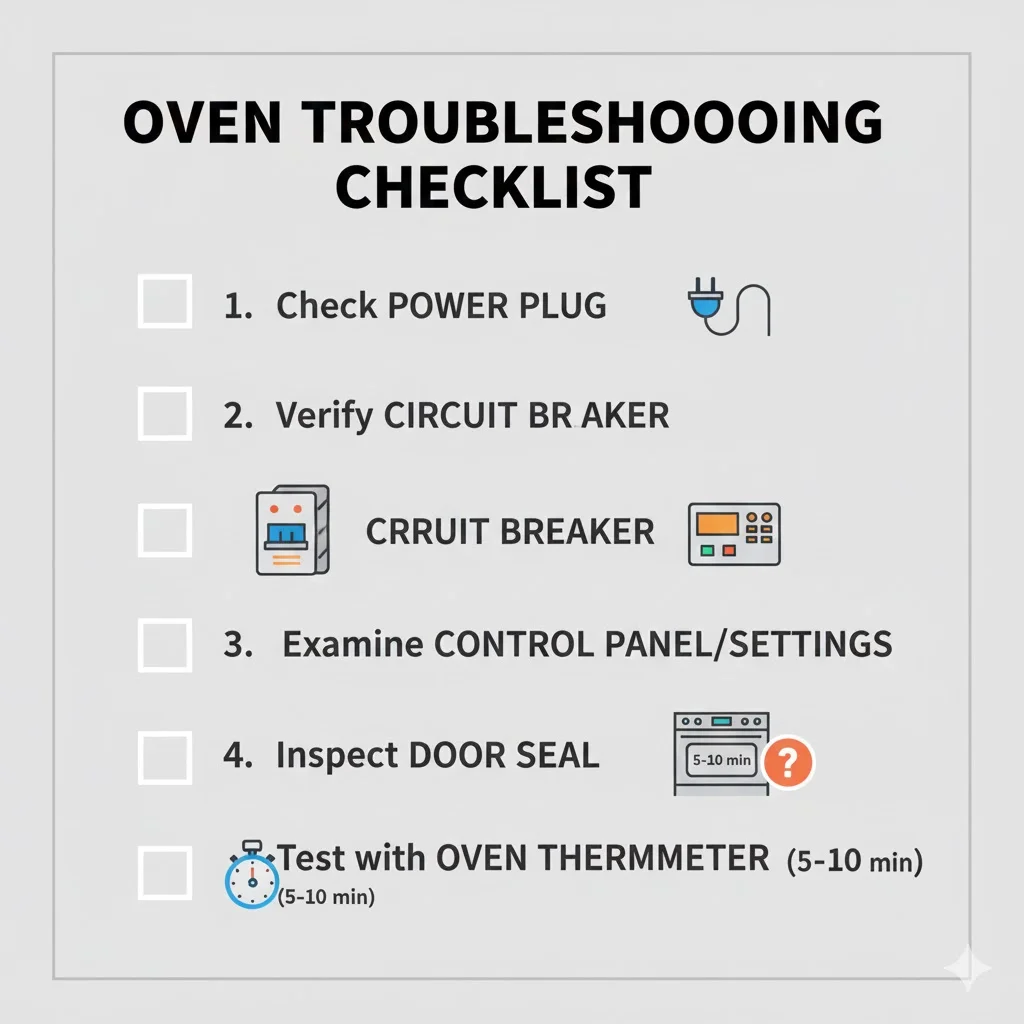
1. Check the Power Supply
- Is the oven plugged in? Sometimes the simplest reason an oven isn’t heating is that it’s not receiving power.
- Breaker tripped? Look at your home’s electrical panel to ensure the oven’s circuit hasn’t been tripped. Reset if needed.
- Timer or child lock enabled? Some ovens will not heat if the timer is on or a child lock is active. Make sure these features are turned off.
2. Verify Oven Settings
- Correct cooking mode: Ensure your oven is set to “Bake” or the mode required for your recipe, not “Broil” or “Convection,” unless intended.
- Temperature setting: Make sure the thermostat is set higher than the current temperature. The oven will not heat if the set temperature is lower than ambient temperature.
- Preheating: Give the oven a few minutes to reach the target temperature before assuming it’s malfunctioning.
3. Perform a Visual Check
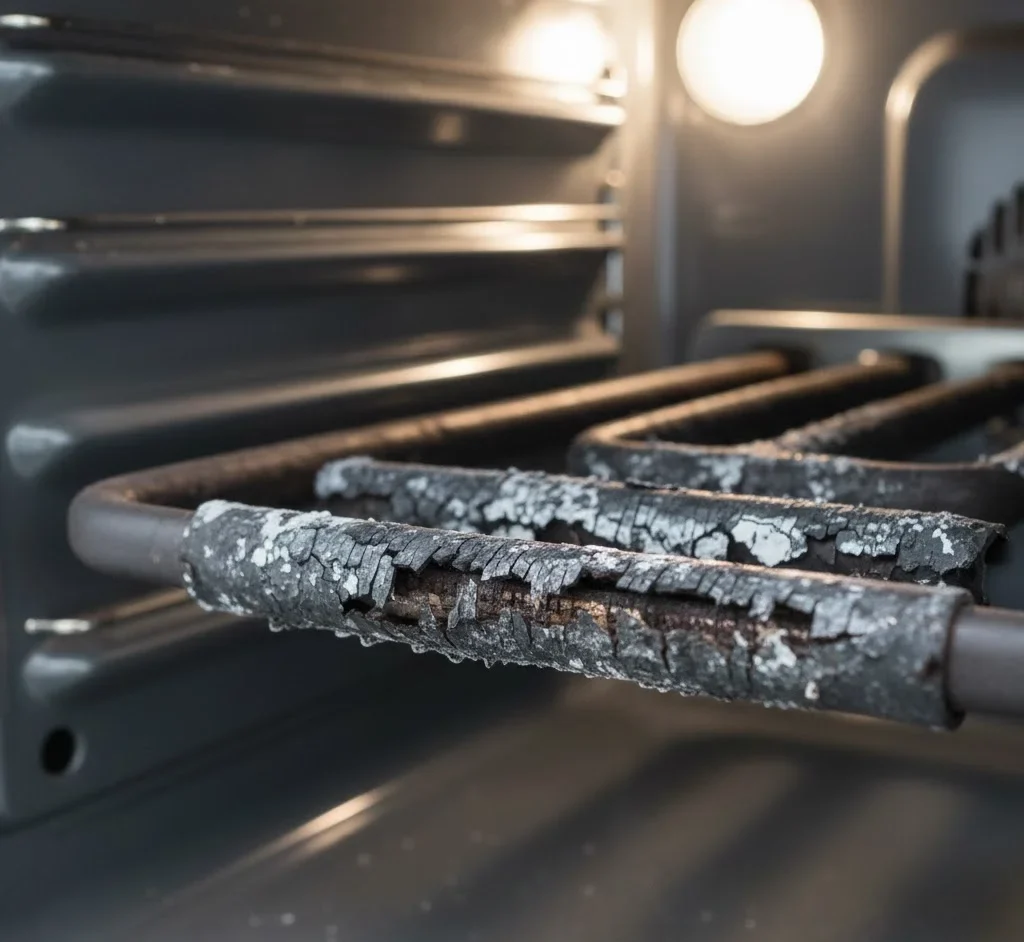
- Heating element condition: Inspect the bake and broil elements for visible damage such as blisters, cracks, or breaks. Damaged elements are a common reason your oven is not heating up properly.
- Loose wires or connectors: Carefully look behind panels for wires that may have come loose.
- Error codes: If your oven has a digital display, note any error codes. Refer to the user manual to understand what they indicate.
Completing this 5–10 minute checklist often resolves simple problems and helps you determine if further troubleshooting or professional repair is needed.
Step-by-step Troubleshooting Guide (Detailed)
If your oven is not heating up properly, following a systematic troubleshooting approach can help you identify the root cause efficiently. This guide covers both electric and gas ovens and shared checks that apply to all types. Always start with the simplest checks before moving to more complex inspections.
Overview — How to Approach Troubleshooting
When troubleshooting an oven that is oven not heating up properly, follow a diagnostic order:
- Power & settings: Confirm the oven is receiving electricity or gas and is correctly configured.
- Visible parts: Inspect heating elements, burners, igniters, and wiring for obvious damage.
- Component testing: Use tools like a multimeter to test elements, sensors, and fuses.
- Repairs or replacement: Replace faulty parts or call a professional if needed.
Approaching troubleshooting in this order minimizes guesswork and keeps the process safe and efficient.
Troubleshooting Electric Ovens
- Confirm Power & Controls
- Ensure the oven is plugged in and the breaker hasn’t tripped.
- Check the outlet for power using a simple device like a lamp.
- Disable any control lock or child lock features.
- Look for display errors; error codes can hint at control board or sensor issues.
- Visual Inspection of Bake/Broil Elements

- Look for visible cracks, blisters, or breaks in the elements.
- Elements should glow evenly when the oven is on; uneven or dim glow indicates a problem.
- Damaged elements are a common reason your oven is not heating up properly and usually require replacement.
- Test Elements with a Multimeter (Continuity)
- Set the multimeter to the ohms (Ω) setting for continuity.
- Probe each terminal of the heating element while the oven is unplugged.
- A functional element typically shows a small, finite resistance. Infinite resistance or zero indicates a faulty element that may be preventing proper heating.
- Check the Oven Temperature Sensor / Thermostat Probe
- Locate the temperature sensor inside the oven cavity.
- Measure resistance with a multimeter and compare readings to the oven’s temperature chart.
- A failing sensor can cause the oven to heat unevenly or stop heating entirely.
- Check the Oven Control Board / Relays
- Symptoms of board failure include erratic temperatures, error codes, or unresponsive controls.
- Try a power cycle (turn off breaker, wait a few minutes, turn back on).
- Persistent errors may require professional diagnosis or board replacement.
- Check Thermal Fuse / Safety Cutout
- Thermal fuses protect your oven from overheating.
- Locate the fuse (consult the manual) and test for continuity with a multimeter.
- A blown fuse is a common reason an oven is not heating up properly and must be replaced.
- Convection Fan & Airflow Problems
- Ensure the convection fan is spinning freely.
- Blocked or malfunctioning fans can cause uneven or slow heating even if elements are fine.
Troubleshooting Gas Ovens
- Confirm Gas Supply & Safety
- Ensure the gas valve is on and there’s no gas leak.
- Verify that pilot light (if present) or electronic ignition is working.
- Gas supply issues are a primary cause of an oven not heating up properly.
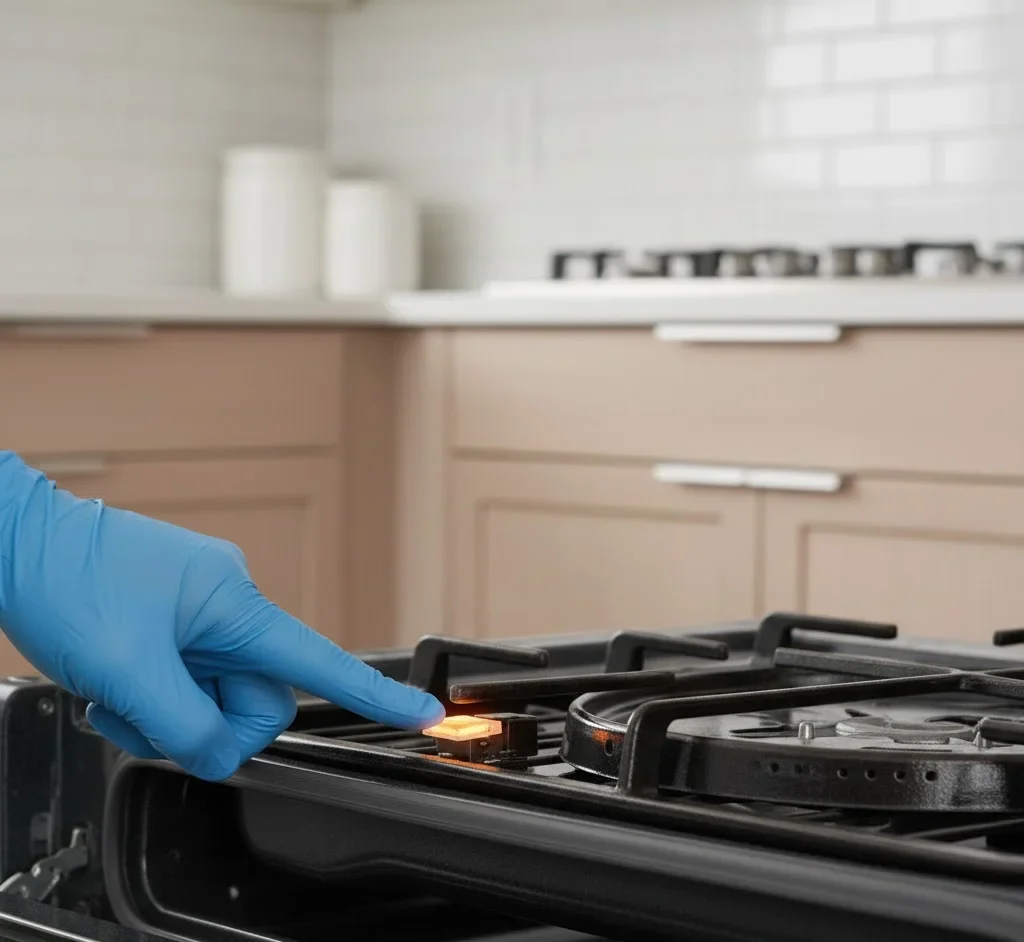
- Check the Igniter
- Observe the igniter during a start cycle; it should glow bright orange and ignite the burner quickly.
- A weak or slow-heating igniter often prevents proper combustion and heat generation.
- Replace faulty igniters following safety guidelines.
- Inspect the Burner and Orifice
- Remove the burner cover and check for clogs, soot, or dirt.
- Clean carefully to restore proper flame and airflow, which may fix heating issues.
- Thermostat / Temperature Sensor & Control Valve
- Gas ovens use sensors and a control valve to regulate flame.
- Test sensors with a multimeter; faulty sensors or valves can prevent the oven from heating properly.
- Safety Valves & Flame Failure Devices
- These devices shut off gas if ignition fails.
- If tripped or malfunctioning, the oven will not heat. Reset or replace according to the manufacturer’s instructions.
Shared Checks for Electric & Gas Ovens
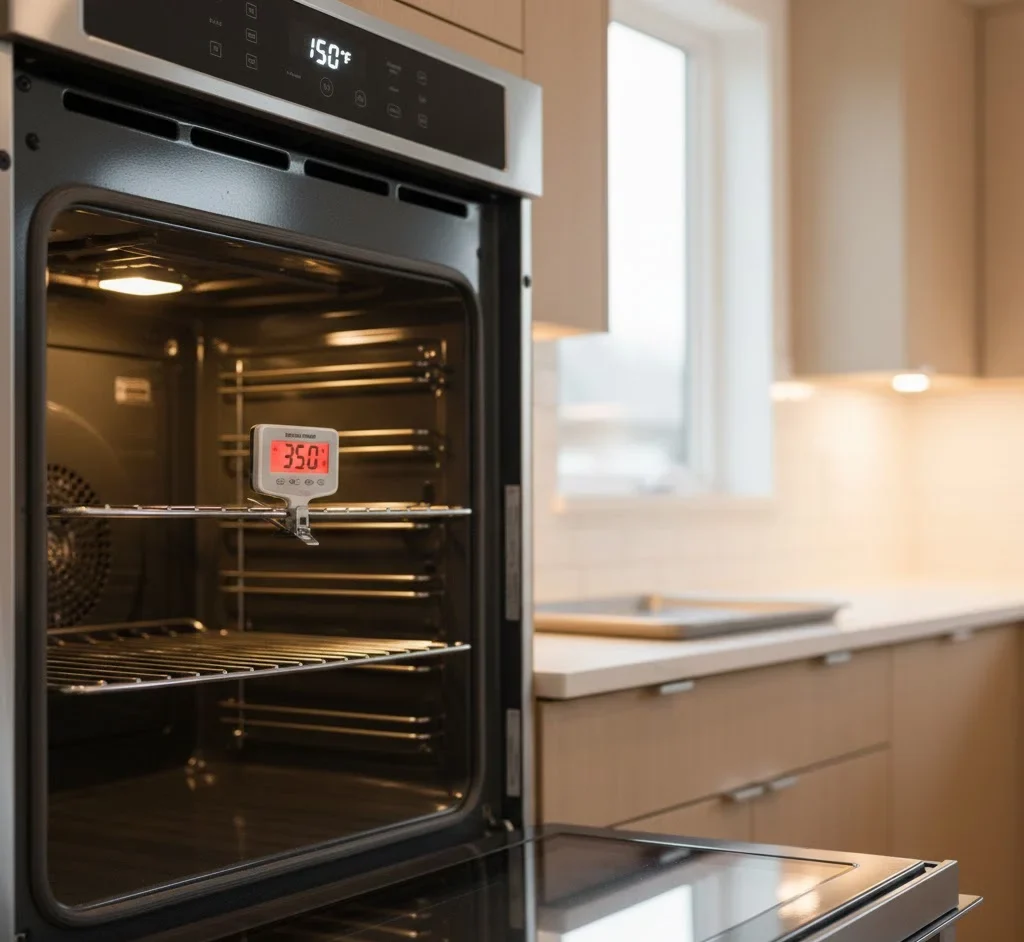
- Oven Calibration & Temperature Offset
- Use an oven thermometer to verify actual temperature vs. settings.
- Adjust calibration if the oven consistently underheats or overheats.
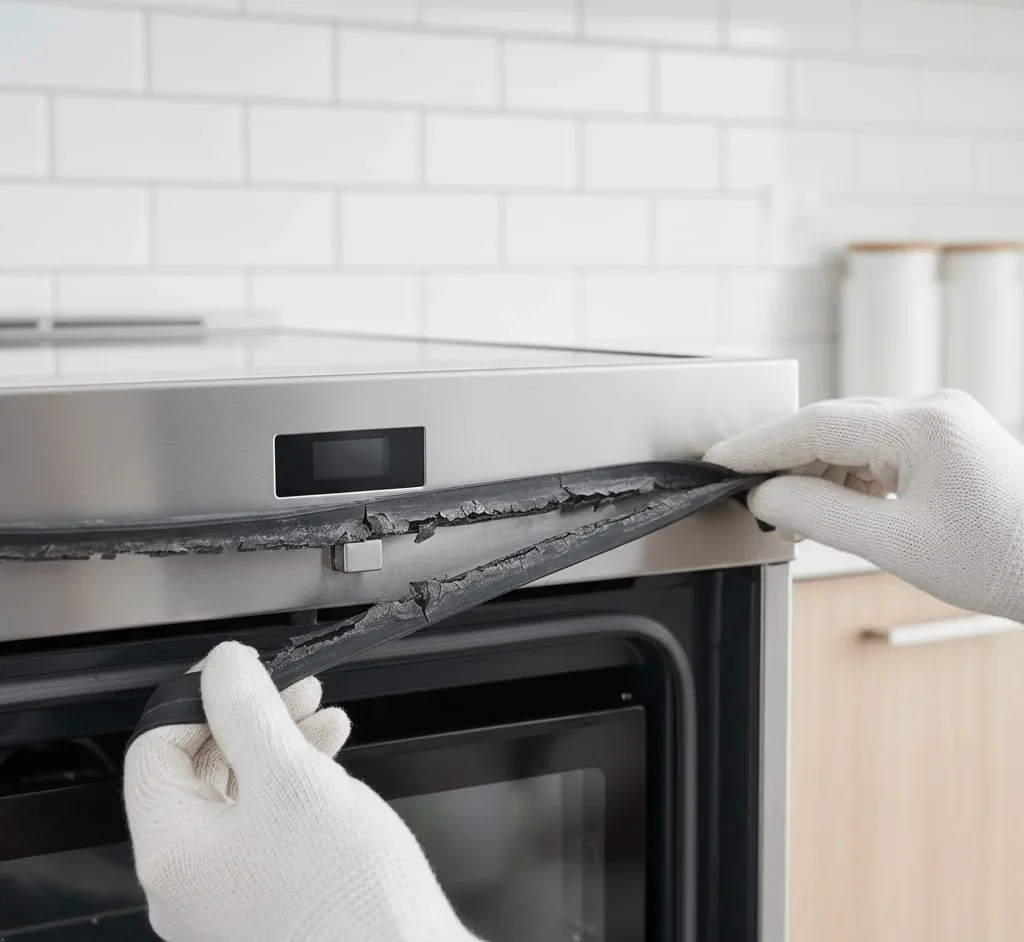
- Door Seal & Gasket Inspection
- Check for cracks, tears, or gaps in the oven door gasket.
- Leaks reduce heating efficiency and can make your oven feel like it’s not heating up properly even if internal components are fine.
- Error Codes & Smart Oven Diagnostics
- Digital ovens display error codes for various issues.
- Consult the manual to interpret codes, perform resets, or identify parts that may need replacement.
- Power Surges & Wiring Issues
- Frequent surges or loose wiring can damage components.
- Look for burn marks, frayed wires, or tripped breakers.
- If wiring issues are suspected, stop troubleshooting and call a professional to avoid risk of shock or fire.
Step-by-Step Repairs & Simple Fixes (DIY)
If your oven is not heating up properly, some issues can be fixed quickly with simple DIY steps. This section covers easy fixes you can do right away, as well as how to replace common parts safely. Always follow safety precautions: unplug the oven or turn off the gas supply before starting any repair.
Quick Fixes You Can Try Right Now
Many heating problems are caused by small, easily overlooked issues. Try these first:
- Reset the breaker: Sometimes the oven won’t heat because the circuit has tripped. Flip the breaker off and back on to restore power.
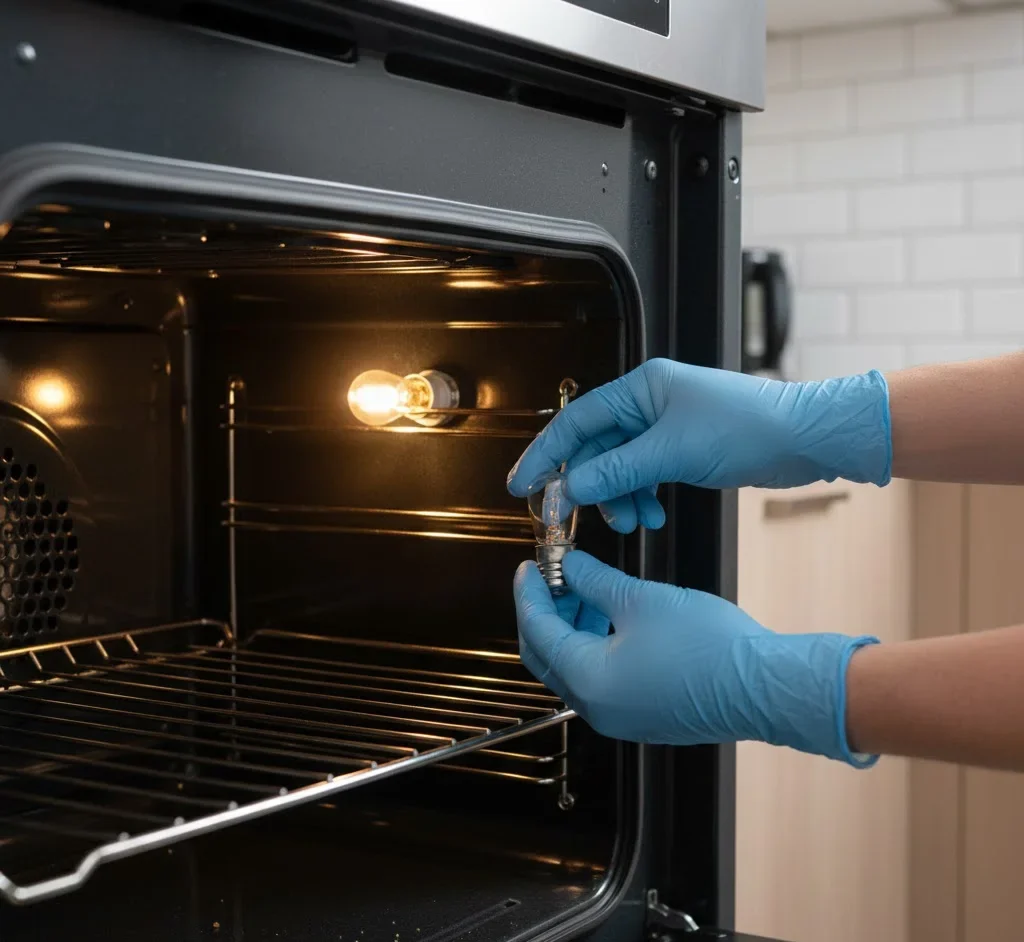
- Replace the oven bulb: A burned-out bulb won’t usually stop heating, but in some ovens, it can affect sensor readings. Replace with the correct wattage bulb.
- Reseat connectors: Loose wires on heating elements, sensors, or control boards can prevent proper heating. Carefully disconnect and reconnect them.
- Clean burners (gas ovens): Remove food debris, soot, or grease from burners and orifices to allow proper flame.
- Replace or adjust the door gasket: A damaged gasket allows heat to escape, making it seem like the oven is not heating up properly. Replace or realign as needed.
These simple fixes often solve minor heating problems without requiring advanced tools or replacement parts.
Replacing Common Parts (Element, Igniter, Sensor)
If the quick fixes don’t work, you may need to replace faulty components. Here’s a basic DIY approach:
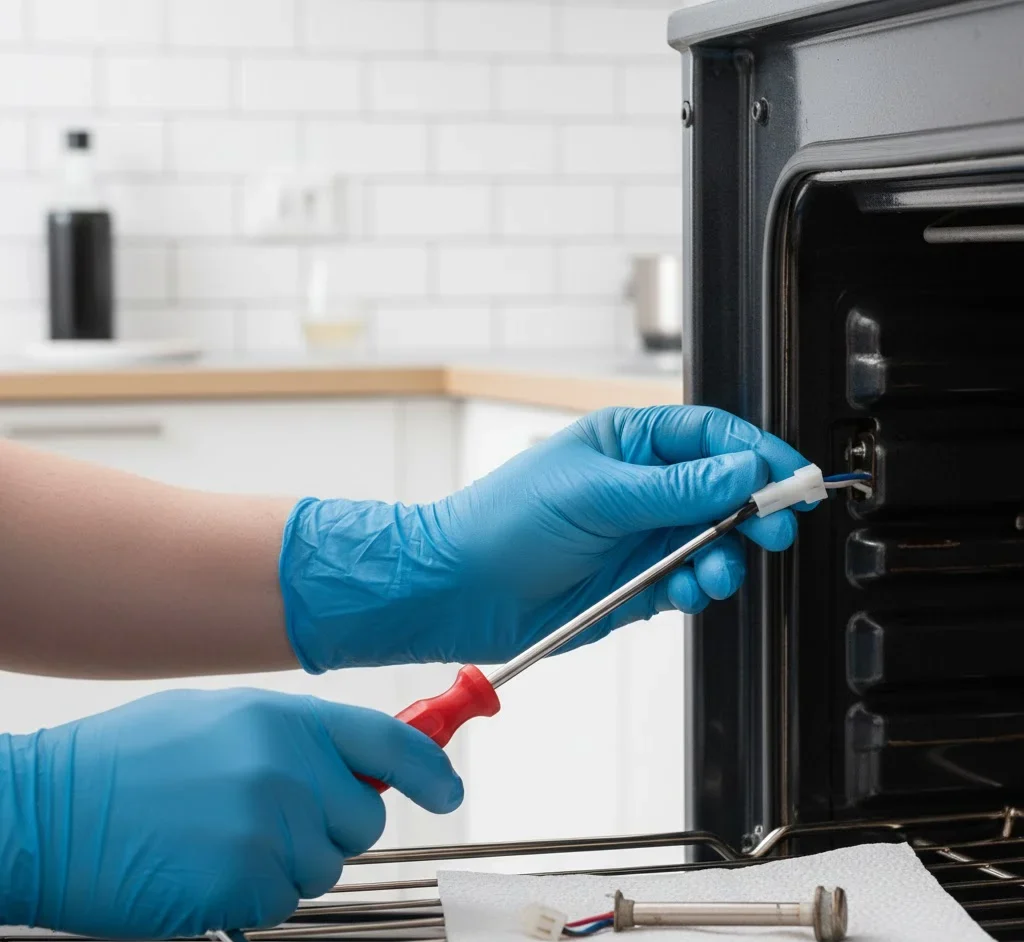
- Heating Element (Electric Oven)
- Safety first: Unplug the oven.
- Remove racks and panel: Access the element screws and terminals.
- Disconnect and remove the old element: Carefully pull out wires.
- Install the new element: Connect wires securely and screw it into place.
- Test: Plug the oven back in and preheat to verify it heats properly.
- Igniter (Gas Oven)
- Safety first: Turn off gas supply.
- Access the igniter: Remove burner cover and screws holding the igniter.
- Disconnect wires and remove: Note orientation for reinstallation.
- Install new igniter: Reconnect wires and screws securely.
- Test: Restore gas and power, and verify proper ignition and heating.
- Temperature Sensor
- Safety first: Unplug oven or turn off gas.
- Locate sensor inside oven cavity: Unscrew and disconnect wires.
- Install replacement sensor: Secure screws and reconnect wires.
- Test: Preheat oven and check temperature accuracy with an oven thermometer.
Replacing these parts can resolve the most common causes of an oven not heating up properly.
When to Replace vs. Repair
Sometimes repairs are not cost-effective, and replacement may be the better option. Consider:
- Age of oven: Older ovens may have multiple failing components; replacement can be safer and more energy-efficient.
- Cost of parts vs. new oven: If replacement parts cost more than 30–50% of a new oven, buying new may make sense.
- Availability of parts: Some models have hard-to-find or obsolete components.
- Complex issues: If multiple components are failing, or if gas/electrical repairs are needed, professional service or a new oven may be safer.
Knowing when to repair versus replace helps you save money while avoiding repeated frustration with an oven not heating up properly.
When to Call a Professional
While many issues can be fixed with simple DIY steps, some situations require professional expertise. If your oven is not heating up properly, know when it’s safer to call a certified technician:
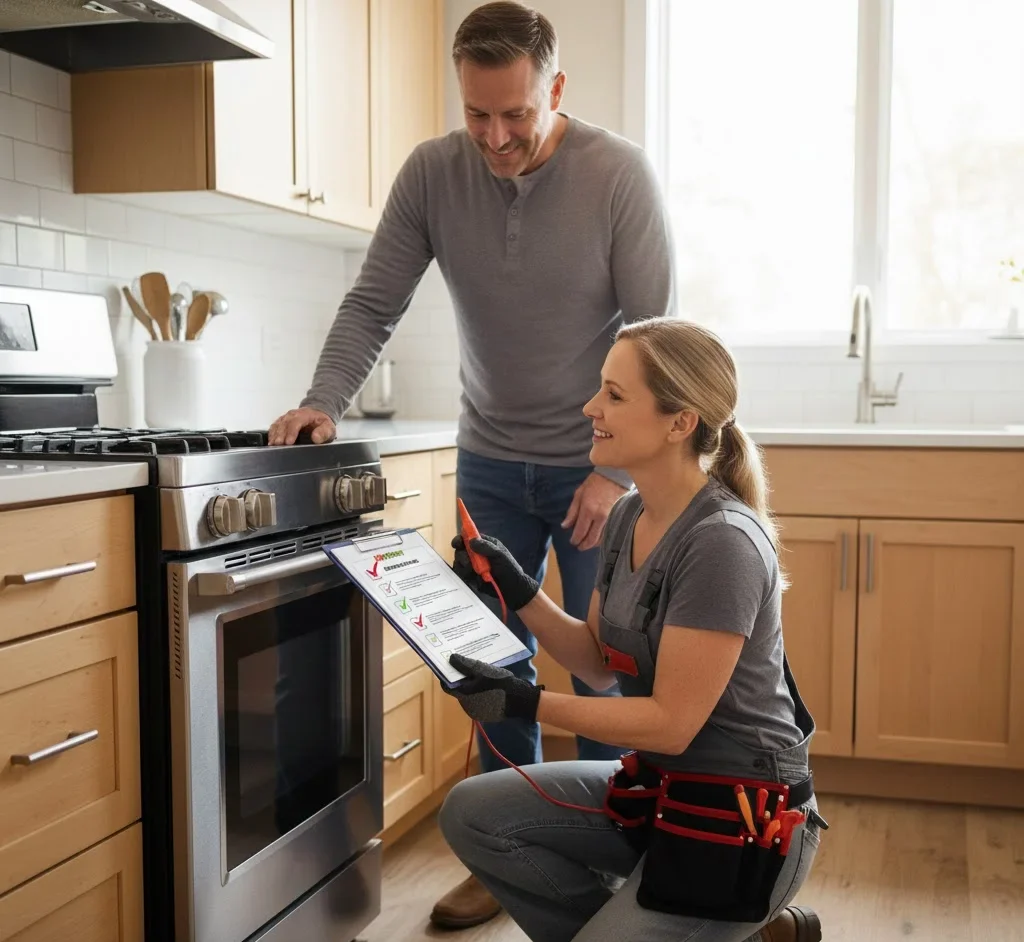
- Gas safety issues: Any gas leak, malfunctioning igniter, or tripped safety valve is dangerous to handle without training.
- Complex electrical wiring: Problems involving wiring behind control boards, relays, or fuses can pose fire or shock hazards.
- Control board replacements: Modern ovens with electronic controls often require specialized tools and knowledge for diagnostics and replacement.
- Warranty considerations: Opening your oven may void manufacturer warranties; a professional can ensure compliance.
What to tell the technician: When calling for service, provide clear details: the oven model, age, observed symptoms, error codes, and what troubleshooting steps you’ve already tried. This saves time, helps them diagnose faster, and ensures your oven is repaired efficiently.
Calling a professional at the right time can prevent further damage and keep you safe while resolving why your oven is not heating up properly.
Cost & Time Expectations (Ballpark)
Understanding the typical costs and time involved helps you plan when tackling an oven not heating up properly:
1. DIY Part Costs
- Heating elements: $25–$80 depending on model.
- Temperature sensors: $15–$40.
- Gas igniters: $20–$60.
- Oven gaskets or door seals: $15–$50.
2. Professional Labor
- Electric oven repairs: $100–$200 on average for a single component replacement.
- Gas oven repairs: $120–$250 for igniter, burner, or sensor issues.
Prices vary by region, oven brand, and whether multiple components need service.
3. Typical Time per Task
- Short tasks: Checking power, replacing a bulb, or reseating connectors — 10–30 minutes.
- Component replacement: Heating element, igniter, or sensor — 30–60 minutes.
- Complex diagnostics or control board replacement: 1–2 hours, plus possible parts procurement.
Knowing these cost and time ranges helps you make informed decisions about whether to attempt a DIY fix or hire a professional, ensuring your oven not heating up properly gets resolved safely and efficiently.
Tips, Best Practices & Maintenance to Prevent Future Problems
Preventing an oven not heating up properly is often easier than fixing it. Regular maintenance and smart usage habits can extend your oven’s life and keep it performing efficiently.
1. Regular Cleaning
- Clean the oven cavity, racks, and burners (for gas ovens) regularly to prevent food residue buildup.
- Avoid abrasive cleaners that can damage heating elements or sensors.
2. Avoid Using Foil on Racks
- Lining racks with aluminum foil can block airflow and reflect heat away from elements, leading to uneven heating.
- Proper airflow helps your oven maintain the correct temperature, reducing the chance it won’t heat properly.
3. Periodic Gasket Checks
- Inspect the door gasket for cracks, tears, or gaps every few months.
- A worn gasket allows heat to escape, making your oven seem like it’s not heating up properly even if elements are fine.
4. Handle the Oven Door Carefully
- Avoid slamming or forcing the door shut; misaligned doors can affect heating and damage gaskets.
5. Use Self-Clean Carefully
- High-temperature self-clean cycles can stress heating elements and sensors. Use sparingly and follow manufacturer instructions.
6. Seasonal Checks
- Inspect elements, burners, igniters, and sensors at least once per season.
- Watch for early signs of failure: dim elements, slow ignition, or inconsistent temperatures.
By following these tips, you minimize the chances of encountering an oven not heating up properly and ensure consistent cooking performance.
Common Mistakes to Avoid
When troubleshooting an oven not heating up properly, avoiding these common mistakes saves time, money, and frustration:
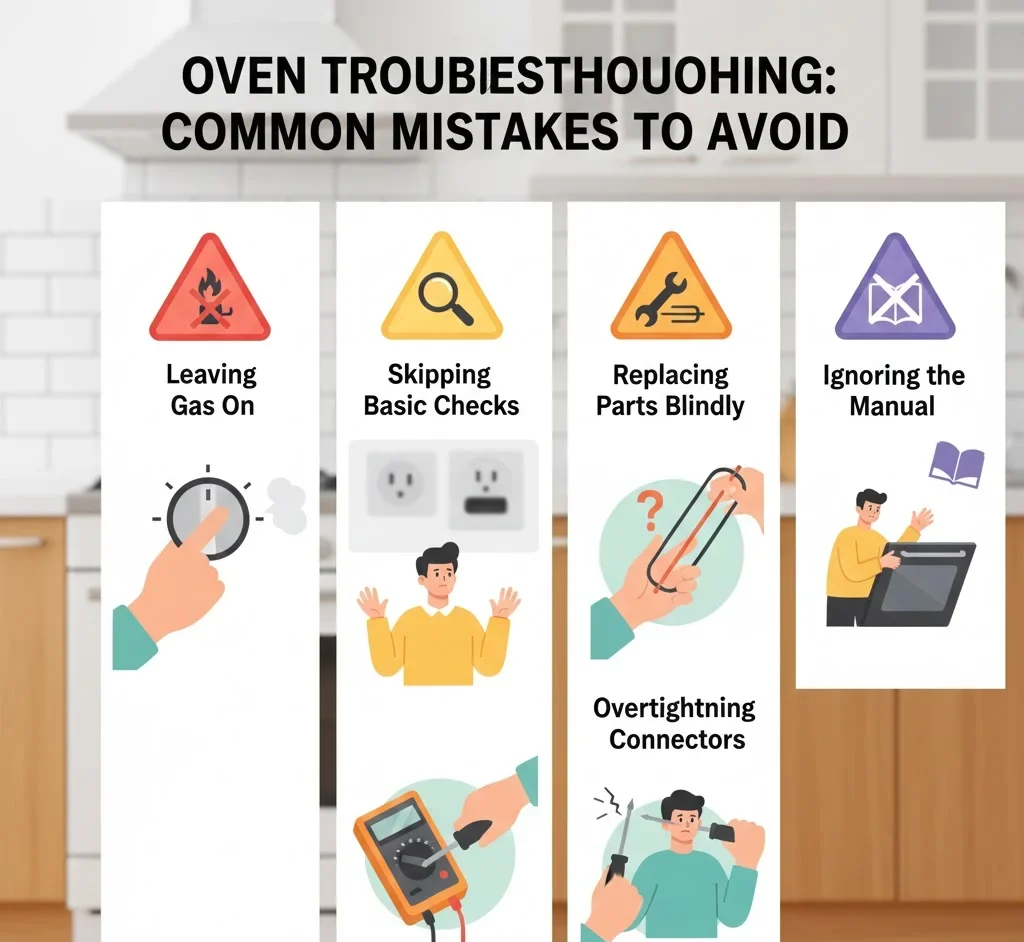
- Working on gas without shutting off supply
- Gas leaks or ignition issues can be dangerous; always turn off the gas valve first.
- Skipping the diagnostic order
- Jumping straight to part replacement without checking power, settings, or visible issues can waste money and overlook simple fixes.
- Replacing parts without testing
- Test elements, sensors, and fuses with a multimeter before replacing them to ensure you’re fixing the actual problem.
- Over-tightening connectors
- Snug connections are necessary, but overtightening can damage terminals or wires, worsening heating issues.
- Ignoring warranties or manuals
- DIY fixes can void warranties. Always check the manufacturer’s guide before attempting repairs.
Avoiding these mistakes reduces the likelihood of prolonged heating problems and helps resolve an oven not heating up properly safely and efficiently.
Frequently Asked Questions (FAQs)
- Why does my oven take too long to heat?
If your oven is not heating up properly, it may take longer than usual to reach the set temperature. Common causes include a failing heating element, a faulty temperature sensor, or a miscalibrated thermostat. Gas ovens may take longer if the igniter is weak. Performing a visual inspection and testing key components can often identify the issue.
- Oven heats but temperature is wrong — what next?
An oven that heats inconsistently or shows the wrong temperature can indicate a problem with the temperature sensor, control board, or calibration. Use an oven thermometer to check the actual temperature. If there’s a significant difference, recalibrate the oven or replace the sensor or faulty component to fix why your oven is not heating up properly.
- Is it safe to keep using an oven that’s not heating properly?
Continuing to use an oven that is not heating correctly can be risky. In electric ovens, faulty wiring or heating elements can cause sparks or fire hazards. In gas ovens, improper ignition or gas leaks are serious safety risks. If your oven is not heating up properly, it’s best to stop using it until it’s repaired or inspected by a professional.
- Can I test an oven element without a multimeter?
While a multimeter gives the most accurate result, you can do a simple visual and functional check. Look for cracks, blisters, or breaks, and observe whether the element glows evenly when powered on. However, for precise diagnostics and to safely confirm faults, using a multimeter is recommended to identify why your oven is not heating up properly.
- Does convection affect heating time?
Yes. Convection ovens circulate hot air with a fan, which can heat food more evenly and often faster than conventional ovens. If your convection oven seems slow, check that the fan is working properly and the oven isn’t overloaded. Poor airflow can make it appear that your oven is not heating up properly, even if the elements are functioning.
- How long should an oven element last?
Heating elements typically last 5–10 years, depending on usage, cleaning habits, and oven type. If your oven is older and shows signs of uneven heating, visible wear, or slow preheating, the element may be failing. Replacing a worn element often resolves issues causing your oven not heating up properly.
Conclusion — Quick Recap & Final Safety Reminder

If your oven is not heating up properly, the most common causes are a faulty heating element, broken igniter (for gas ovens), malfunctioning temperature sensor, or simple issues like tripped breakers or incorrect settings. Quick DIY fixes include checking power, reseating connectors, inspecting elements, or replacing worn parts.
However, if you encounter gas leaks, sparking, or complex control board issues, it’s important to call a professional. Remember: safety always comes first, never attempt repairs when unsure or if dangerous conditions exist. By following the steps in this guide, you can troubleshoot your oven safely and efficiently.
Quick Reference Cheat Sheet (Printable)
Here’s a 1-page overview for easy reference when your oven is not heating up properly:
| Symptom | Possible Cause | Quick Check / Fix |
|---|---|---|
| Oven won’t heat | Power outage, tripped breaker, child lock | Check plug, breaker, disable lock |
| Element not glowing | Cracked or burnt element | Visual inspection, replace if damaged |
| Uneven heating | Faulty sensor or bad convection fan | Test sensor with multimeter, check fan operation |
| Gas oven won’t ignite | Weak igniter or blocked burner | Inspect igniter, clean burner |
| Temperature off | Miscalibrated thermostat | Use oven thermometer, adjust calibration |
| Heat escaping | Damaged door gasket | Inspect, replace or realign gasket |
| Error codes | Control board or sensor issue | Refer to manual, reset or replace component |
Tip: Keep this cheat sheet in your kitchen for quick troubleshooting whenever your oven is not heating up properly.