Introduction
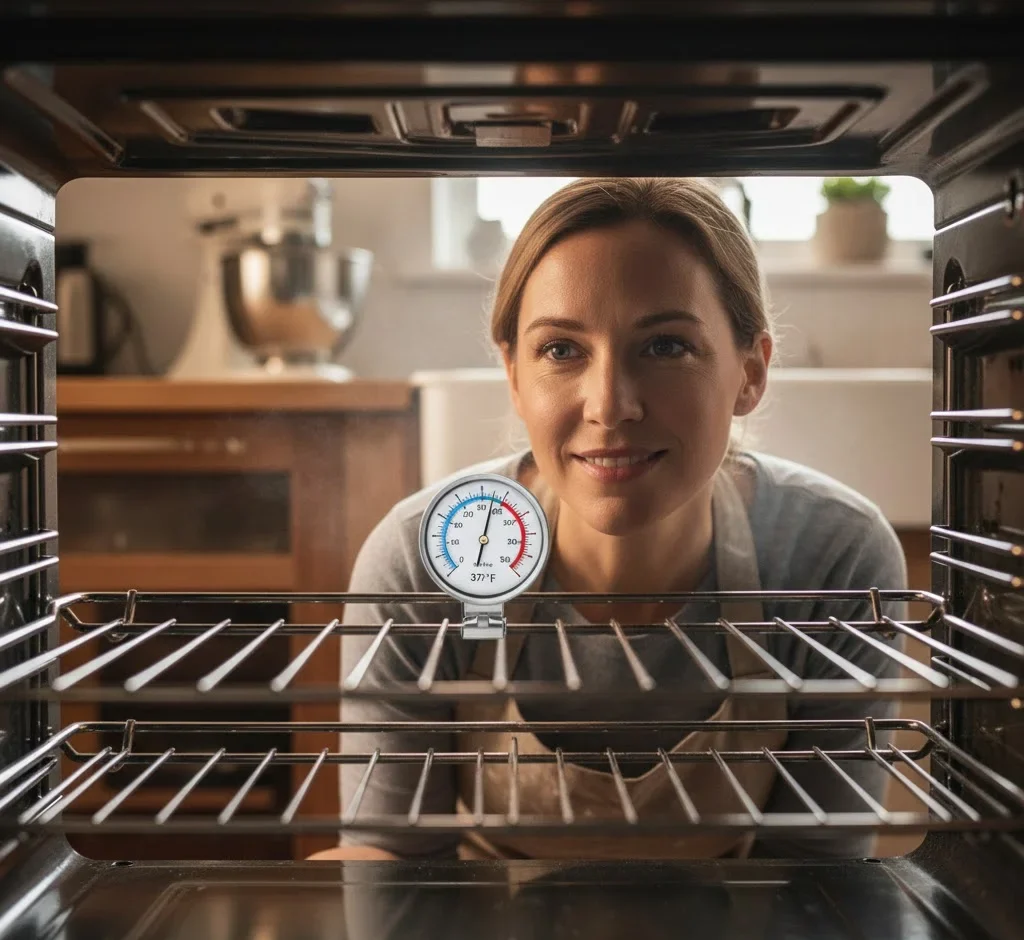
Getting consistent results in baking and cooking starts with knowing that your oven is performing as it should. Many home cooks don’t realize that even a small difference between the oven setting and its actual temperature can affect the outcome of your recipes. That’s why learning how to test oven temperature is so important. It ensures your cakes rise perfectly, bread bakes evenly, and cookies come out just right every time.
The good news is that you don’t need any fancy tools or professional expertise. This simple DIY method is beginner-friendly and only requires a basic oven thermometer and a few easy steps. By following this guide, you’ll quickly discover whether your oven is accurate or if adjustments are needed, saving you from frustrating baking mishaps.
Why Oven Temperature Accuracy Matters
Even a small variation in your oven’s temperature can make a big difference in cooking and baking results. If your oven runs hotter than the set temperature, delicate recipes like cakes or pastries may burn on the outside while remaining undercooked inside. On the other hand, an oven that runs too cool can leave bread dense and cookies flat.
Performing a simple oven temperature accuracy test helps you identify these discrepancies so you can adjust your cooking methods or calibrate your oven accordingly. By knowing exactly how to test oven temperature, you’ll gain confidence that every dish you bake comes out perfectly golden, fluffy, and evenly cooked.
How to Bake Chicken in Oven | Perfect Every Time
Recipes that are particularly sensitive to temperature include:
- Cakes and cupcakes, which rely on precise heat for proper rise and texture
- Breads and rolls, which need consistent warmth for even baking
- Delicate pastries like puff pastry or meringues, which can collapse or burn if the temperature is off
By taking a few minutes to check your oven, you prevent frustrating baking failures and save ingredients, time, and effort in the kitchen.
Tools You’ll Need
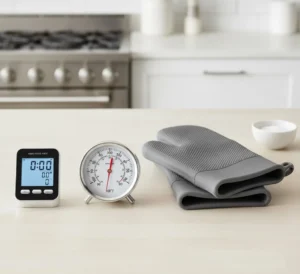
Before you begin learning how to test oven temperature, it’s important to gather the right tools. Having everything ready makes the process simple, quick, and accurate. Here’s what you’ll need:
- Oven thermometer – This is the most important tool for your DIY test. Both digital and analog thermometers work well. It shows the true temperature inside your oven, so you can compare it to the temperature setting.
- Timer or clock – You’ll need to track how long your oven takes to reach the set temperature and to ensure accurate readings during the test.
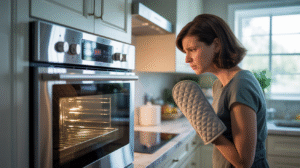
- Oven mitts – Safety first! You’ll be handling a hot oven, so protect your hands with sturdy oven mitts.
- Optional: Notebook or paper – Recording your results can help you track your oven’s accuracy over time and note any temperature adjustments you may need to make.
By gathering these tools, you’re all set to perform a simple and effective oven temperature accuracy test that ensures your baked goods turn out perfectly every time.
Step-by-Step Guide to Test Oven Temperature
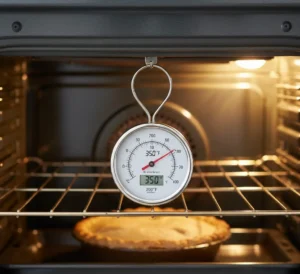
Performing a DIY oven temperature check is easier than you might think. By following these steps, you can accurately determine whether your oven heats to the temperature you set.
Step 1 – Preheat Your Oven
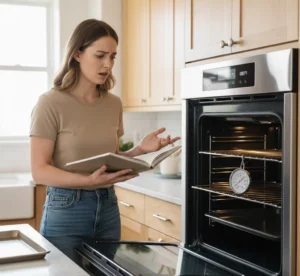
Start by setting your oven to a specific temperature, such as 350°F (175°C). Allow the oven to fully preheat before you begin the test. This ensures that the thermometer measures a stable temperature, giving you accurate results. Knowing how to test oven temperature starts with a fully preheated oven.
Step 2 – Place the Thermometer
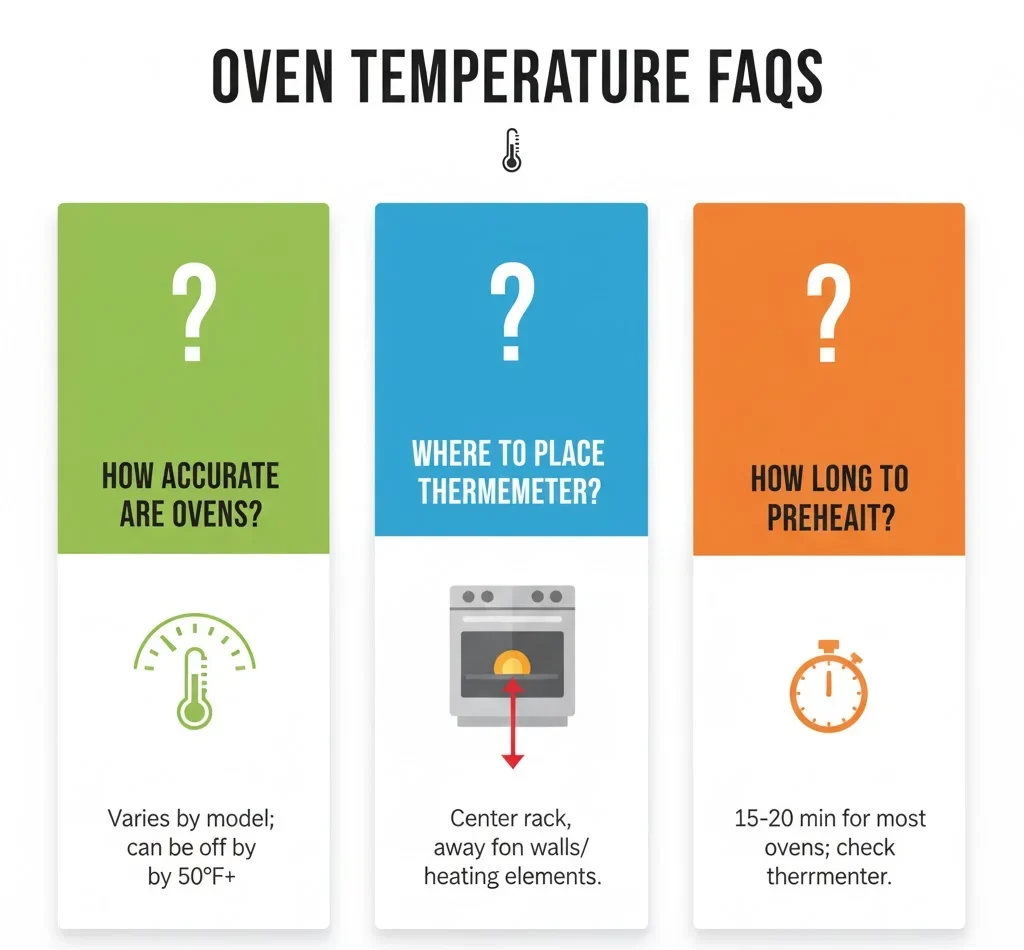
Place an oven thermometer in the center of the oven, avoiding contact with the walls or heating elements. The center placement provides the most accurate reading, as the edges of the oven may be slightly hotter or cooler than the middle.
Step 3 – Monitor the Temperature
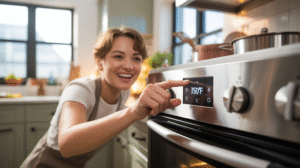
Wait 10–15 minutes for the thermometer reading to stabilize. Then compare the thermometer’s temperature to the oven setting. This simple check tells you immediately if your oven runs hotter, cooler, or just right. Using this method is the easiest way to perform an oven temperature accuracy test at home.
Step 4 – Record Results
Write down any differences you notice. For example, if your oven is set to 350°F but the thermometer shows 340°F, you know it’s slightly cooler than intended. Repeat this test at different temperature settings to see if the variation changes. Recording these results helps you adjust recipes or consider oven calibration for consistent baking.
Tips for Accurate Results
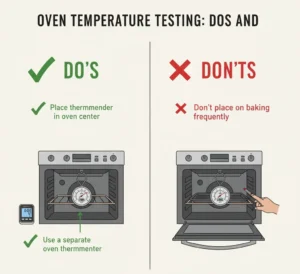
Once you know how to test oven temperature, following a few simple tips will help ensure your results are as accurate as possible:
- Let the oven preheat completely – Always allow your oven to reach the set temperature before taking readings. Preheating fully ensures that the thermometer measures the true cooking temperature, not a partially heated oven.
- Avoid opening the door frequently – Every time you open the oven, heat escapes, causing temperature fluctuations. Keep the door closed while testing for more reliable results.
- Test at multiple temperature points – Checking your oven at only one temperature may not reveal all inconsistencies. Test at low, medium, and high settings to get a complete picture of your oven’s accuracy.
- Use a reliable, quality thermometer – A cheap or faulty thermometer can give misleading readings. Invest in a quality digital or analog thermometer to make your oven temperature accuracy test dependable.
Following these simple practices will help you get precise results and ensure your oven performs consistently for all your recipes. Accurate testing leads to better baking and cooking outcomes every time.
Common Mistakes to Avoid

When learning how to test oven temperature, even small mistakes can lead to inaccurate results. Here are the most common errors to watch out for:
- Placing the thermometer near oven walls or heating elements This can give false readings because the edges of the oven often run hotter or cooler than the center. Always place your thermometer in the middle for the most accurate results.
- Not waiting for the oven to preheat fully Taking a temperature reading too early can mislead you about your oven’s true performance. Always allow the oven to reach the set temperature before checking.
- Ignoring temperature variations across the oven Many ovens have hot and cool spots. Testing only one area can give a false sense of accuracy. Consider checking multiple spots if you notice uneven baking.
- Using a faulty or cheap thermometer A low-quality thermometer can give inconsistent readings, making your oven temperature accuracy test unreliable. Invest in a dependable thermometer to get trustworthy results.
Avoiding these mistakes ensures your readings are precise, helping you bake and cook with confidence. Proper testing prevents wasted ingredients and improves overall cooking outcomes.
FAQs
How often should I test my oven temperature?
It’s a good idea to perform an oven temperature accuracy test every few months, especially if you bake frequently. Testing after moving your oven or after heavy use can also help ensure consistent results.
Can I adjust my oven if it’s too hot or too cold?
Some ovens allow manual calibration through the settings or by following the manufacturer’s instructions. If your oven is slightly off, you can also adjust cooking times or temperatures based on your oven temperature test results.
Will all ovens have the same accuracy?
No, oven accuracy varies by brand, model, and age. Older ovens or inexpensive models may have larger temperature differences, which is why learning how to test oven temperature is essential for reliable baking.
Can I use a digital thermometer instead of an analog one?
Yes, both digital and analog oven thermometers work well. Digital thermometers may offer faster readings and more precise measurements, making your oven temperature accuracy test easier and more accurate.
Conclusion
Testing your oven’s temperature doesn’t have to be complicated. By following this simple DIY guide, you can easily determine whether your oven is heating accurately. Knowing how to test oven temperature ensures your cakes, bread, and other baked goods turn out perfectly every time.
Regularly checking your oven not only improves your cooking results but also prevents wasted ingredients and time. Take a few minutes to perform an oven temperature accuracy test and bake with confidence knowing your oven is reliable and consistent.