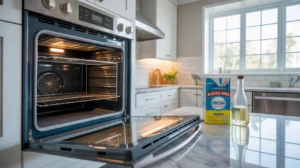
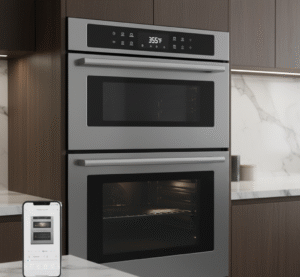
If you’ve ever baked cookies that turned out half raw or a pizza with a soggy crust, the culprit was probably your oven, not your recipe. Learning how to preheat oven properly can make the difference between undercooked disappointment and golden, evenly baked perfection.
In this guide, you’ll discover how to preheat oven step by step, whether you’re using a gas, electric, or convection model. We’ll explain why preheating matters, how long it really takes, and the simple habits that make baking, roasting, or reheating faster and more reliable.
TL;DR: Preheating means setting your oven to the right temperature and waiting until it’s fully hot before adding food. Mastering how to preheat oven correctly ensures even cooking, better texture, and consistent results every time.
Check this video The correct way to preheat an oven
Why Preheating Matters
What “Preheat” Actually Means
When you learn how to preheat oven the right way, you’re not just turning on heat, you’re bringing the entire oven (air, racks, walls, and cookware) to a stable, even temperature. This process ensures thermal equilibrium, meaning your food starts cooking instantly and evenly once it’s inside. Without full preheating, the oven’s heat fluctuates, leading to uneven results.
How to Bake Potato in Oven | Crispy & Fluffy
What Preheating Affects
Understanding how to preheat oven correctly directly impacts how your food cooks. A properly heated oven affects:
- Rise – baked goods like cakes and bread need immediate heat to rise before the structure sets.
- Crust – roasting meats and baking pizzas need a hot surface for that crisp, golden crust.
- Texture & Timing – if you skip preheating, your dish may dry out or take longer to cook, throwing off timing and taste.
When Preheating Is Optional (and When It’s Not)
Preheating is essential for baking, roasting, and broiling, basically any recipe that depends on precise timing or texture. However, you can sometimes skip it for slow-cooked dishes, casseroles, or dehydrating foods, where gradual heat won’t ruin the outcome. But if you want consistent results every time, mastering how to preheat oven is always worth the few extra minutes.
Oven Not Heating Up? 5 Easy Fixes
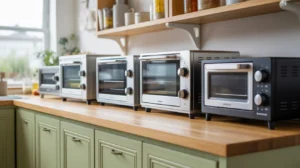
 Gas vs Electric vs Convection | Quick Overview
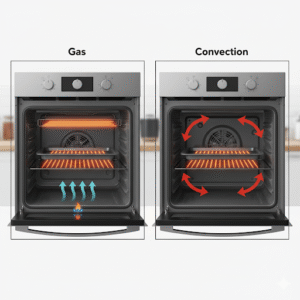 Gas vs Electric vs Convection | Quick Overview
How Each Oven Type Heats
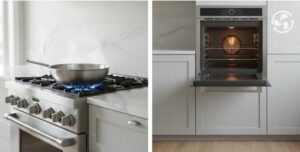
To understand how to preheat oven properly, it helps to know how each type generates heat:
- Gas ovens use an open flame that warms the air quickly but adds humidity, great for roasting meats and veggies.
- Electric ovens rely on heating coils that deliver steady, even heat, ideal for cakes, cookies, and baked goods.
- Convection ovens circulate hot air with a built-in fan, which speeds up preheating and ensures even browning.
How Design Affects Preheat Time and Food Outcome
Each design impacts both how long the oven takes to heat and how your food cooks:
- Gas heats faster but may fluctuate in temperature.
- Electric holds consistent heat but takes a few extra minutes to reach target temperature.
- Convection needs less time overall because the fan distributes air evenly.
When to Prefer Convection vs Conventional
- For baking: Stick to conventional (non-fan) mode when you want a gentle, even rise for cakes or bread.
- For roasting: Choose convection mode to crisp up potatoes, vegetables, or poultry evenly.
- For reheating or multitasking: Convection saves time and energy.
Learning how to preheat oven based on your specific model helps you adjust recipes more accurately and achieve consistent results every time.
5 Best Oven Thermometer 2026 – Accurate Picks
 How Long to Preheat an Oven | Quick Reference
 How Long to Preheat an Oven | Quick Reference
Short Answer Summary (Helping Keyword)
Most ovens take 10–15 minutes to preheat, depending on temperature:
- To 350°F (177°C): 10–12 minutes (convection: 7–9 minutes).
- To 400°F (204°C): 12–15 minutes (convection: 9–11 minutes).
- To 450°F (232°C): 15–20 minutes (convection: 10–12 minutes).
This directly answers the common query: how long to preheat oven.
Factors That Change Preheat Time
- Oven age & efficiency – older ovens may take longer.
- Size & insulation – bigger ovens or poorly insulated ones need more time.
- Starting temperature – winter kitchens = longer preheats.
- Empty vs loaded oven – a baking stone, cast iron, or multiple pans absorb heat, slowing preheat.
- Voltage (for electric) – low voltage = slower coil heating.
When the Oven “Indicator” Isn’t Enough
- Many ovens beep or flash “ready” once the air reaches the set temperature – but the walls, racks, and cookware may still be cooler.
- For reliable results, let it sit an extra 5 minutes after the indicator.
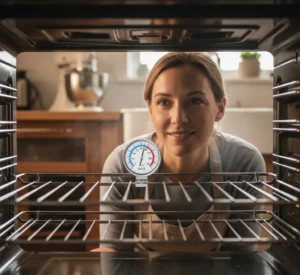
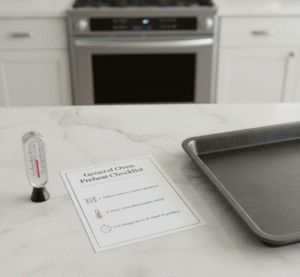
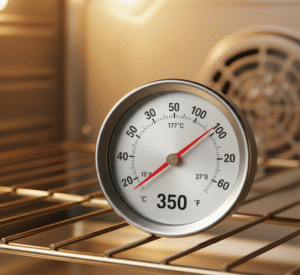
- Better yet, place a small oven thermometer on the middle rack to know when the entire oven is truly at the right temperature.
 Step-by-Step Guide | Universal Prep
 Step-by-Step Guide | Universal Prep
1. Prep Checklist Before Turning the Oven On
Before you touch the dial, do a quick 30-second check:
- Clear the oven – remove trays, foil, or pans left inside.
- Check racks – position them where you’ll need them (middle for most baking, upper for broiling, lower for roasting).
- Choose cookware – glass and ceramic heat slower, metal heats faster. Have it ready to go.
This small prep step saves you from opening the door mid-preheat, which causes heat loss.
2. Set the Temperature and Mode
- Turn the dial or press the digital controls to your recipe’s temperature.
- Choose the right mode:
- Bake (conventional): default, steady bottom + top heat.
- Convection (fan): faster, more even cooking. Reduce recipe temp by ~25°F (15°C).
- Broil/Grill: high top heat only, for fast browning.
- Bake (conventional): default, steady bottom + top heat.
3. Wait for the Indicator + Add a Few Minutes
- Your oven’s light or beep signals that the air inside has reached the set temperature.
- For best accuracy, wait an extra 5 minutes so the walls, racks, and cookware are equally hot.
4. Confirm with an Oven Thermometer
- Place a simple oven thermometer on the center rack.
- Check if it matches your setting – ovens can be off by 10–30°F.
- Adjust with a few degrees up/down if needed, or make a note for next time.
 Step-by-Step: Preheating for Each Oven Type
 Step-by-Step: Preheating for Each Oven Type
Preheating a Gas Oven
- Open the oven and make sure the flame or igniter is working.
- Set the temperature using the dial or controls.
- Close the door and let the oven warm up.
- Typical time: 8–12 minutes to 350°F (177°C).
- Tip: Gas ovens may heat unevenly – rotate pans halfway if baking multiple trays.
Preheating an Electric Oven
- Set the desired temperature with the dial or digital panel.
- Allow coils to glow red and cycle until stable.
- Wait for the indicator, plus 5 extra minutes.
- Typical time: 10–15 minutes to 350°F (177°C).
- Tip: Electric ovens hold temperature more consistently ideal for precise baking.
Preheating a Convection Oven
- Select convection bake mode and set temperature.
- Fan kicks in automatically to circulate heat.
- Wait for the indicator, plus 2–3 extra minutes.
- Typical time: 7–9 minutes to 350°F (177°C).
- Tip: Lower recipe temp by 25°F (15°C) and reduce baking time slightly.
Special Case: Broil & Grill Preheats
- Broil mode heats the top element quickly.
- Preheating takes only 3–5 minutes.
- Place your rack before starting, since moving it mid-preheat wastes heat.
- Keep food close to the top element for fast browning.
Special Case: Pizza Stone or Cast-Iron Skillet
- These heavy materials absorb and store heat.
- Even if the oven beeps, they need 20–30 extra minutes to fully heat through.
- A properly heated stone/skillet ensures crisp pizza crusts and evenly browned bread.
Notes on Ranges & Extra Time
- Pizza stones or cast-iron cookware: add 20–30 minutes beyond preheat for them to soak through.
- Large roasts or full oven loads: add 5–10 minutes to stabilize after the oven beeps “ready.”
- Older ovens may run slower, check with an oven thermometer to be sure.
- Convection mode often shaves off 2–5 minutes, but you still need to confirm the rack and cookware are fully heated.
Tips & Pro Tips for Preheating
Use an Oven Thermometer
Your oven’s built-in indicator isn’t always accurate. Place a small, inexpensive oven thermometer on the 1. Use an Oven Thermometer – How to Read & Place It
Even if your oven beeps “ready,” it might still be off by 10–30°F. To truly master how to preheat oven accurately, place an oven thermometer in the center rack (not near the door or wall). Wait until it reads your target temperature before starting to bake. This small habit ensures your food cooks evenly every time.
- How to Speed Up Preheating Safely
Want to shave a few minutes off preheating time? Here’s how to preheat oven faster without damaging it:
- Keep the door shut, every open drops the temperature by up to 50°F.
- Avoid “hacks” like setting the oven to max heat this stresses the elements.
- Use convection mode if available; the fan helps distribute heat more quickly.
- Best Cookware & Rack Placement for Even Heat
Before you start cooking, position the rack where it matches the recipe:
- Middle rack for even baking (cookies, cakes, casseroles).
- Lower rack for crispy pizza or roasting.
- Upper rack for quick browning or broiling.
Preheat the cookware too, especially pizza stones or cast-iron pans, so they retain heat the moment food touches them.
- When to Start the Recipe Timer
Always start your recipe timer after the oven is fully preheated, not when it beeps, but once the temperature holds steady for a minute or two. This ensures precise timing and consistent texture, especially for baked goods.
- Energy & Safety Tips
- Don’t leave an oven running empty for long, it wastes energy.
- Check that your oven’s door seal is clean and tight.
- Keep kids and pets away during preheating.
- Clean spills regularly to prevent smoke and uneven heating.
 Common Mistakes (and How to Fix Them)
 Common Mistakes (and How to Fix Them)
Mistake 1: Trusting the Indicator Light Alone
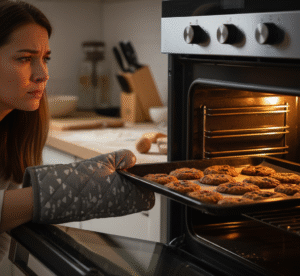
- Most ovens flash a light or beep when they think they’ve reached the set temperature, but that doesn’t always mean they’re truly ready. To really understand how to preheat oven properly, always verify with an oven thermometer. This ensures your oven walls, racks, and air temperature are evenly heated before cooking.
How to Bake Sweet Potatoes in the Oven
Mistake 2: Opening the Door During Preheat
- Every time you open the door, heat escapes, sometimes dropping the temperature by 50°F or more. Plan ahead: place your cookware, racks, and thermometer before you start. When learning how to preheat oven, patience pays off, keeping the door closed helps it heat faster and stay consistent.
Mistake 3: Wrong Rack or Foil Position
- Leaving a baking sheet or foil in the wrong place can block airflow, making the oven heat unevenly. Always position racks before turning the oven on, based on what you’re cooking. This simple habit improves results and helps you master how to preheat oven for both baking and roasting.
Mistake 4: Ignoring Cold Cookware or Pizza Stones
- Cold pizza stones, baking steels, or cast iron take longer to absorb heat. Even if your oven beeps “ready,” those heavy surfaces might still be cool. Give them an extra 20–30 minutes to fully heat, it’s the secret to crisp crusts and perfect sears.
Mistake 5: Mixing Up Bake and Broil
- Bake mode heats from the bottom for even cooking. Broil heats from the top for quick browning or melting. Mixing them up can ruin recipes or scorch the top layer before the inside cooks. Always double-check your setting before preheating.
Troubleshooting
Oven Won’t Reach Temperature
If your oven seems stuck and never gets as hot as you set it:
- Check the thermostat or sensor, it may need recalibration.
- Inspect the door seal (gasket), a worn or loose seal lets heat escape.
- Look for blocked vents, clear away foil or pans that could restrict airflow.
- Verify with an oven thermometer, sometimes it’s heating fine, but the built-in sensor is inaccurate.
- If none of these solve it, your oven may need professional servicing (igniter replacement in gas ovens or heating element in electric).
Oven Temperature Fluctuates
Does your oven swing hot and cold while baking? That’s more common than you think.
- Normal cycling: Ovens turn heat on and off to maintain temp, small swings (10–15°F) are normal.
- Excessive swings (30–50°F): could be a faulty thermostat or heating element.
- Quick fixes:
- Use the middle rack for the most stable heat.
- Rotate trays halfway through baking to even things out.
- Try an oven thermometer to see the real pattern.
- Use the middle rack for the most stable heat.
- If it fluctuates too much, it may need calibration or repair.
Indicator Says “Preheated,” But Food Undercooks
If your oven beeps “ready,” but your cake is raw inside or pizza dough stays pale:
- The issue: The air heats faster than the oven walls, racks, and heavy cookware. Your food is going into a partially warmed oven.
- Solution:
- After the “preheated” signal, wait 5 extra minutes for full stabilization.
- Use a thermometer on the middle rack to confirm.
- For stones, cast iron, or baking steel, allow 20–30 minutes extra soak time.
- After the “preheated” signal, wait 5 extra minutes for full stabilization.
- This small wait ensures your food starts in a truly hot, even environment, and cooks as recipes intend.