Dehydrating fruit is the process of removing moisture from fresh fruit to preserve it for longer periods while concentrating its natural flavors and nutrients. This method transforms juicy fruit into chewy, flavorful snacks that are perfect for on-the-go, baking, or even gift jars.
The great news is you don’t need an expensive dehydrator to enjoy this healthy treat. With just your home oven, you can easily make dehydrated fruit anytime. Learning how to dehydrate fruit in oven is simple, cost-effective, and surprisingly quick once you know the steps.
By dehydrating fruit at home, you can:
- Enjoy healthy, preservative-free snacks anytime.
- Save money by reducing food waste and preserving seasonal fruits.
- Create long-lasting treats that are convenient for travel, school lunches, or recipes.
What is Fruit Dehydration?
Fruit dehydration is simply the process of removing water from fruit. By drying fruit, you slow down the growth of bacteria and mold, extending its shelf life. The result is a concentrated, naturally sweet snack that retains most of its vitamins and minerals.
Benefits of Dehydrating Fruit at Home
- Healthy Snacks: No added sugar or preservatives unless you choose to add them.
- Cost-Effective: Preserve extra fruit before it spoils.
- Customizable: Add your favorite flavors like cinnamon, lemon, or ginger.
- Versatile: Use dehydrated fruit in cereal, baking, or as standalone snacks.
What You’ll Need to Dehydrate Fruit in the Oven
Before you start, it’s important to gather all the tools and ingredients you’ll need. Having everything ready makes the process smoother and ensures your fruit dehydrates evenly. This section will guide you through the essentials for a successful at-home fruit dehydration.
Best Fruits for Oven Dehydration
Almost any fruit can be dehydrated, but some work better than others for flavor, texture, and drying time. Here are some beginner-friendly options:
- Apples: Sweet or tart varieties, sliced thinly for quick dehydration.
- Bananas: Perfect for chewy snacks or chips; slice evenly.
- Strawberries: Slice into halves or thin rounds for faster drying.
- Pineapple: Tropical flavor with slightly longer drying time.
- Mangoes: Naturally sweet and chewy when dried.
- Blueberries: Can be dried whole but may require slightly longer oven time.
Tip: Choose ripe, firm fruit without bruises for the best results. Wash and peel (if needed) before slicing evenly.
Essential Equipment for Beginners
You don’t need fancy appliances to dehydrate fruit at home. Here’s what you’ll need for your oven fruit dehydration guide:

- Oven: A standard home oven that can maintain a low temperature.
- Baking Sheets: Flat trays to lay out the fruit slices.
- Parchment Paper or Silicone Mats: Prevent sticking and make cleanup easier.
- Wire Racks (optional but recommended): Allow air circulation for more even drying.
- Sharp Knife & Cutting Board: For slicing fruit evenly.
- Airtight Containers: To store the dehydrated fruit once cooled.
Optional Additions:
- Light sugar sprinkle or natural spices like cinnamon or ginger for extra flavor.
With these tools and ingredients, you’re ready to move on to the step-by-step process of how to dehydrate fruit in oven, ensuring perfectly dried, tasty snacks every time.
Step-by-Step Guide to Dehydrate Fruit in the Oven
Dehydrating fruit at home is easier than you might think. By following this simple step-by-step guide, you can enjoy healthy, chewy snacks without a dehydrator. Learn how to dehydrate fruit in oven effectively and safely with these beginner-friendly steps.
1. Prepare the Fruit

- Wash all fruit thoroughly under running water.
- Peel fruit if necessary (apples, pears, mangoes).
- Slice fruit evenly—thinner slices dry faster and more evenly.
- Remove pits, cores, or seeds to ensure smooth drying.
Pro Tip: Uniform slices are the secret to consistent results. Try to keep slices around 1/8–1/4 inch thick.
2. Preheat Your Oven
Set your oven to 140–170°F (60–75°C) for low-temperature drying.
If your oven doesn’t go that low, use the lowest possible setting and leave the oven door slightly ajar for airflow.
Why Low Heat Matters: Slow drying preserves nutrients and prevents the fruit from burning or caramelizing.
3. Arrange Fruit on Baking Sheets
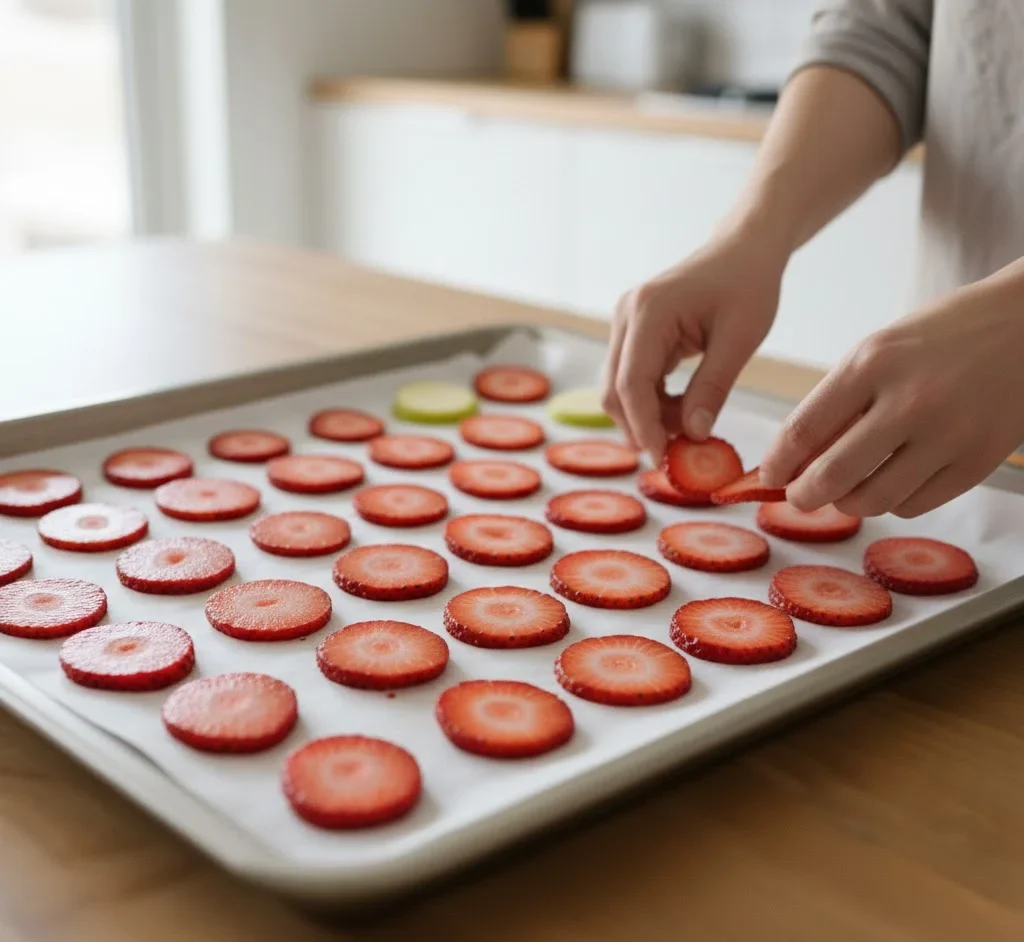
- Line baking sheets with parchment paper or a silicone mat.
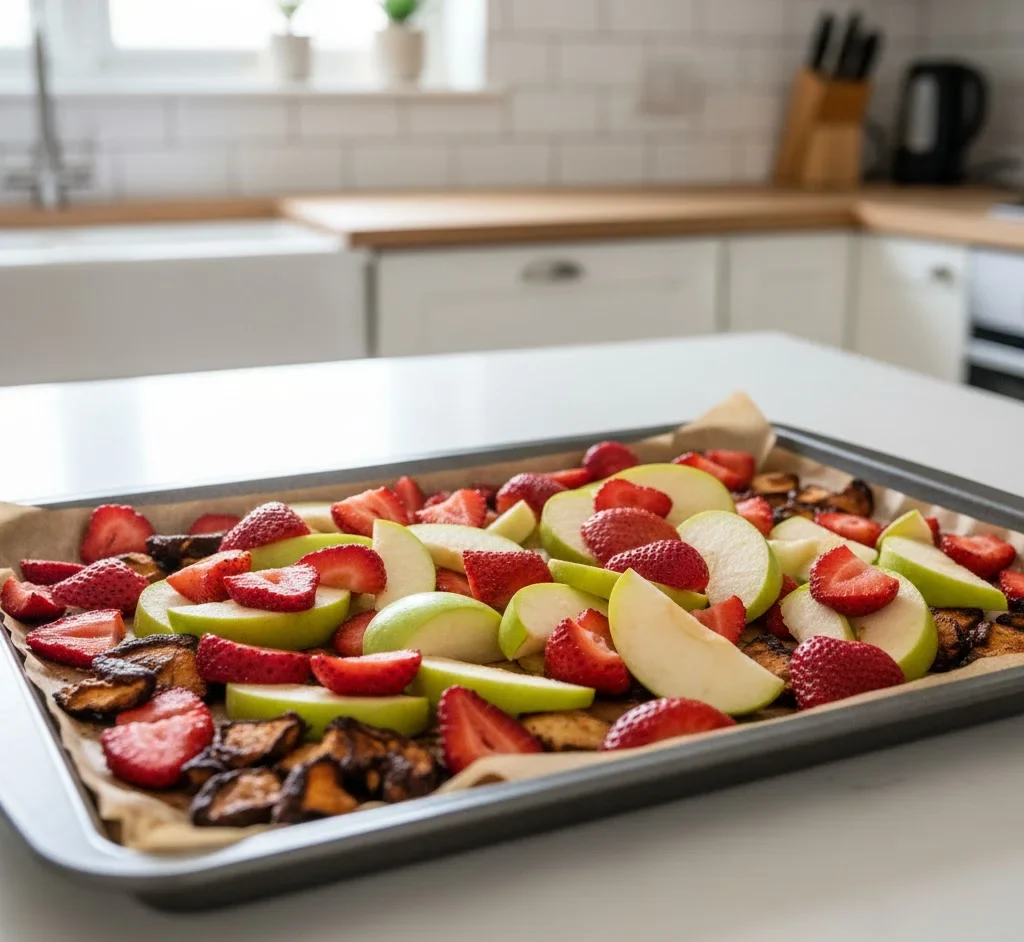
- Arrange fruit slices in a single layer with space between them for proper airflow.
- Optional: Place slices on wire racks for more even dehydration.
Tip: Avoid overcrowding; this can trap moisture and lead to unevenly dried fruit.
4. Dehydrate the Fruit
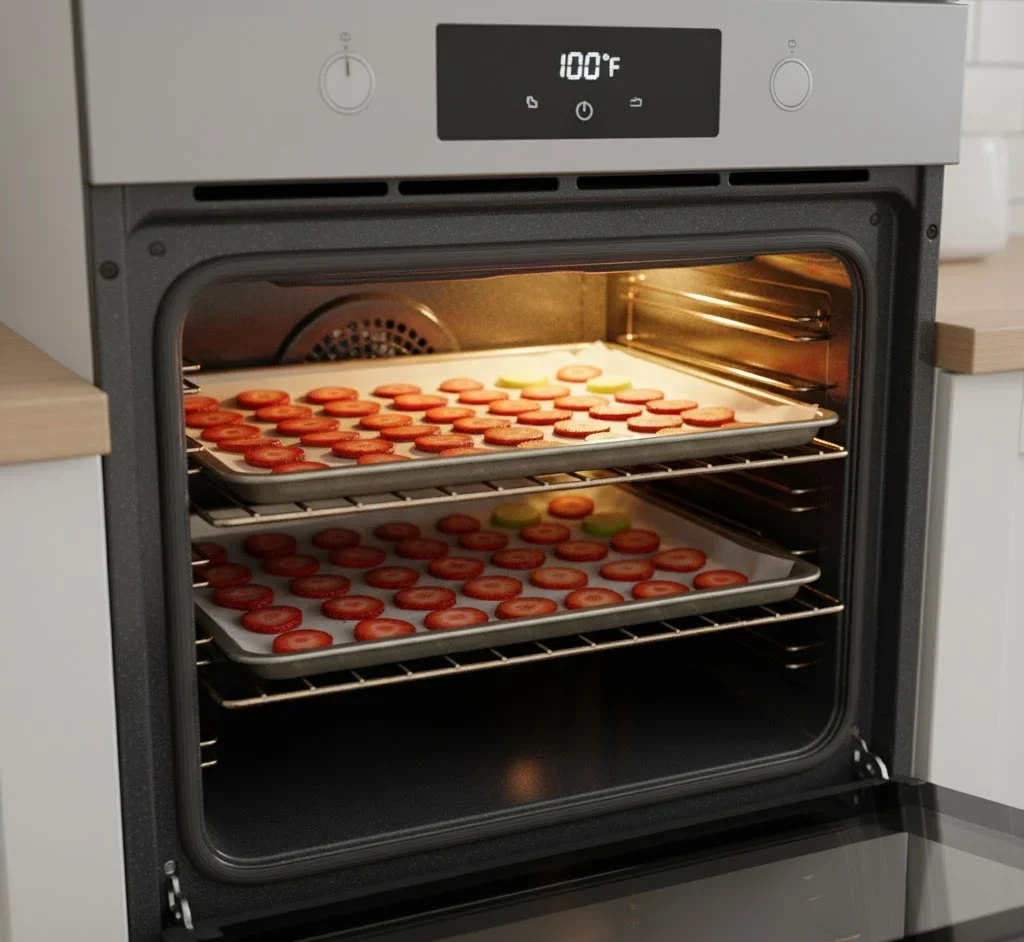
- Place trays in the oven and allow fruit to dry slowly.
- Approximate drying times:
- Apples, pears: 6–8 hours
- Strawberries: 4–6 hours
- Bananas: 6–8 hours
- Mangoes: 8–10 hours
- Rotate trays halfway through for even drying.
Pro Tip: Check fruit periodically, especially after the minimum time. Oven temperatures can vary, affecting drying time.
5. Check for Doneness
- Dehydrated fruit should be flexible but not sticky or wet.
- Apples and pears: leathery and pliable
- Bananas and mangoes: slightly chewy
- Strawberries and smaller berries: no moisture pockets inside
Test Tip: Let a slice cool slightly and fold it. If water beads appear or it tears easily, it needs more time.
6. Cool and Store Properly

- Let the fruit cool completely before storing.
- Store in airtight containers like glass jars or resealable bags.
- Keep in a cool, dry place away from sunlight.
- Properly stored fruit can last 6–12 months depending on type.
Bonus Tip: Consider freezing batches for even longer shelf life.
This step-by-step guide ensures anyone can master how to dehydrate fruit in oven without a dehydrator and enjoy healthy homemade snacks anytime.
Tips for Perfect Oven-Dehydrated Fruit
Even with the easiest method, a few simple tips can make a big difference when learning how to dehydrate fruit in oven. Follow these tips to ensure your fruit dries evenly, tastes delicious, and lasts longer:
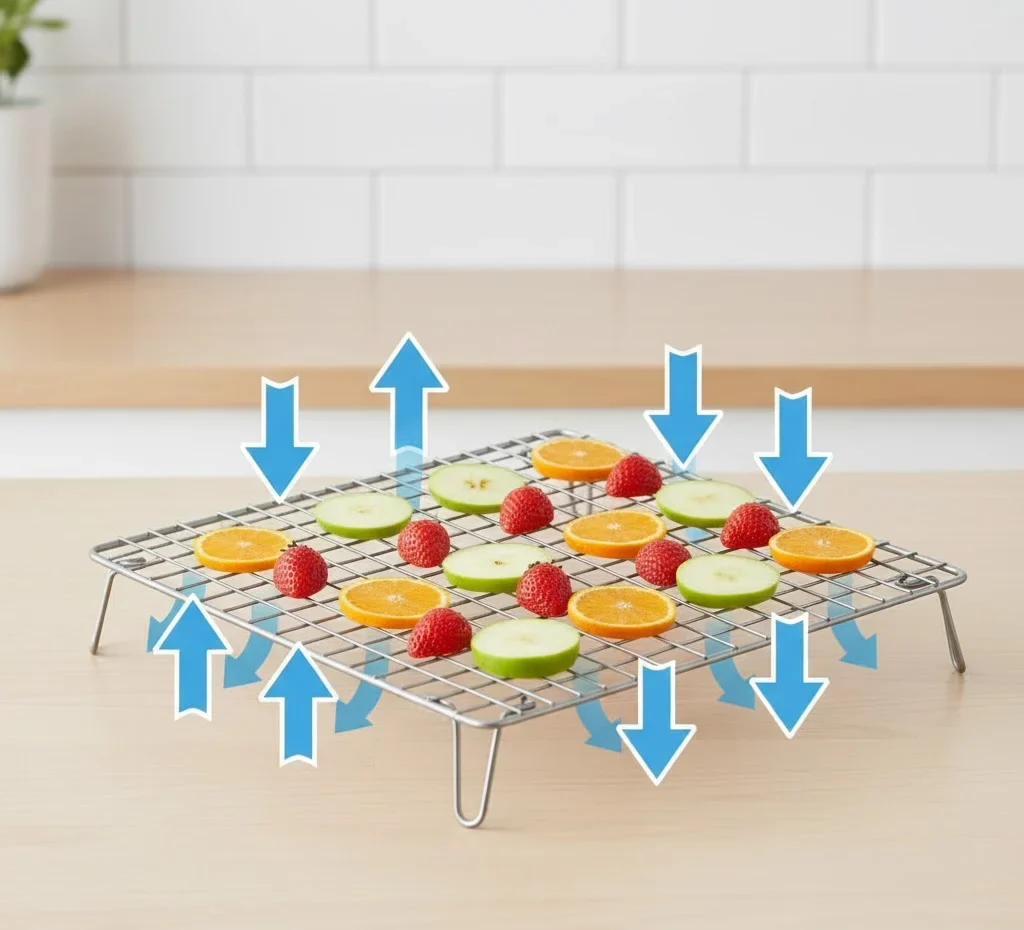
Rotate Trays for Even Drying
If you’re using multiple baking sheets, rotate them halfway through the drying process. This helps all slices receive uniform heat and airflow, preventing some pieces from drying faster than others.
Slice Fruit Uniformly
Consistent thickness ensures that all pieces dehydrate at the same rate. Thin slices dry faster, while thicker slices may stay moist inside.
Use a Fan if Available
Even a small countertop fan can improve air circulation in the oven, speeding up dehydration and helping prevent sticky spots.
Avoid Overcrowding the Oven
Leave space between fruit slices and between trays. Crowding can trap moisture, slow drying, and result in uneven texture.
Common Mistakes to Avoid
When learning how to dehydrate fruit in oven, beginners often make avoidable errors. Here’s what to watch out for:
Fruit Slices Too Thick or Uneven
Uneven slices lead to inconsistent drying. Thick slices may stay moist inside while thin slices over-dry or burn.
Oven Too Hot
High temperatures can caramelize sugars too quickly or burn the edges. Stick to low, slow heat for the best results.
Not Using Racks or Parchment Paper
Fruit can stick to trays, making removal difficult. Using parchment paper or wire racks prevents sticking and allows better airflow.
Improper Storage
Storing fruit while still warm or in a humid container can cause mold growth. Always cool completely and use airtight containers in a dry, cool spot.
Frequently Asked Questions (FAQs)
1. How long does it take to dehydrate fruit in the oven?
The drying time depends on the type of fruit, slice thickness, and oven temperature. On average:
- Apples and pears: 6–8 hours
- Bananas: 6–8 hours
- Strawberries: 4–6 hours
- Mangoes: 8–10 hours
Check your fruit periodically. The goal is flexibility without moisture, so times may vary slightly.
2. Can I dehydrate fruit without a dehydrator?
Yes! You can easily learn how to dehydrate fruit in oven at home. A conventional oven at low temperatures with proper airflow works just as well as a dedicated dehydrator.
3. How do I know when fruit is fully dehydrated?
Fruit should be pliable but not sticky.
- Smaller fruits like berries should have no moisture pockets.
- Test by letting a slice cool and folding it; if no water appears and it holds shape, it’s ready.
4. Can I dehydrate citrus fruits?
Absolutely! Citrus slices like oranges, lemons, and limes can be dehydrated, though they may take slightly longer. Use thin slices, and consider placing them on a wire rack to prevent sticking.
5. How should I store dehydrated fruit?
Cool completely before storing.
- Use airtight containers such as glass jars or resealable bags.
- Keep in a cool, dry place away from sunlight.
- Properly stored fruit can last 6–12 months. Freezing can extend shelf life further.
Conclusion
Dehydrating fruit at home is a simple, healthy, and cost-effective way to enjoy flavorful snacks all year round. By following this guide on how to dehydrate fruit in oven, you can preserve seasonal fruits, reduce waste, and experiment with your favorite flavors.
Start with basic fruits like apples or strawberries, try different spices or citrus slices, and enjoy the satisfaction of homemade, naturally sweet snacks. Healthy, long-lasting, and delicious oven-dehydrated fruit is a treat everyone can make at home!