Why Oven-Baked Salmon Is the Easiest Way to a Perfect Meal
If you’ve ever wondered how to cook salmon in oven perfectly every single time, you’re about to discover the simplest, most foolproof method. Oven baking is hands-down the easiest way to get salmon that’s moist, flaky, and full of flavor with no fancy tools or chef skills required.
The beauty of this method is how consistent and hands-off it is. Once you set your salmon bake oven temp, the oven takes care of everything while you prep your sides or set the table. No flipping, no splattering oil, just tender, buttery salmon that practically melts in your mouth.
Whether you’re cooking for one, meal prepping for the week, or impressing dinner guests, learning how to cook salmon in oven means you’ll never have to deal with dry, overcooked fish again. It’s quick, simple, and delicious, a kitchen win every time!
 What You Need (Tools & Ingredients)
 What You Need (Tools & Ingredients)
Before diving into how to cook salmon in oven, make sure you have the right tools and ingredients ready. Having everything prepped makes the process smooth and ensures your salmon turns out moist, flavorful, and evenly cooked every time.
Tools
To master how to cook salmon in oven, a few simple kitchen essentials make all the difference:
- Baking sheet or rimmed pan Use one that can handle high heat without warping. A rimmed edge prevents juices from spilling.
- Parchment paper or aluminum foil keeps the fish from sticking and makes cleanup effortless.
- Instant-read thermometer The secret to never overcooking salmon. Aim for 125°F–130°F (52–54°C) for moist, flaky perfection.
- Oven thermometer Optional, but useful if your oven tends to run hot or cool. It helps ensure the correct salmon bake oven temp.
- Wire rack (optional) Lifts the salmon slightly, allowing air to circulate underneath for even cooking and crispier skin.
Pro Tip: If you bake salmon often, consider investing in a reusable silicone baking mat it’s non-stick, eco-friendly, and perfect for high-heat roasting.
Ingredients (Simple Pantry List)
You don’t need fancy ingredients to learn how to cook salmon in oven just a few basics for bold flavor:
- Salmon fillets or steaks fresh or frozen (thawed) work equally well.
- Olive oil or melted butter helps the salmon brown beautifully and stay juicy.
- Salt & black pepper The basic flavor foundation.
- Lemon adds brightness and helps balance the richness of the fish.
- Fresh herbs Dill, parsley, or thyme pair wonderfully with salmon.
- Optional glazes or flavor boosters:
- Honey + soy sauce for a sweet-savory glaze
- Dijon mustard + garlic for a punchy flavor
- Paprika or chili flakes for gentle heat
- Honey + soy sauce for a sweet-savory glaze
Pro Tip: Keep it simple for your first try. Even just olive oil, salt, pepper, and lemon can make an amazing baked salmon.
Choosing the Right Salmon
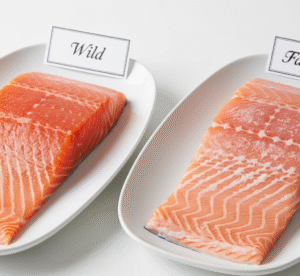 Choosing the Right Salmon
Not all salmon fillets are created equal. The type you choose affects both the flavor and how your fish cooks in the oven.
- Wild vs. Farmed:
- Wild salmon (like sockeye or coho) has a deeper color, leaner texture, and stronger flavor.
- Farmed salmon (like Atlantic salmon) is milder, higher in fat, and stays juicier when baked great for beginners.
- Wild salmon (like sockeye or coho) has a deeper color, leaner texture, and stronger flavor.
- Skin-On vs. Skinless:
- Skin-on fillets help protect the flesh from heat and add extra flavor. The skin peels off easily after baking.
- Skinless fillets work well for foil packets or parchment-baked recipes.
- Skin-on fillets help protect the flesh from heat and add extra flavor. The skin peels off easily after baking.
- Portion Size:
- A standard serving is 4–6 oz (110–170 g) per person.
- For even cooking, choose fillets that are similar in thickness about 1 to 1.5 inches thick is ideal for baking evenly.
- A standard serving is 4–6 oz (110–170 g) per person.
Pro Tip: If you’re unsure, ask your fishmonger for center-cut fillets they’re uniform in shape and perfect for oven cooking.
Prep – How to Get Salmon Ready for the Oven
Before we dive into how to cook salmon in oven, proper prep is what sets you up for success. The right thawing, drying, and seasoning steps ensure your salmon turns out tender, flavorful, and evenly baked at your ideal salmon bake oven temp. [Best Wall Oven]
Thawing Safely (If Frozen)
If you’re using frozen salmon, proper thawing ensures it cooks evenly and stays moist. Avoid quick-defrosting in hot water or microwaves; those methods partially cook the fish and ruin texture.
Best thawing methods:
- Refrigerator method (overnight):
- Place the sealed salmon in a dish or shallow bowl in the fridge for 8–12 hours.
- Safest and best for flavor retention.
- Place the sealed salmon in a dish or shallow bowl in the fridge for 8–12 hours.
- Quick thaw (same day):
- Submerge the sealed salmon (in airtight plastic) in a bowl of cold water for 30–45 minutes.
- Change water every 15 minutes to keep it cold.
- Submerge the sealed salmon (in airtight plastic) in a bowl of cold water for 30–45 minutes.
Pro Tip: Once thawed, cook salmon within 24 hours for best freshness and flavor. Never refreeze raw fish after thawing.
Patting Dry and Trimming
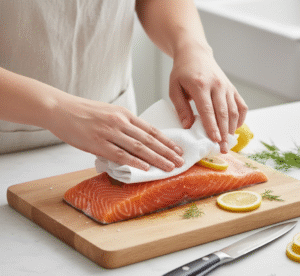 Patting Dry and Trimming
After thawing (or if your salmon is fresh), gently pat it dry with paper towels. Removing surface moisture helps in two ways:
- It allows the seasoning and oil to stick better.
- It helps the fish bake evenly and brown slightly on the edges instead of steaming.
Trim off any thin belly pieces or uneven edges if needed; those can overcook faster. Aim for an even thickness so the whole fillet cooks at the same pace.
Pro Tip: If you love crispier skin, pat the skin side extra dry moisture prevents that satisfying crisp.
Seasoning Basics
Once your fish is thawed and dry, it’s time to flavor it up. When learning how to cook salmon in oven, seasoning doesn’t need to be complicated; simplicity lets the fish shine.
- Salt timing:
- For best flavor, salt your salmon 10–15 minutes before baking. This allows the salt to penetrate slightly and enhance juiciness.
- Simple rubs:
- Mix olive oil with salt, pepper, and a pinch of paprika or garlic powder for a classic base.
- Marinades:
- Ideal for adding bold flavors (e.g., soy-honey, mustard-dill). Marinate for 15–30 minutes max too long and acid-based marinades can “cook” the surface.
- Dry seasonings vs. sauces:
- Use dry rubs for crispier finishes; use glazes or sauces for moisture and shine.
Pro Tip: Add citrus (like lemon slices or zest) after baking to keep it bright and fresh baking lemon juice too long can turn it bitter.
Skin On vs Skin Off – Which to Choose and Why
This depends on your cooking style and preference:
- Skin-On Salmon:
- Acts as a protective barrier, keeping the delicate flesh from drying.
- Easier to handle (less likely to break apart).
- The skin crisps nicely if baked on a wire rack or at high heat.
- Best for baking directly on a sheet pan.
- Acts as a protective barrier, keeping the delicate flesh from drying.
- Skin-Off Salmon:
- Great for foil packets or parchment baking (en papillote).
- Soak up sauces or marinades more evenly.
- Easier to serve directly without removing skin.
- Great for foil packets or parchment baking (en papillote).
Pro Tip: If you’re unsure, keep the skin on while baking you can always remove it easily after cooking, once the fish has rested.
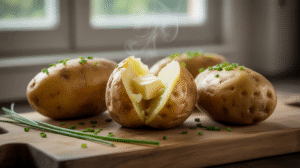
Also check these: How to Bake Potato in Oven
Tips for Perfectly Moist Salmon Every Time
When learning how to cook salmon in the oven, getting that perfectly moist, flaky texture can feel tricky, but it’s all about technique. With the right salmon bake oven temp, a little timing precision, and a few smart tricks, your fish will come out tender and juicy every single time. These expert tips will help you master how to cook salmon in oven like a pro, ensuring consistent results whether you’re baking one fillet or a whole side.
Use an Instant-Read Thermometer
 Use an Instant-Read Thermometer
This is your best friend for perfect results every time. Salmon can go from “just right” to overcooked in minutes, so internal temperature matters more than cook time.
- For moist, restaurant-style salmon: remove it when the center reaches 125°F–130°F (52–54°C).
- For fully opaque, firmer salmon: cook to 140°F–145°F (60–63°C) (USDA-safe).
Pro Tip: Always check at the thickest part of the fillet for the most accurate reading. This small step makes a huge difference when mastering how to cook salmon in oven perfectly.
Don’t Overcook – Remove at Target Internal Temp
Salmon keeps cooking even after it’s out of the oven due to residual heat (called carryover cooking). If you wait until it looks “done,” it’s already a little overdone inside.
- Remove the salmon 3–5°F before your target temperature.
- Let it rest (covered loosely with foil) to finish gently.
Quick guide:
If your goal is 130°F → remove at 125°F, rest for 3 minutes.
Rest the Fish 3–5 Minutes
This simple step keeps your salmon juicy. Resting allows the natural juices to redistribute throughout the flesh instead of running out the moment you cut in.
- After baking, let the salmon sit for 3–5 minutes on the pan or plate.
- Tent loosely with foil if you want to keep it warm.
Pro Tip: Avoid covering it tightly you’ll trap steam and lose that delicate flaky texture.
Low and Slow vs High Heat – When to Choose Each
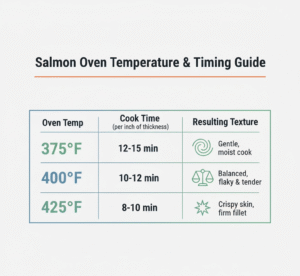
Different oven temps give different textures both delicious, depending on your goal.
- Low & Slow (375°F / 190°C):
- Yields softer, more evenly cooked fish.
- Ideal for thicker fillets, meal prep, or foil-packet salmon.
- Hard to overcook, very forgiving.
- Yields softer, more evenly cooked fish.
- High Heat (425°F / 218°C):
- Creates crisp edges and caramelized surfaces.
- Great for skin-on fillets or glazed salmon.
- Requires close timing check early to avoid dryness.
- Creates crisp edges and caramelized surfaces.
Pro Tip: Combine both methods bake low and finish with a quick 1–2 minute broil for a crispy top and moist center.
Use Skin to Protect Flesh and Add Flavor
Keeping the skin on while baking acts as a built-in moisture barrier. It prevents the delicate flesh from direct heat and adds extra flavor when crisped.
- Bake skin-side down on parchment or foil.
- Once baked, slide a spatula between skin and flesh to remove it easily.
Pro Tip: Even if you don’t eat the skin, it’s your best defense against overcooking when learning how to cook salmon in oven.
Brining or Salting Briefly for Juiciness
A short dry brine helps the fish retain moisture and enhances its natural flavor.
How to dry brine salmon:
- Sprinkle each fillet lightly with salt.
- Let it rest 10–15 minutes before baking.
- Gently pat dry again to remove excess moisture.
This draws out surface moisture and firms up the texture slightly, resulting in beautifully flaky, seasoned salmon.
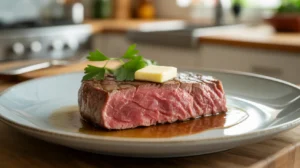
How to Cook Steak in the Oven Without a Cast Iron Pan
Pro Tip: You can add a touch of brown sugar to the brine for a subtle caramelized finish.
Use Compound Butter for Richness
Butter not only boosts flavor, it locks in moisture. A dollop of compound butter (butter mixed with herbs, garlic, or lemon zest) melts over the salmon as it bakes, basting it naturally.
Simple lemon-herb butter:
- Mix softened butter with minced garlic, chopped dill, lemon zest, and a pinch of salt.
- Add a small pat on top of each fillet before baking or right after for a glossy finish.
Pro Tip: Compound butter freezes well make a batch and slice off a piece whenever you bake fish.
Common Mistakes (and How to Avoid Them)
Even when you know how to cook salmon in oven, a few small missteps can make the difference between juicy, flaky fish and something dry or unevenly cooked. Here are the most common mistakes people make and how to fix them for perfect results every time.
Overcooking (How to Spot & Fix)
The number one reason salmon turns dry is overbaking. It’s easy to think “just a few more minutes” will make it safer to eat, but those extra minutes rob the fish of its tenderness.
How to avoid it:
- Use an instant-read thermometer that takes the guesswork out completely.
- Pull the salmon from the oven when it reaches 125°F–130°F (52–54°C) for moist, flaky results.
- Remember carryover cooking: the temperature will rise another 3–5°F as it rests.
How to fix it (if overcooked):
- Brush on a bit of olive oil, melted butter, or lemon-butter sauce before serving to add moisture back.
- Use leftovers in salads or creamy pastas where extra sauce can balance dryness.
Pro Tip: Slightly underdone salmon (translucent in the center) will continue to cook while resting don’t panic if it looks a bit soft when you take it out.
Cooking Uneven Fillets (Butterflying & Thickness Issues)
 Cooking Uneven Fillets (Butterflying & Thickness Issues)
A thick piece of salmon will cook slower than a thin tail-end piece, causing one side to be dry while the other is barely done.
How to avoid it:
- Choose even-sized fillets when buying.
- If one side is thinner, fold it under or butterfly the thicker section so the whole piece cooks evenly.
- Arrange fillets skin-side down and leave space between each for consistent heat circulation.
Pro Tip: If cooking multiple pieces, remove thinner ones a couple of minutes earlier and keep them warm under foil while the thicker ones finish.
Not Preheating the Oven / Wrong Oven Temp
Skipping preheat time or guessing the oven temperature can ruin the cooking process. An underheated oven will steam the fish instead of roasting it, while an overheated one burns the glaze before the center cooks through.
How to avoid it:
- Always preheat your oven fully before placing the salmon in.
- Use an oven thermometer to confirm accuracy. Many ovens run 10–20°F off.
- For most recipes, 400°F (204°C) is the sweet spot for a golden crust and tender center.
Pro Tip: For delicate fillets, lower to 375°F (190°C) for slower, more forgiving cooking.
Using Too Much Sugar in Glazes (Burn Risk)
Sweet glazes (like honey, maple, or brown sugar) caramelize beautifully but too much sugar or too high a temperature can make them burn before the salmon is done.
How to avoid it:
- Apply glazes halfway through baking, not at the start.
- Stick to 425°F (218°C) or below when using sweet ingredients.
- Mix sugar with acid (lemon, vinegar, soy sauce) or fat (butter, oil) to balance and slow down browning.
Pro Tip: For that glossy finish, brush on a second layer of glaze after baking and let the heat of the salmon slightly melt it.
Crowding the Pan (Steam vs. Roast)
 Crowding the Pan (Steam vs. Roast)
If salmon fillets are packed too tightly together, the oven’s heat can’t circulate properly. Instead of roasting, they steam. This results in pale, soggy fish with no browning.
How to avoid it:
- Leave at least 1–2 inches (2.5–5 cm) between fillets on the pan.
- Use a large baking sheet or two smaller ones if cooking multiple servings.
- Bake on parchment or foil, not directly in a deep dish, to allow airflow.
Pro Tip: For even more browning, place the salmon on a wire rack set over the baking sheet.
Skipping Rest – Why That Matters
Even if you’ve mastered how to cook salmon in oven, skipping the rest step can undo your work.
How to avoid it:
- Once you remove salmon from the oven, let it rest for 3–5 minutes before serving.
- Tent loosely with foil (not tightly sealed) to keep it warm without trapping steam.
Pro Tip: Use the resting time to quickly prepare your sauce, sides, or garnish your salmon will be perfectly moist and ready to plate.
How to Tell When Salmon Is Done (Visual + Thermometer Cues)
Learning how to cook salmon in oven perfectly comes down to one crucial step: knowing exactly when it’s done. Salmon can go from moist and flaky to dry and overcooked in just a minute, so mastering this part is key. Whether you’re baking at your favorite salmon bake oven temp or trying a new recipe, these simple cues will help you nail it every time.
Flakes Easily but Still Moist
The easiest visual cue is how the salmon flakes. When it’s perfectly cooked:
- The flesh should separate easily with a gentle press of a fork or your finger.
- The inside should look moist and slightly glossy, not dry or chalky.
- The surface should feel firm but spring back slightly when touched.
Pro Tip: Insert a fork at an angle into the thickest part of the fillet and twist gently if the flakes separate but the center still looks juicy, it’s ready.
Color Cues – Translucent Center vs. Opaque Flesh
Color is another great indicator, especially if you don’t have a thermometer handy.
- Undercooked salmon: Deep red or raw-looking in the center, translucent, and very soft.
- Perfectly cooked salmon: Light pink in the center with a touch of translucence; opaque around the edges.
- Overcooked salmon: Entirely pale and opaque, often dry and flaky all the way through.
Pro Tip: Remember, salmon continues to cook for a few minutes after leaving the oven, so it’s better to remove it when it still looks slightly translucent in the middle.
 Thermometer Placement – Check the Thickest Part
 Thermometer Placement – Check the Thickest Part
Even if you’ve practiced how to cook salmon in oven many times, the most reliable way to check doneness is with a food thermometer.
A digital instant-read thermometer gives you the most reliable reading. Here’s how to use it correctly:
- Insert the probe into the thickest part of the salmon fillet, avoiding any bones or the thin tapered ends.
- Wait 2–3 seconds for an accurate reading.
- Check for these ideal internal temperatures:
- Medium-rare / moist: 120–125°F (49–52°C)
- Medium / tender and flaky: 125–130°F (52–54°C)
- Well done (USDA-safe): 140–145°F (60–63°C)
- Medium-rare / moist: 120–125°F (49–52°C)
Pro Tip: The salmon bake oven temp (375°F–400°F) is ideal for consistent results it allows the center to heat evenly without overbaking the edges.
If It’s Slightly Underdone – Quick Fixes
 If It’s Slightly Underdone – Quick Fixes
No worries, it’s easy to fix! If your salmon looks a bit too translucent in the middle, you can quickly finish it off without overcooking.
- Option 1: Rest it a few more minutes.
- The residual heat will gently bring it up to the perfect temperature.
- Option 2: Give it a quick broil.
- Move the pan to the top rack and broil for 1–2 minutes to finish cooking and lightly brown the top.
Pro Tip: Always err on the side of slightly undercooked you can fix that in seconds, but overcooked salmon can’t be reversed.
Leftovers, Storage & Reheating – Keep Your Salmon Fresh and Delicious
Even after you’ve mastered how to cook salmon in oven, handling leftovers properly makes a huge difference in flavor and texture. Whether you’re storing it for tomorrow’s lunch or repurposing it into a new meal, these simple storage and reheating tips will keep your salmon just as delicious and moist as when it first came out of the oven.
How Long Cooked Salmon Lasts in the Fridge or Freezer
Once you’ve learned how to cook salmon in oven, you’ll want to make sure your effort doesn’t go to waste. Proper storage ensures the salmon stays fresh and safe to eat.
- In the fridge: Store in an airtight container or tightly wrapped foil for up to 3 days.
- In the freezer: Wrap individual fillets in plastic wrap or freezer paper, then seal in a freezer-safe bag for up to 2 months.
- Thawing tip: Thaw overnight in the fridge, not at room temperature, to maintain texture and prevent bacterial growth.
Pro Tip: Label your container with the date so you always know how long it’s been stored.
Best Reheating Methods to Keep It Moist (Avoid the Microwave!)
To maintain the tenderness you achieved when mastering how to cook salmon in oven, reheat gently. The goal is to warm it through without drying it out.
- Oven Method (Best for moisture)
- Preheat the oven to 275°F (135°C).
- Place salmon on a baking dish and cover loosely with foil.
- Heat for 10–15 minutes, until warmed through.
- Preheat the oven to 275°F (135°C).
- Stovetop Method (Quick and gentle)
- Add a splash of water or broth to a skillet over low heat.
- Cover with a lid and steam gently for 5–7 minutes.
- Add a splash of water or broth to a skillet over low heat.
- Avoid the microwave.
- Microwaves heat unevenly and can make salmon dry or rubbery.
- If you must use it, add a damp paper towel on top and use 50% power for short bursts.
- Microwaves heat unevenly and can make salmon dry or rubbery.
Pro Tip: Always reheat salmon slowly at a low temperature patience keeps it juicy!
Ideas for Leftover Salmon (Quick & Delicious Meals)
 Ideas for Leftover Salmon (Quick & Delicious Meals)
Knowing how to cook salmon in oven means you’ll likely have tasty leftovers and they’re incredibly versatile! Instead of reheating plain fillets, try transforming them into easy, flavorful meals.
- Salmon Salad: Flake into a bowl with mayo, lemon juice, celery, and herbs perfect for sandwiches or crackers.
- Salmon Pasta: Toss with cooked pasta, olive oil, garlic, and spinach for a creamy, satisfying dish.
- Salmon Tacos: Combine with avocado, salsa, and shredded cabbage for an easy weeknight dinner.
- Salmon Fried Rice: Stir into leftover rice with soy sauce and veggies for a quick Asian-inspired meal.
Pro Tip: Always warm leftover salmon gently or enjoy it cold in salads for a refreshing twist.