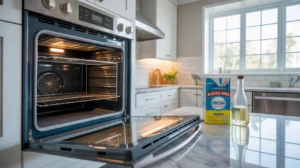
 Peeking into the oven to check on your cookies, roast, or pizza should be easy, but when the oven window is cloudy or greasy inside, it feels impossible. A dirty oven window doesn’t just look bad, it can also affect visibility and even leave behind odors the next time you cook.
The good news? Learning how to clean oven window inside is much simpler than most people think. You don’t need expensive sprays or harsh chemical cleaners either. With a few everyday ingredients like baking soda and vinegar, you can get your oven glass sparkling clear again, safely and without the fumes.
A cloudy oven window can make it hard to keep an eye on your cooking, whether it’s cookies, roast chicken, or a bubbling lasagna. Over time, grease and burnt-on splatters build up inside the glass, making your oven look dull and less safe to use.
The good news? In this guide, you’ll learn how to clean oven window inside using a simple, no-harsh-chemicals method. All you need is baking soda, vinegar, and a few basic tools you probably already have in your kitchen. We’ll also cover when (and how) to use your oven’s self-clean cycle if you want a deeper clean.
This step-by-step tutorial is beginner-friendly and takes about 20–30 minutes of hands-on work (plus wait time). It’s perfect for renters, busy home cooks, or anyone who wants a streak-free oven door without toxic fumes.
A cloudy oven window can make it hard to keep an eye on your cooking, whether it’s cookies, roast chicken, or a bubbling lasagna. Over time, grease and burnt-on splatters build up inside the glass, making your oven look dull and less safe to use.
The good news? In this guide, you’ll learn how to clean oven window inside using a simple, no-harsh-chemicals method. All you need is baking soda, vinegar, and a few basic tools you probably already have in your kitchen. We’ll also cover when (and how) to use your oven’s self-clean cycle if you want a deeper clean.
This step-by-step tutorial is beginner-friendly and takes about 20–30 minutes of hands-on work (plus wait time). It’s perfect for renters, busy home cooks, or anyone who wants a streak-free oven door without toxic fumes.
Also check these:
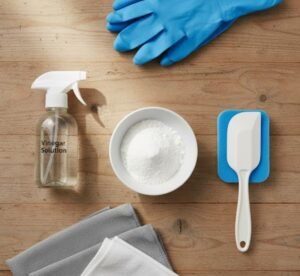 One of the best things about learning how to clean oven window inside is that you don’t need any fancy products. Most of the supplies are likely sitting in your kitchen already.
Basic Supplies
- Baking soda: the main ingredient for loosening greasy, baked-on grime.
- White vinegar: helps break down residue and adds a streak-free shine.
- Water: just enough to mix into a paste with baking soda.
- Small bowl & spoon: to mix your paste.
- Spray bottle: for applying vinegar evenly.
- Microfiber cloths: gentle, non-linting, and perfect for polishing.
- Non-abrasive scrub pad: for scrubbing without scratching.
- Plastic or silicone spatula: helps lift stubborn residue safely.
- Soft-bristle brush: handy for corners and edges.
- Optional: glass scraper or razor blade: only if used carefully at a flat angle (never press down hard).
Alternatives for Renters & Eco-Friendly Options
- Dishwasher tablet method: Dip a tablet in warm water and gently rub it over the oven glass for a quick clean.
- Lemon steam trick: Slice a lemon, place it in an oven-safe dish of water, and heat the oven briefly. The steam loosens grease, making it easier to wipe away.
- Eco swaps: Old cotton T-shirts instead of microfiber, or bamboo brushes instead of plastic tools.
Having these tools ready will make the cleaning process faster and more effective, and you won’t have to stop mid-way to search for supplies.
 Step 1: Remove the Oven Door or Inner Glass (If Removable)
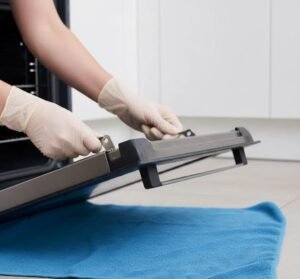 Step 1: Remove the Oven Door or Inner Glass (If Removable)
- Check your oven’s manual, many models have hinge locks that let you lift the door off safely.
- Place the door flat on a padded surface (like a towel on the floor or counter).
- If your oven door doesn’t come off, don’t worry, you can still clean it in place. Just be a bit more careful with drips.
 Step 2: Make the Baking Soda Paste
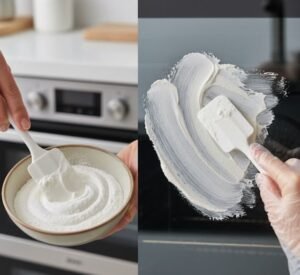 Step 2: Make the Baking Soda Paste
- In a small bowl, mix ½ cup baking soda with 2–3 tablespoons of water.
- Stir until you have a thick, spreadable paste, not too runny, not too dry.
- It should stick to the glass without sliding off.
Step 3: Apply Paste & Wait
- Use a spatula or cloth to spread the paste over the inside of the oven window.
- Cover all greasy areas, especially the edges where grime collects.
- Let the paste sit for 20–60 minutes (longer if the glass is heavily stained, even overnight is fine).
- For ovens with double-pane glass, only apply the paste to the surfaces you can reach. (The sealed layer can’t be cleaned at home.)
 Step 4: Wipe, Scrub, and Remove Residue
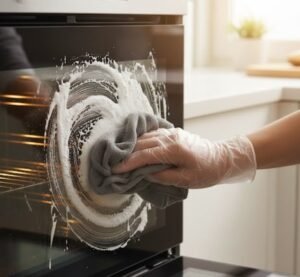 Step 4: Wipe, Scrub, and Remove Residue
- Dampen a microfiber cloth with warm water and gently wipe away the paste.
- For stubborn spots, use a non-abrasive scrub pad or a plastic scraper held at a flat angle.
- Rinse the cloth and repeat until all residue is gone.
- It may take two or three passes to get a completely clean surface.
 Step 5: Vinegar Spray & Final Wipe
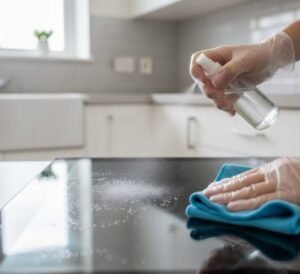 Step 5: Vinegar Spray & Final Wipe
- Fill a spray bottle with white vinegar and mist the glass.
- The vinegar will fizz slightly with any leftover baking soda, lifting remaining residue.
- Wipe with a fresh microfiber cloth until the glass is streak-free and clear.
Step 6: Reassemble & Final Polish
- If you removed the door or glass, carefully reinstall it according to your oven manual.
- Give the glass one last buff with a dry microfiber cloth or a drop of glass cleaner for extra shine.
- Step back and admire your crystal-clear oven window!
 Optional: Deep Cleaning with the Self-Clean Cycle
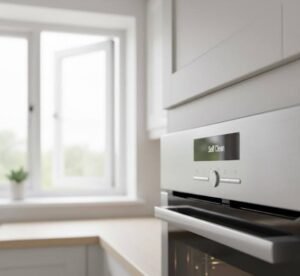 Optional: Deep Cleaning with the Self-Clean Cycle
If your oven has a self-clean feature and you want an even deeper clean:
- Remove racks and accessories: high heat can discolor or damage them.
- Wipe heavy spills first: self-clean works best on light residue.
- Lock the door and select “Self Clean” on the control panel.
- Ventilate the kitchen: open a window or run a fan, since the cycle creates heat and smoke.
- Wait for cool-down: once the oven is cool, wipe away the gray ash with a damp cloth.
When to use it: Self-clean is great for the oven’s interior, but it usually won’t fix greasy buildup between glass panes. Use it occasionally, but not if your seals are damaged or if you have pets sensitive to smoke.
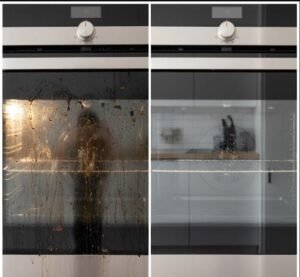 Sometimes you don’t have the time (or patience) for a full deep clean. These shortcuts can help when you just need your oven glass to look better fast.
Steam Trick
One of the easiest quick cleans uses steam:
- Fill an oven-safe dish with hot water and add a few drops of dish soap (or drop in a dishwasher tablet).
- Place it on the middle rack and heat the oven to around 200°F (90°C) for 15–20 minutes.
- Turn off the oven, let it cool slightly, and carefully remove the dish.
- Wipe the softened grime off the glass with a damp microfiber cloth.
This trick won’t get rid of heavy, baked-on grease, but it’s perfect for light spots or fresh splatters.
Store-Bought Cleaners
If you prefer ready-made products, there are commercial oven glass cleaners available. Here’s how to use them safely:
- Choose a non-abrasive, fume-free spray or cream designed for glass.
- Apply according to the label and wipe with a microfiber cloth.
- Avoid ammonia-heavy products or abrasive powders, which can scratch tempered glass or leave behind harsh fumes.
- Always ventilate your kitchen when using store-bought cleaners.
Pro tip: Even if you use commercial cleaners occasionally, sticking to the baking soda and vinegar method most of the time helps protect your oven glass and avoid damage.
Tips & Pro Tricks
 Tips & Pro Tricks
Keeping your oven window sparkling doesn’t have to be a huge job. With a few smart habits and the right tools, you can cut cleaning time in half.
Preventative Habits
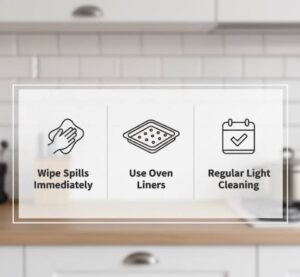
- Wipe spills immediately: If food splatters on the glass while the oven is warm (but not hot), wipe it away before it hardens.
- Quick wipe after roasting: Keep a damp microfiber cloth handy and give the glass a light wipe after each big cooking session.
- Line your oven floor (safely): Use an oven-safe liner or baking sheet on the lower rack to catch drips, just never block airflow or vents.
Best Tools to Speed the Job
- Microfiber cloths: These are streak-free and reusable, making them the #1 tool for glass care.
- Silicone spatula: Works like a safe scraper for baked-on bits without scratching.
- Soft-bristle brush: Perfect for cleaning edges and corners where grime collects.
Maintenance Schedule
- Weekly: Light wipe-down with a damp cloth to stop buildup before it gets tough.
- Monthly: Do a quick baking soda + vinegar wipe if you cook often.
- Quarterly: Plan a deeper clean, especially before the holidays or big cooking events.
Cleaning Between Glass Panes
Sometimes grease sneaks between the double panes of oven glass, and unfortunately, it’s not always easy to reach.
- Check your manual: Some oven doors can be taken apart safely with just a screwdriver. If so, clean the inside glass panels carefully with the baking soda paste method.
- If sealed shut: You won’t be able to reach it at home. In that case, call a professional or the oven manufacturer’s service team. Trying to pry it open on your own could break the seal and cause permanent damage.
 Common Mistakes to Avoid
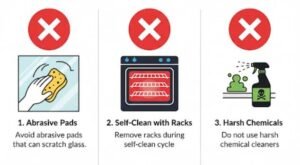 Common Mistakes to Avoid
Cleaning oven glass is simple once you know how, but a few common mistakes can damage your appliance or make the job harder. Here’s what to watch out for:
- Using harsh abrasives or strong chemicals: Steel wool, gritty powders, or ammonia-based sprays can scratch or weaken tempered glass. Stick with baking soda, vinegar, or gentle, non-abrasive cleaners.
- Scratching with metal scrapers: Razor blades or metal scrapers can be helpful, but only if used very carefully at a flat angle. Pressing too hard or scraping at the wrong angle can leave permanent scratches or even chip the glass.
- Running self-clean with racks or food inside: The extreme heat of the self-clean cycle can discolor oven racks, warp accessories, or create heavy smoke if food debris is left inside. Always empty your oven first.
- Ignoring your manual (or damaged seals): Every oven is a little different. Your manual may include specific cleaning do’s and don’ts. If you notice cracked or worn seals around the glass, avoid self-clean mode and call for service, high heat could make the problem worse.
By avoiding these mistakes, you’ll protect your oven window and keep it looking new for years to come.