If you’ve ever wondered how to bake chicken in oven without drying it out or undercooking it, you’re in the right place. Baking chicken may seem simple, but getting that perfect balance of juicy inside and golden outside takes the right oven temp, timing, and technique.
In this easy step-by-step guide, you’ll learn exactly how to bake chicken in oven perfectly every time, whether you’re cooking chicken breasts, thighs, or a whole bird. No fancy tools or chef skills needed, just a baking dish, a little seasoning, and your oven doing the magic.
We’ll walk you through everything: the right bake chicken oven temp, how to prep your chicken for maximum flavor, how to check for doneness, and what mistakes to avoid. By the end, you’ll know how to bake chicken in oven so it comes out juicy, flavorful, and safe to eat, every single time.
This guide is designed for beginners and busy home cooks who want reliable results without overthinking. If you’ve struggled before, don’t worry, after this, you’ll finally feel confident knowing exactly how to bake chicken in oven like a pro.
Quick Facts (Mini Cheat-Sheet)
Learning how to bake chicken in oven starts with understanding a few key numbers and tools. These quick facts will save you from overcooking or guessing every time you bake.
Safety & Finishing Temp
- The safe internal temperature for baked chicken is 165°F (74°C).
- Always check in the thickest part of the meat, that’s the best way to confirm you’ve mastered how to bake chicken in oven safely.
- Let the chicken rest for 5–10 minutes after baking to lock in juices.
Fast Temp Conversions (Common Oven Temps)
When learning how to bake chicken in oven, oven temperature is everything. Here’s a quick conversion guide:
- 350°F ≈ 177°C – gentle heat for juicy, slow-baked results.
- 375°F ≈ 191°C – best all-around temp for chicken breasts and thighs.
- 400°F ≈ 204°C – crispier skin and faster cooking for drumsticks or wings.
- 425°F ≈ 218°C – high heat for quick roasting or caramelized skin.
Quick Tips Summary
- Pat chicken dry before seasoning, it helps with browning.
- Use a meat thermometer to check for doneness.
- Rest chicken 5–15 minutes before slicing for juicier bites.
- Always preheat your oven, consistency is key when learning how to bake chicken in oven like a pro.
 Ingredients & Tools (What You Need)
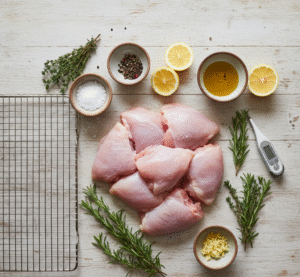 Ingredients & Tools (What You Need)
Before we dive into the full steps of how to bake chicken in oven, here’s what you’ll need to get started.
Basic Ingredients
- Chicken – breasts, thighs, drumsticks, or a whole bird.
- Salt & pepper – the essentials for flavor.
- Olive oil or butter – helps crisp the skin and keep the meat tender.
- Optional extras: lemon slices, garlic, or herbs for added aroma and flavor.
Optional Flavor Boosters
- Brine: A simple saltwater soak that makes chicken more tender and juicy.
- Marinades: Oil, acid (like lemon or vinegar), and spices to infuse flavor.
- Dry rubs: A mix of spices (paprika, garlic powder, onion powder, etc.) rubbed directly onto the chicken.
Tools Checklist
To make how to bake chicken in oven simple and consistent, gather these kitchen tools first:
- Instant-read thermometer – for perfect doneness every time.
- Rimmed baking sheet or roasting pan – to catch drippings.
- Wire rack – keeps air circulating for even baking.
- Tongs and foil – for easy flipping and covering.
- Cutting board and kitchen shears – for prepping and carving safely.
 Step-by-Step Guide: How to Bake Chicken in the Oven Perfectly Every Time
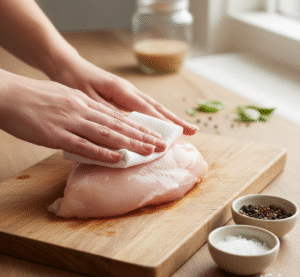 Step-by-Step Guide: How to Bake Chicken in the Oven Perfectly Every Time
If you’ve ever struggled with dry chicken or uneven cooking, this simple guide will show you how to bake chicken in oven perfectly, juicy, flavorful, and golden every single time. Whether you’re making breasts, thighs, or a whole chicken, these steps cover everything from prep to plating.
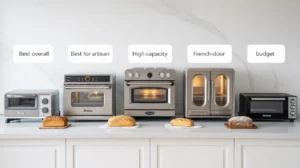
5 Best Ovens for Baking Cookies
Step 1: Thawing & Drying
The first rule in learning how to bake chicken in oven is to start with properly thawed and dried meat.
- Thawing safely: Always thaw chicken in the refrigerator. For a quick method, place the sealed chicken in cold water, changing the water every 30 minutes.
- Drying matters: Once thawed, pat the chicken completely dry with paper towels. This helps the skin crisp up instead of steaming.
Step 2: Brine or Not? (Optional)
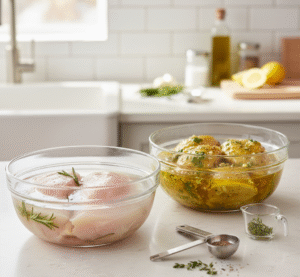 Step 2: Brine or Not? (Optional)
- Quick brine: Soak chicken in a saltwater solution (about 4 cups water + 3 tbsp salt) for 20–30 minutes for breasts or up to 2 hours for larger cuts.
- Why it helps: Brining locks in moisture, especially for lean cuts like boneless breasts. It’s optional but highly recommended if you want guaranteed juiciness.
Step 3: Seasoning & Oiling
- Dry rub: Mix salt, pepper, and spices (paprika, garlic powder, onion powder) and rub evenly over the chicken.
- Marinade: Use a simple mix of oil, acid (like lemon juice or vinegar), and herbs for deeper flavor.
- Don’t skip the oil: A light coat of olive oil or melted butter helps seasoning stick and encourages browning.
Step 4: Arrange on the Pan
- Place chicken on a wire rack over a rimmed baking sheet (or a roasting pan). This allows hot air to circulate, cooking more evenly.
- Keep pieces in a single layer with space between them, crowding causes steaming instead of roasting.
Step 5: Choose the Right Oven Temp (Bake Chicken Oven Temp)
- 350–375°F (177–191°C): Great for gentle, even cooking. Best for breasts or whole chickens when you want juicy results.
- 400–425°F (204–218°C): Ideal for thighs, drumsticks, or wings when you want crispy skin and faster cooking.
- Convection ovens: Reduce the temp by about 25°F (≈14°C) or shorten time by 10–15%.
Step 6: Baking – Cut-Specific Guidance
Cooking times can vary based on size and oven accuracy, so use these as guidelines and confirm with a thermometer:
- Boneless, skinless breasts: 375°F (191°C) – 20–30 min
- Bone-in breasts: 375°F (191°C) – 30–40 min
- Boneless thighs: 400°F (204°C) – 20–25 min
- Bone-in thighs/legs: 400°F (204°C) – 35–45 min
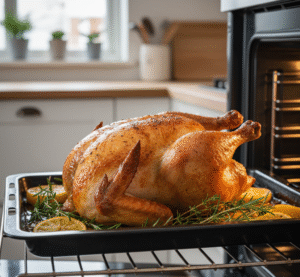
- Whole chicken (3–5 lb / 1.4–2.3 kg): Start at 425°F (218°C) for 10–15 min to brown, then reduce to 375°F (191°C). Cook 15–20 min per lb until 165°F.
- Wings: 400°F (204°C) – 25–30 min
- Thin cutlets/tenders: 375°F (191°C) – 10–15 min
Always check internal temp: The goal is 165°F (74°C) in the thickest part.
Step 7: Check Doneness & Carryover
- Insert your thermometer into the thickest part of the meat, avoiding bones.
- Once it reads 165°F (74°C), pull it from the oven.
- Remember: chicken continues cooking slightly after you remove it, this is called carryover cooking.
Step 8: Resting & Carving
- Let chicken rest before slicing: 5–10 minutes for pieces, 10–15 minutes for a whole chicken.
- This allows juices to redistribute, keeping the meat moist.
- Carve against the grain for tender slices.
Step 9: Serving & Storing Leftovers
- Serve immediately with sides like roasted veggies, rice, or salad.
- Store leftovers in an airtight container in the fridge within 2 hours. They’ll last up to 3–4 days.
- Reheat to 165°F (74°C) before eating for safety.
Variations & Advanced Options
Convection vs. Conventional Ovens (Adjustments)
- Conventional ovens heat from the top and bottom, so cooking may take a little longer.
- Convection ovens circulate hot air with a fan, cooking food more evenly and quickly.
- Rule of thumb: reduce the temp by 25°F (≈14°C) or shorten the time by 10–15% when using convection.
High-Heat for Crisp Skin (Pros & Cons)
- Pros: Baking at 425°F (218°C) gives chicken skin a beautiful golden-brown crisp and locks in juices.
- Cons: Higher heat increases the risk of burning or drying lean cuts like breasts. Best reserved for thighs, drumsticks, wings, or to start a whole chicken.
- Pro tip: For whole chicken, start high (425°F for 10–15 minutes), then lower to 375°F to finish cooking evenly.
Covered vs. Uncovered Baking (When to Tent with Foil)
- Uncovered: Best for crisp skin and browning.
- Covered (foil-tented): Helps retain moisture if chicken is at risk of drying out (especially boneless breasts).
- Combo method: Bake covered for most of the time, then uncover during the last 10–15 minutes for color and crispness.
One-Pan Family Meals (Veggies Added – Timing Tips)
- Pair chicken with veggies like carrots, potatoes, onions, or broccoli.
- Tip: Cut veggies into uniform sizes so they cook evenly.
- Place dense veggies (potatoes, carrots) under the chicken so they cook in the drippings and soften fully.
- Add quick-cooking veggies (like zucchini or asparagus) in the last 10–15 minutes so they don’t overcook.
Tips for Juicy, Flavorful Chicken
Brining Basics (Quick Brine Recipe + Time)
- Mix 4 cups water + 3 tbsp salt (add 1 tbsp sugar if desired).
- Submerge chicken in the brine for 20–30 minutes (breasts) or up to 2 hours (larger cuts).
- Rinse lightly and pat dry before seasoning.
- Result: noticeably more tender and juicy chicken.
Best Rub/Marinade Building Blocks
- Dry rub basics: Salt, black pepper, paprika, garlic powder, onion powder.
- Marinade formula: Oil (olive), acid (lemon juice or vinegar), spices, and optional sweetener (honey, brown sugar).
- Marinate for at least 30 minutes, or overnight for maximum flavor.
How to Get Crispy Skin
- Pat dry thoroughly before seasoning.
- Brush lightly with oil or melted butter.
- Bake at a slightly higher temp (400–425°F) for pieces with skin.
- Don’t overcrowd the pan, air circulation is key.
Using a Thermometer Like a Pro
- Insert the thermometer into the thickest part of the chicken (avoid touching bone).
- Look for 165°F (74°C) for safe doneness.
- For whole chicken: check both the breast and thigh.
- Always clean thermometer probes after each use.
How to Salvage Slightly Overcooked Chicken (Sauces/Juices)
- Slice and drizzle with pan juices, broth, or gravy to restore moisture.
- Turn leftovers into soups, casseroles, tacos, or chicken salad where added sauce/cream balances dryness.
- Pro tip: store sliced chicken in a small amount of broth or gravy to keep it moist in the fridge.
 Common Mistakes (and How to Avoid Them)
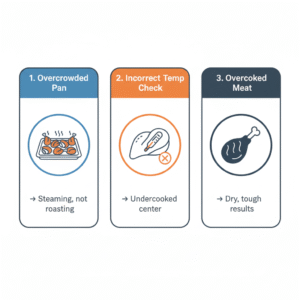 Common Mistakes (and How to Avoid Them)
Even when you know how to bake chicken in oven, a few small missteps can mean the difference between juicy and dry. Here’s how to avoid the most common ones:
Overcooking the Breast
- Symptom: Dry, tough chicken breast that feels stringy when you cut into it.
- Why it happens: Breasts are lean and cook faster than other cuts.
- Quick fix: Bake at 375°F (191°C), pull it from the oven as soon as it hits 165°F (74°C), and let it rest. For extra protection, brine or cover loosely with foil for part of the bake.
Undercooked Center
- Symptom: Outside looks done, but the center is pink or raw.
- Why it happens: Oven heat doesn’t penetrate evenly, especially in thicker cuts.
- Quick fix: Use a thermometer in the thickest part of the meat. If baking bone-in chicken, test near the bone as well. Adjust rack position so heat circulates properly (middle of the oven is best).
Crowded Pan → Steaming, Not Roasting
- Symptom: Chicken turns pale and soggy instead of golden and crispy.
- Why it happens: Too many pieces jammed together trap steam.
- Quick fix: Space chicken out in a single layer on a wire rack over a baking sheet. For a big batch, use two pans instead of cramming everything onto one.
Relying on Color Alone
- Symptom: Chicken looks brown on the outside but may still be unsafe inside.
- Why it happens: Oven heat browns the skin faster than it cooks the center.
- Quick fix: Never rely on color as your only guide. Use an instant-read thermometer for safe, accurate results.
Using Wrong Thermometer Placement
- Symptom: Chicken seems cooked (thermometer says 165°F) but still has raw spots.
- Why it happens: The thermometer probe was touching bone or not in the thickest part.
- Quick fix: Insert the probe into the thickest, meatiest part, avoiding bones. For whole chicken, check both the breast and thigh to confirm even cooking.