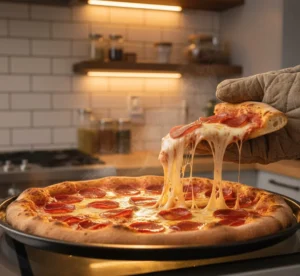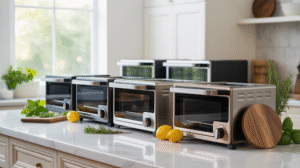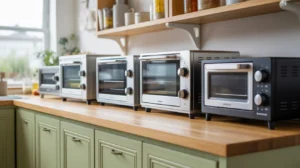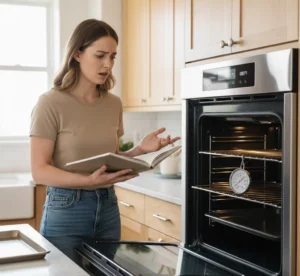
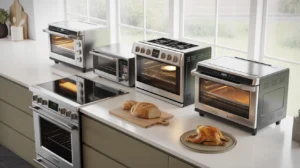
Choosing the best electric oven isn’t just about cooking, it’s about transforming the way you prepare meals at home. A good oven makes everyday dinners easier, helps you bake more evenly, and even unlocks cooking styles like air frying, rotisserie, or convection roasting. The wrong one, on the other hand, can leave you frustrated with uneven results, wasted counter space, and higher energy bills.
Quick At-a-Glance Comparison
Not sure which oven is right for your kitchen? The comparison table below makes it easy to see the differences in size, power, features, and price at a glance so you can quickly narrow down the best electric oven for your needs.
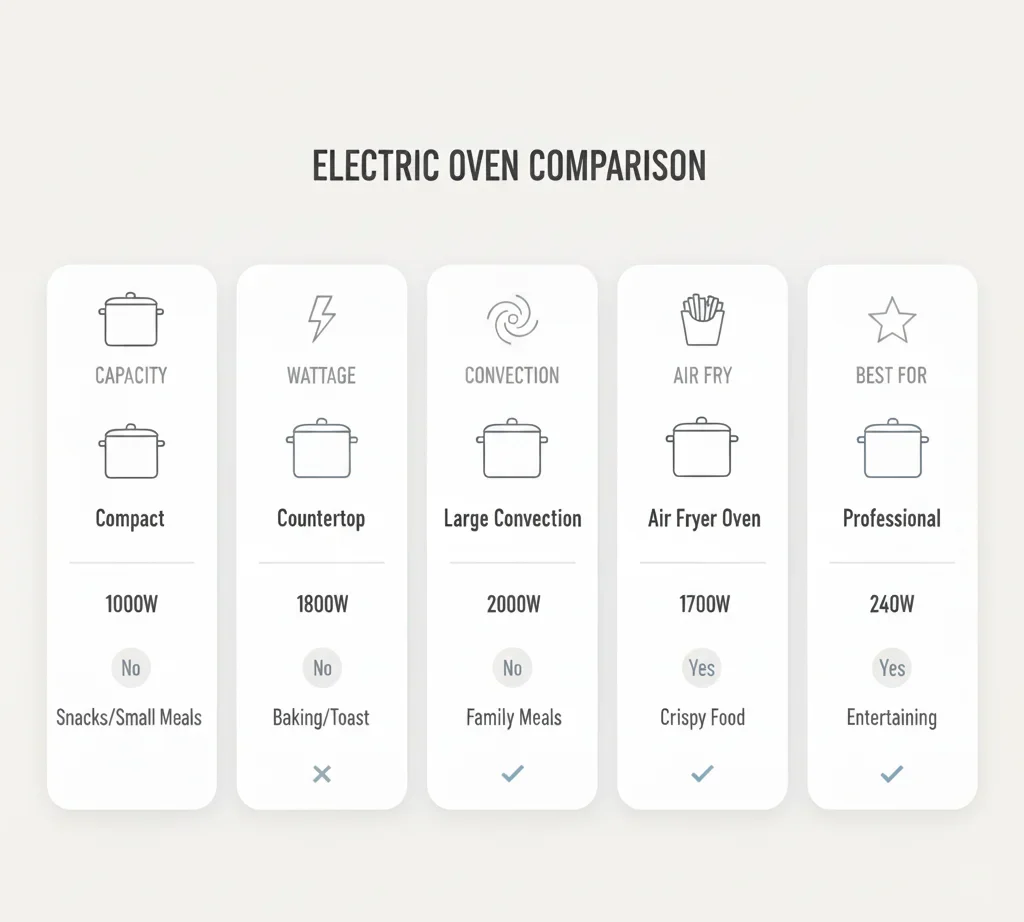
Best Electric Ovens Comparison Table
| Product | Type | Capacity | Power | Key Features | Best For | Price Range |
|---|---|---|---|---|---|---|
| Kenmore Front Control Electric Range | Freestanding Range + Cooktop | 4.8 cu. ft. | Multiple cooktop elements | 5 burners, True Convection, Steam & Self-Clean, Air Fry | Families, daily cooking, full kitchens | Mid–High |
| VEVOR Commercial Convection Oven (60Qt, 4-Tier) | Commercial Countertop Convection | 66 L / 60 Qt | 1800 W | 4 racks, stainless steel, wide temp range, durable build | Catering, bakeries, batch cooking | Mid–High |
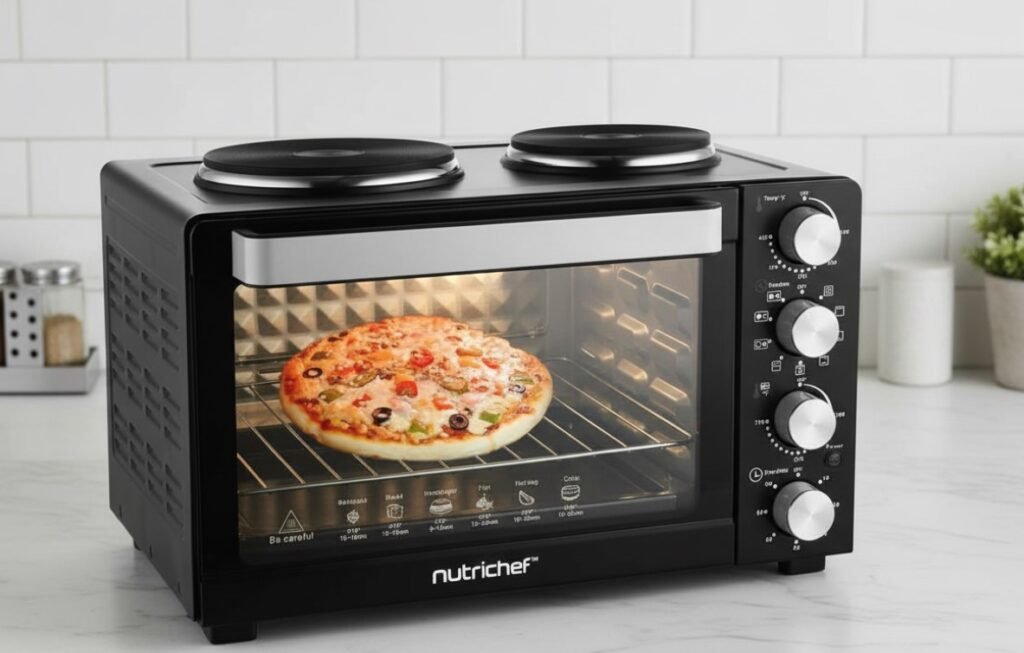
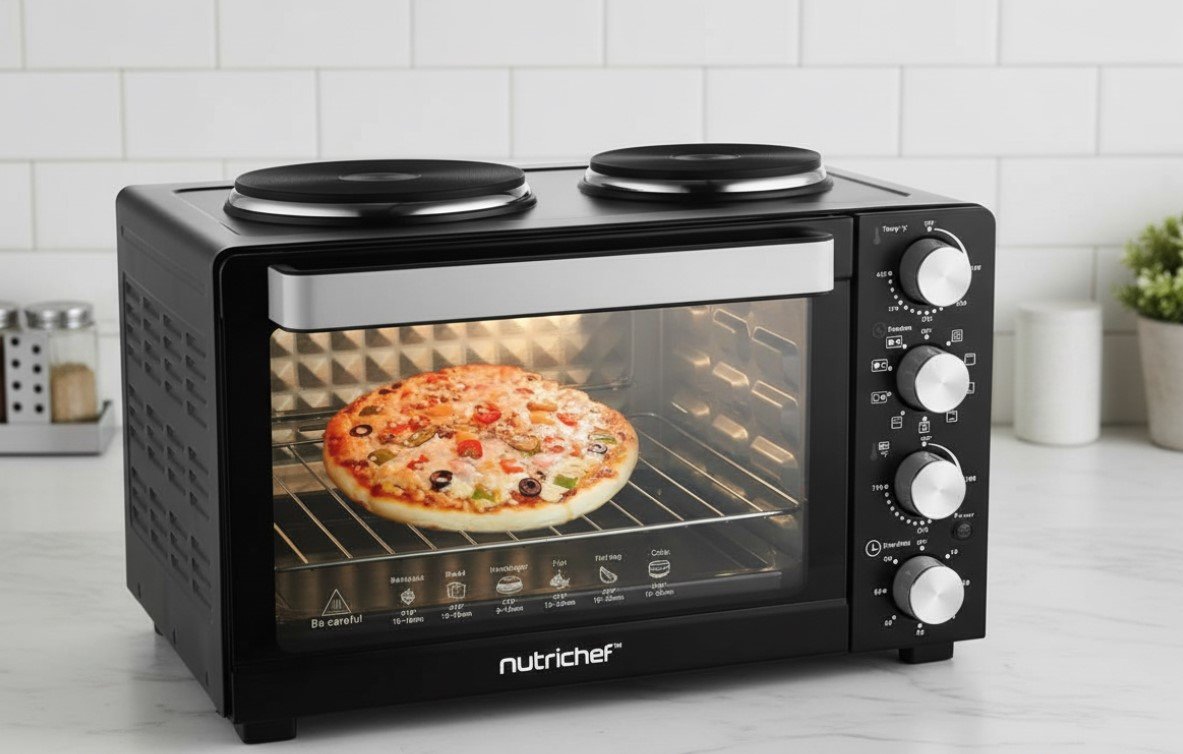
| NutriChef 2-in-1 Convection Oven & Cooker | Countertop Combo Oven | 30 Qt | 1500 W | Dual hot plates, 7 modes, Rotisserie | Small families, compact kitchens, students | Mid |
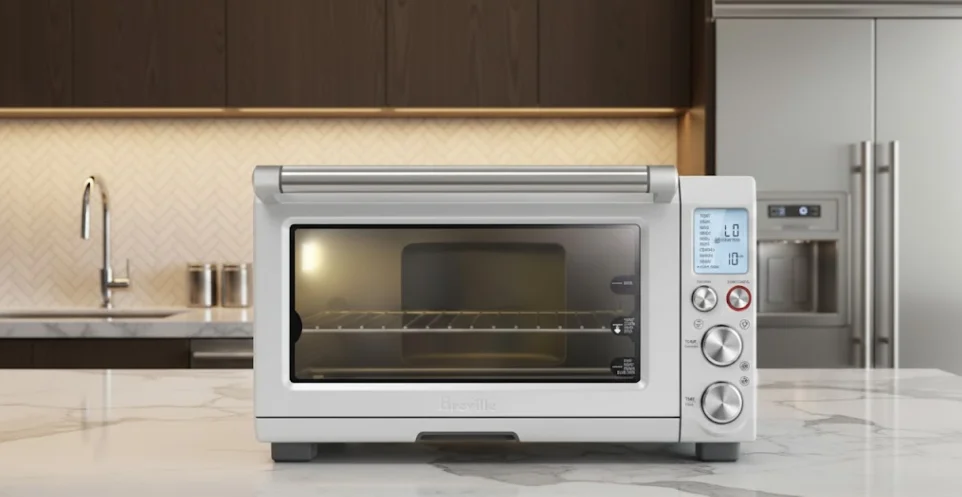
| Breville Smart Oven Pro (BOV845BSS) | Countertop Smart Convection | 1 cu. ft. interior | 1800 W | Element IQ, 10 cooking functions, convection fan | Baking, roasting, precision cooking | Upper–Mid |
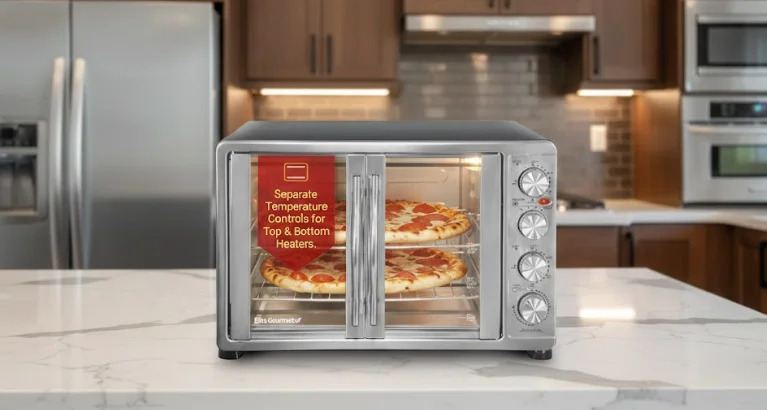
| Elite Gourmet French-Door Convection Oven (ETO-4510M) | Countertop French-Door Convection | 45 L / 47.5 Qt | 1800 W | French doors, Rotisserie, dual heating controls | Rotisserie lovers, stylish compact use | Budget–Mid |
Why Trust This Review
How We Tested and Compared These Ovens
Testing criteria focused on what buyers care about when choosing the best electric oven:
- Baking and roasting performance
- Heat distribution and accuracy
- Preheat speeds
- Feature usefulness (air fry, rotisserie, true convection, steam clean)
- Ease of cleaning and everyday usability
- Build quality and long-term value
Notes on real-use testing vs spec-based evaluation for fairness and accuracy.
Who This Guide Is For
- Home cooks are looking for the best electric oven for baking bread, pizza, or desserts.
- Families who need large-capacity ranges or commercial-style convection ovens.
- Small kitchens needing efficient countertop solutions.
- Casual cooks want simple, reliable heating.
- Catering setups or small businesses needing durable, multi-tier ovens.
Quick Buying Checklist (Before You Dive Into Models)
A fast guide to help readers pick the best electric oven based on must-have features, space needs, and real world usability.
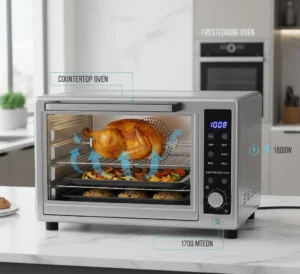
Must-Check Specs When Choosing the Best Electric Oven
- Capacity and internal dimensions (what size meals and pans you can actually fit).
- Wattage and heating power for faster preheat and consistent cooking.
- Convection vs true convection (important for baking performance).
- Control type: knobs, digital panel, presets, smart features.
- Build materials: stainless steel interior/exterior, insulated doors.
- Temperature range and accuracy (key for anyone comparing the best electric oven options).
Practical Concerns to Review Before Buying the Best Electric Oven
- Countertop footprint or freestanding space requirements.
- Clearance needed for ventilation and door swing.
- Electrical needs: standard outlet vs dedicated circuit.
- Weight and portability (especially for large countertop ovens).
- Noise level of convection fan during operation.
- Exterior heat levels and safety for kids/pets.
- Ease of installation for full-size electric oven ranges.
Features That Matter Most When Picking the Best Electric Oven
- Self-clean, steam clean, or manual clean options.
- Air-fry mode for healthier frying-style results.
- Rotisserie function for whole chickens and roasts.
- True convection for superior heat circulation and even browning.
- Bake, broil, toast, pizza, keep-warm, delay start, and slow cook modes.
- Interior lighting and glass visibility for monitoring food.
- Rack positions and included accessories (pans, racks, rotisserie kit).
- Smart features: timers, alerts, auto shutoff, safety lock.
Top 5 Electric Ovens (Detailed Review Blocks)
(Each review block includes: Product Overview, Key Specs Table, Standout Features, Performance Breakdown, Ease of Use & Cleaning, Pros & Cons, Who Should Buy It, Quick Verdict)
Overview
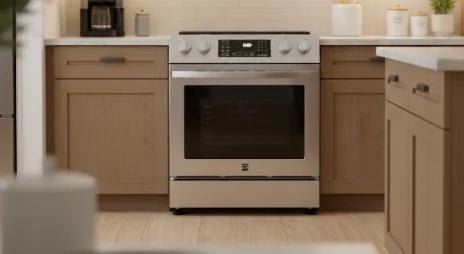
If you’re looking for a full-size kitchen upgrade, the Kenmore Front Control Electric Range Oven is hard to beat. With five cooktop elements, a spacious 4.8 cu. ft. convection oven, and modern extras like Air Fry and Steam/Self-Cleaning modes, it delivers the performance of a professional setup while fitting seamlessly into your home kitchen.

- True Convection ensures even, faster baking & roasting
- Turbo Boil elements cut boiling time dramatically
- Built-in Air Fry setting for healthier fried favorites
- Easy-to-use Steam & Self-Clean functions

- Requires a dedicated kitchen space (not countertop-friendly)
- Higher upfront investment than compact ovens
Overview
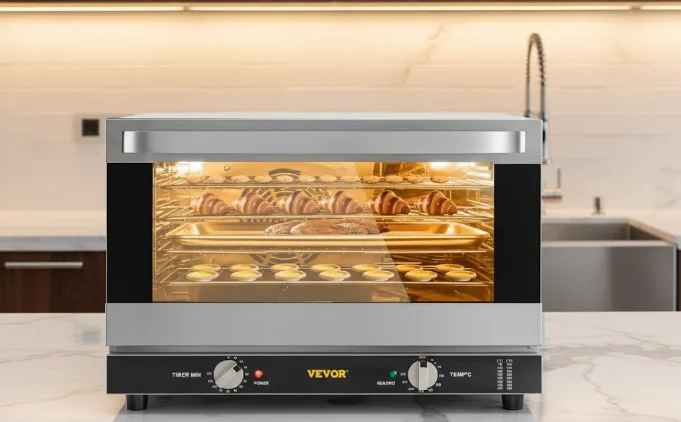
Need something that can handle serious batch cooking? The VEVOR Commercial Convection Oven is designed for high-volume use, whether you’re running a small bakery, catering service, or just love hosting. With its 66L interior, four racks, and durable stainless steel body, it delivers consistent results for everything from pizza to pastries.
- Spacious 4-tier interior fits multiple trays
- 1800W power + convection fan for even heat circulation
- Includes wire racks, food tray & gloves
- Easy-clean stainless body with tempered glass door
- Larger countertop footprint
- Higher power draw (needs good ventilation/space)
Overview
The Hamilton Beach Convection Toaster Oven with Rotisserie is a standout countertop electric oven thanks to its extra-large interior that fits two 12” pizzas or big casseroles. It features true convection cooking and a built-in rotisserie spit for perfectly roasted chicken. With 1,500W of power, simple manual knob controls, and a removable drip tray, it’s designed for both performance and convenience. It’s a great pick for families, meal preppers, or anyone who wants the benefits of a full oven in a tabletop package.
- Huge capacity, rotisserie, affordable
- No digital controls, bulkier footprint
Overview
If you want precision cooking in a compact footprint, the Breville Smart Oven Pro is the gold standard. With its Element IQ technology, it automatically adjusts heat across its five quartz elements for perfectly even results. Add in 10 versatile cooking functions and convection power, and you’ve got a countertop oven that rivals a full-size unit.
- Element IQ system for smart heat distribution
- 10 cooking functions (toast, pizza, slow cook, etc.)
- Convection fan reduces cook time by up to 30%
- Large enough for 13″ pizza or roast chicken
- Premium price point compared to budget ovens
- Not as large as a freestanding range
Overview
For cooks who want style + functionality, the Elite Gourmet French Door Oven is an excellent pick. Its dual-door design saves space and looks sharp on the counter, while the rotisserie feature lets you cook tender, flavorful meats at home. With a 45L capacity and convection airflow, it’s perfect for medium families or entertainers.
- French doors save space and improve access
- Rotisserie spit + convection fan for tender, even cooking
- Fits two 12” pizzas or a 7lb turkey
- Multiple rack positions for flexible cooking
- Manual controls only (less precise than digital models)
- Takes up more counter space than a toaster oven
How to Choose the Best Electric Oven: Step-by-Step Guide
Buying an oven isn’t just about looks or price, it’s about finding the right fit for your cooking style, kitchen space, and long-term use. Use this step-by-step guide as a checklist before making your choice.
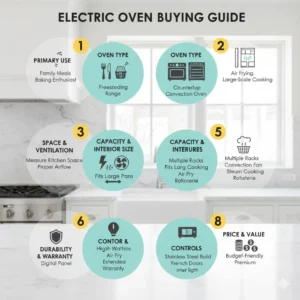
Step 1 Define Your Primary Use
Ask yourself: What will I use this oven for most?
- Everyday family meals: A freestanding range like the Kenmore makes sense.
- Baking & roasting: A smart convection oven such as the Breville Smart Oven Pro is a strong choice.
- Crispy snacks & air frying: Models with Air Fry (Kenmore, Breville) save counter space over buying a separate air fryer.
- Catering or batch cooking: A commercial model like the VEVOR 60Qt handles large batches at once.
Step 2 Pick the Right Type
Match the oven type to your lifestyle:
- Freestanding Electric Range (Kenmore): Best if you need both oven + stovetop in one appliance.
- Countertop Convection Oven (Breville, Elite Gourmet, NutriChef): Best for limited space or secondary oven use.
- Commercial Half-Size Oven (VEVOR): Ideal for bakeries, catering, or large households cooking in volume.
💡 Quick rule:
Range = full kitchen setup
Countertop = compact or everyday convenience
Commercial = heavy-duty, high capacity
Step 3 Measure Space & Ventilation
Nothing’s worse than buying an oven that doesn’t fit. Check:
- Countertop depth & width (leave 2–3 inches clearance at back/sides for airflow).
- Electrical outlet type (standard 120V vs 240V for ranges).
- Ventilation needs (full ranges may need a hood; commercial units need airflow).
📝 Tip: Measure twice, buy once.
Step 4 Capacity & Interior Size
Don’t just look at liters or quarts think about real cooking use:
- 30 Qt NutriChef: Good for 2–3 people, can handle small pizzas.
- 45–60 Qt ovens (Elite Gourmet, VEVOR): Can fit two 12” pizzas or a turkey.
- 4.8 cu. ft. Kenmore range: Large enough for family roasts, multi-tray baking.
💡 Translation guide:
30 Qt (~28 L): Small family, 9” pizza, 4–6 muffins
45–60 Qt (~45–66 L): Medium family, 12” pizza, roast chicken
4.5–5 cu. ft.: Full meals, turkey, multiple trays
Step 5 Power & Features to Prioritize
Higher wattage = faster preheat & stronger performance. Look for:
- Convection or True Convection: Even cooking & faster results
- Steam & Self-Clean: Less scrubbing, healthier steam-bake options
- Air Fry mode: Healthier crisping
- Rotisserie: Even roasting for meats
- Hot plates (NutriChef): Great if you don’t have a stovetop
Step 6 Controls & Ease of Use
Controls affect convenience:
- Knob Controls (VEVOR, Elite Gourmet): Durable, simple, old-school reliability.
- Digital / Smart Controls (Breville, Kenmore): Precise settings, presets, timers.
Look for: Interior light, removable trays, easy-clean design.
Step 7 Durability, Warranty & Service
A good oven should last 5–10 years. Consider:
- Build materials: Stainless steel > plastic/aluminum for durability.
- Door design: French doors (Elite Gourmet) vs solid doors depends on space preference.
- Warranty: Breville & Kenmore often offer stronger service/warranty support.
Step 8 Price & Value
Think in budget tiers:
- Budget ($100–$200): Compact ovens (NutriChef, small countertop models).
- Mid-range ($250–$500): Large countertop convection (Elite Gourmet, Breville, VEVOR).
- Premium ($700+): Freestanding ranges (Kenmore), professional-level features.
💡 Tip: Don’t just buy on price match your investment to how often and how heavily you’ll use the oven.
Features Explained: What Actually Matters
Buying an oven often feels overwhelming with all the buzzwords. Here’s what each major feature really means and whether it’s worth caring about.
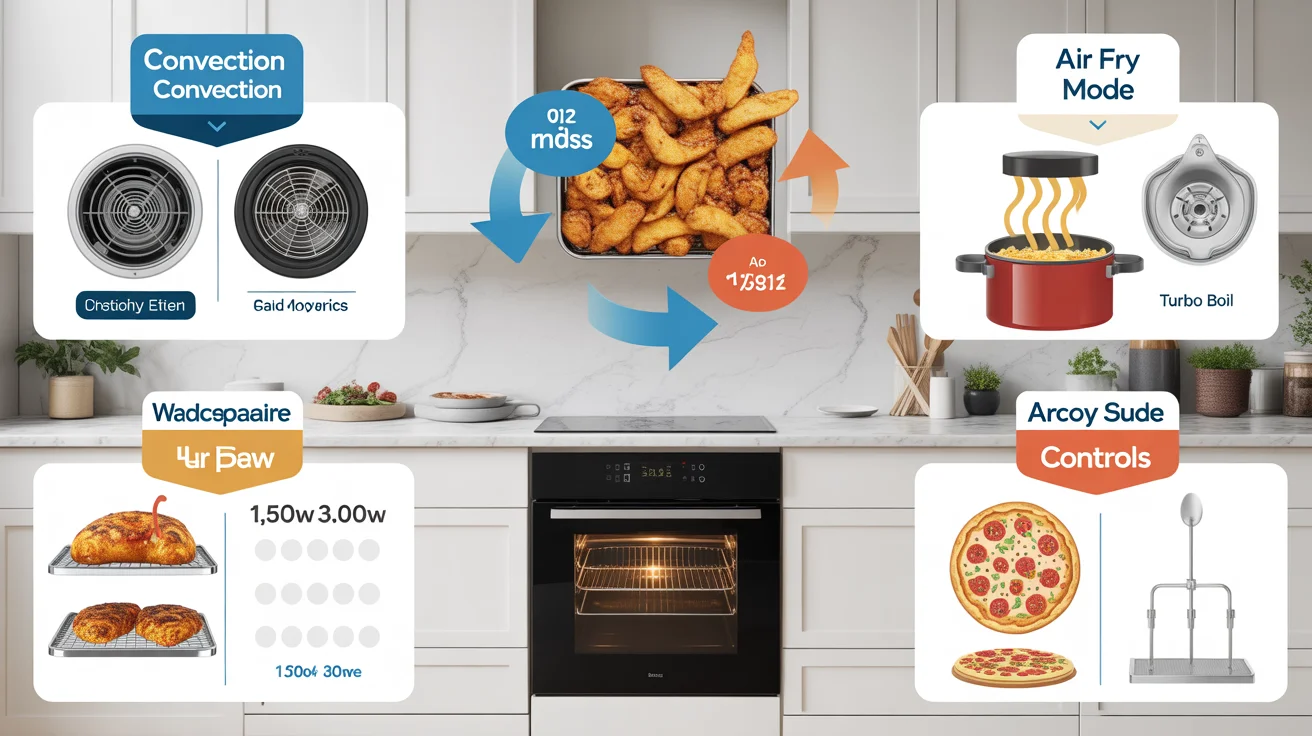
Convection vs True Convection vs Conventional Oven
- Conventional Oven: Heat comes from top and bottom elements only. Works fine but can lead to uneven cooking.
- Convection Oven: Adds a fan to circulate hot air. This helps food cook faster and more evenly, but sometimes creates hot spots.
- True Convection (a.k.a. European Convection): Includes a third heating element behind the fan. This ensures consistent, even heat circulation — ideal for roasting, baking multiple trays, or crisping foods.
💡 Example: The Breville Smart Oven Pro and Kenmore Electric Range both use True Convection for precise, even results. 👉 See the Breville Smart Oven Pro on Amazon.
Air Fry & Turbo Boil Explained
Air Fry Mode: Uses superheated air with convection to mimic deep-frying without oil. Perfect for fries, chicken wings, or frozen snacks. Saves you from buying a separate air fryer.
Turbo Boil Elements: Found on stovetop ranges (like the Kenmore Electric Range), these are high-output burners that boil water almost twice as fast as standard elements ideal for pasta nights or big family meals.
👉 Check the Best Double Wall Oven.
Wattage & Heating Elements
Why it matters: Wattage = power. Higher wattage means faster preheating, [How to preheat] stronger baking, and better browning.
Quick Guide:
- 1,500–1,800W: Standard countertop ovens (NutriChef, Elite Gourmet).
- 1,800–2,000W: Premium countertop ovens (Breville).
- 3,000W+ (240V): Full-size ranges or commercial ovens (Kenmore, VEVOR).
💡 Rule of thumb: Higher wattage = better performance, but also more energy use.
Racks, Trays & Accessories (Rotisserie, Baskets)
What to look for:
- Adjustable Racks: Essential for cooking tall vs. flat dishes.
- Crisper Baskets: Help with air fry and toasting.
- Rotisserie Kits: Let you roast whole chickens evenly (included in some VEVOR and NutriChef models).
- Baking Trays & Pizza Stones: Nice-to-have add-ons, especially for home bakers.
👉 Tip: Always wash accessories before first use to remove protective coatings.
Controls: Mechanical Knobs vs Smart Presets
Mechanical Knobs (VEVOR, Elite Gourmet):
- Pros: Simple, durable, no software to fail.
- Cons: Less precise, fewer presets.
Digital / Smart Presets (Breville, Kenmore):
- Pros: Exact temperature control, auto-timers, specialized cooking modes.
- Cons: More expensive; may have a learning curve.
💡 Recommendation: If you want set-and-forget convenience, go digital. If you want rugged simplicity, knobs are fine.
Setup & First-Time Use (Step-by-Step)
Before you cook your first meal, follow these steps to get your oven ready.
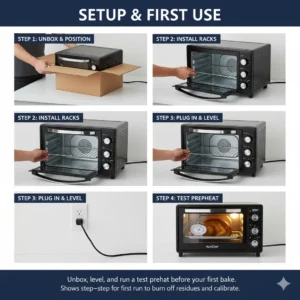
1. Unboxing Checklist
- Remove the oven carefully and place it on a flat surface.
- Check for all accessories: racks, trays, rotisserie kit, user manual.
- Inspect for any shipping damage.
2. Placement & Ventilation
- Countertop ovens: Leave 2–3 inches clearance at sides/back for airflow.
- Freestanding ranges: Measure your cutout space carefully; ranges typically need 30” width.
- Commercial ovens: Place on a heat-resistant surface with plenty of ventilation.
3. Electrical Requirements & Safety
- Countertop ovens: Most use 120V outlets plug directly into the wall.
- Full ranges (Kenmore): Usually 240V dedicated circuits hire an electrician if unsure.
Rule: Never use cheap extension cords or power strips. Always plug directly into the wall.
4. Leveling & Initial Tests
- For freestanding ranges: Use adjustable feet to level the oven.
- Run the oven empty at 400°F for 20 minutes to burn off factory oils and residues. Keep the kitchen well-ventilated.
5. Calibrating & First Bake
- Place an oven thermometer inside during preheat.
- Compare displayed temp vs. actual temp. Adjust with calibration mode (if available).
- This ensures accurate cooking from the start.
6. Using Main Cooking Modes for the First Time
- Convection Bake: Try cookies or roasted veggies they’ll cook evenly.
- Air Fry: Test frozen fries or chicken wings to check crisping.
- Steam (Kenmore): Use for bread or reheating leftovers to prevent drying.
- Rotisserie (NutriChef, VEVOR): Try a small chicken first to test rotation and browning.
Cleaning & Maintenance (Practical Checklist)
A good oven will last years but only if you maintain it properly. Here’s how to keep yours in top shape.
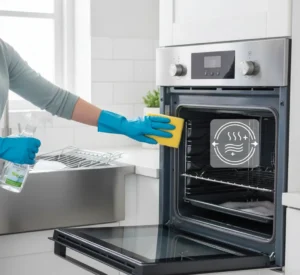
Daily Wipe Down & Crumb Tray
- Unplug before cleaning a countertop oven; let it cool fully.
- Wipe exterior & knobs with a soft cloth and mild dish soap.
- Empty the crumb tray daily (most countertop ovens have one).
- Avoid harsh abrasives that can scratch stainless steel.
Self-Clean vs Steam Clean vs Manual
- Self-Clean (Kenmore ranges): Uses very high heat to burn off residue. Run only when the oven is empty, with good ventilation. Best for heavy grease buildup.
- Steam Clean (Kenmore, Breville): Adds water at low heat to soften grime. Best for quick, regular cleaning.
- Manual Clean: For countertop/commercial ovens, use a damp cloth, non-abrasive sponge, or oven-safe degreaser.
⚠️ Safety Tip: Never use oven cleaner spray on self-clean ovens it can damage the interior coating.
Deep Cleaning Door Seals, Racks & Trays
- Remove racks/trays and soak in warm, soapy water.
- For stubborn grease, sprinkle baking soda + vinegar, let fizz, then scrub.
- Gently wipe rubber door seals with a damp cloth, don’t pull or stretch them. A damaged seal = heat loss and uneven cooking.
Troubleshooting Common Problems
- Oven not heating: Check outlet, reset circuit breaker, inspect heating elements.
- Uneven baking: Rotate trays halfway through, avoid overcrowding, use convection if available.
- Strange smells (new oven): Run empty at 400°F for 20 minutes. For recurring smells, clean drip trays and check for burnt crumbs.
Tips & Tricks (Quick Wins)
Rack Positioning:
- Top rack = broiling, browning cheese, crisping tops.
- Middle rack = cookies, cakes, pizza, even heat.
- Bottom rack = roasting meats, casseroles, bread with a crispy bottom.
Crisp Roast Skin:
Use True Convection + finish on top rack for the last 5–10 minutes.
Best Pans:
- Dark non-stick pans = faster browning.
- Light aluminum pans = gentler, even baking.
- Avoid glass in convection mode (heats unevenly).
Save Energy:
- Bake multiple trays at once with convection.
- Don’t open the door often; it drops temp by ~25°F each time.
- Use residual heat: turn the oven off 5–10 minutes early for casseroles.
Rotisserie & Air Fry Basket:
- Keep food centered for even rotation.
- Don’t overload the basket air circulation = crispiness.
Common Mistakes to Avoid
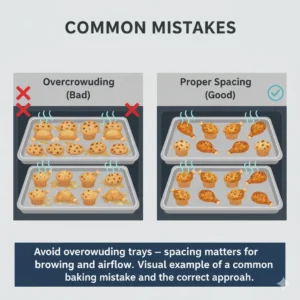
- Overcrowding trays: Leads to steaming, not browning. Leave at least 1 inch between items.
- Skipping preheat: Causes undercooked centers or soggy bottoms. Always preheat unless using Air Fry reheat.
- Wrong rack choice: Cakes on bottom = burnt base. Roasts on top = dried-out edges. Use the middle rack for most foods.
- Ignoring ventilation (commercial units): Without clearance, ovens overheat and trip breakers.
- Using thin, cheap pans: They warp and cook unevenly. Invest in heavy-duty aluminum or steel bakeware.
Frequently Asked Questions (FAQs)
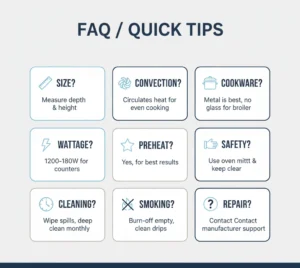
1. What size electric oven should I buy for a family of 4?
For a family of four, aim for at least 4–5 cu. ft. if you want a freestanding range, or 30–45 quarts for a countertop oven. This ensures you can cook a whole chicken or two pizzas at once. 👉 Best Match: Kenmore Front Control Range (4.8 cu. ft.) or Elite Gourmet 47.5Qt Convection Oven.
2. Is convection really better than conventional?
Yes. Convection uses a fan to circulate hot air, cutting cooking time by ~25% and creating even browning. Conventional ovens are fine for simple baking, but convection shines for roasting, pizza, and cookies. 👉 Best Match: Breville Smart Oven Pro with advanced convection setting.
3. Can I use my old bakeware in a convection oven?
Mostly yes. Metal pans (aluminum, stainless) work best. Avoid glass or thin pans. They heat unevenly and may crack. 💡 How-to: For convection, lower the temp by 25°F compared to a conventional recipe. 👉 Best Match: NutriChef 2-in-1 Convection Oven (great for everyday baking pans).
4. How much does wattage affect cooking time?
Higher wattage = faster preheat and shorter cook times. For example, a 1,800W oven can boil water or crisp fries faster than a 1,500W model. 👉 Best Match: VEVOR Commercial Oven (1800W–2800W options) for high-output kitchens.
5. Are countertop commercial ovens safe to run indoors at home?
Yes, if rated for 120V household outlets. Just ensure good ventilation and keep 4–6 inches clearance around the oven. 👉 Best Match: VEVOR Commercial Convection Oven (120V household compatible).
6. How often should I use self-clean vs manual cleaning?
Self-Clean: Every 2–3 months or after heavy spills.
Manual Wipe/Steam: Weekly or after greasy meals.
💡 Tip: Run steam clean first for lighter messes to extend time between self-clean cycles. 👉 Best Match: Kenmore Front Control Range (Self + Steam Clean options).7. Can I use the air fry function for frozen foods?
Absolutely. The Air Fry mode is perfect for frozen fries, nuggets, or wings. Use the basket for crispier results, no oil needed. 👉 Best Match: Kenmore Range with Air Fry Function.
8. What electrical circuit do I need for a freestanding electric range?
Most full-size ranges need a 240V dedicated circuit (40–50 amps). Countertop ovens only need a standard 120V outlet. 👉 Best Match: Kenmore (240V required) vs Breville/NutriChef (standard 120V) for small kitchens.
Conclusion & Final Recommendations
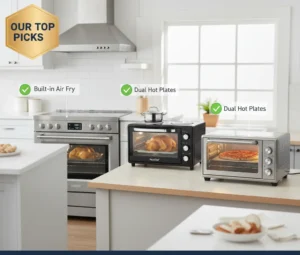
Choosing the best electric oven depends on your kitchen setup, cooking style, and budget. After reviewing our top picks, here’s a quick breakdown:
Best Family Range Oven: Kenmore Front Control Electric Range
Full-size, 5-element cooktop, convection, and air fry. Perfect for daily family cooking.
Best Countertop Performer: Breville Smart Oven Pro
Compact but powerful, with 10 functions and Element iQ for precision. Great for everyday versatility.
Best for Batch Cooking & Commercial Use: VEVOR Commercial Convection Oven
Spacious interior with 4-tier racks, perfect for parties, catering, or restaurant-style baking.
Best Budget & Multi-Function Pick: NutriChef 2-in-1 Convection Oven & Cooker
Affordable, versatile with dual hot plates, and ideal for small apartments or college kitchens.
Best for Rotisserie Lovers: Elite Gourmet French Door Convection Oven
Large capacity with rotisserie function, perfect for golden chickens and family feasts.