The best bread proofing box keeps dough at a steady, warm temperature so it rises on schedule, even in a cold kitchen. We compared the top-rated proofers on Amazon, from Brød & Taylor's folding proofer to roomy budget boxes and a sourdough starter home, and these six are worth buying.

Brød & Taylor Folding Proofer
The proven proofer bakers trust, with humidity and slow-cook modes.

Brød & Taylor + Shelf
Same proofer with a shelf to proof two levels at once.
GIYUDOT Folding Proofer
Roomy, foldable and well rated, with a 48-hour timer.

XL Dough Proofing Box
Fits two big bowls, with a timer that beeps when proofing ends.

Brød & Taylor Sourdough Home
Keeps your starter at the perfect temperature, warm or cool.

PID Folding Proofer
PID control for very steady temperatures.
Quick Answer: The Best Bread Proofing Boxes
- Best overall: Brød & Taylor Folding Proofer. Precise, humid and folds flat.
- Best bundle: Brød & Taylor with Shelf. Two levels for batch baking.
- Best value: GIYUDOT Folding Proofer. Roomy with a 48-hour timer.
- Best for starters: Brød & Taylor Sourdough Home · XL: Extra Large Box
Bread Proofing Boxes Compared
Prices change often, so tap Check to see today's price on Amazon.
| Proofer | Temp range | Timer | Humidity | Folds | Price |
|---|---|---|---|---|---|
| Brød & Taylor Best Overall | 70–120°F | No | Water tray | Yes, 2.75" | Check |
| Brød & Taylor + Shelf Bundle | 70–120°F | No | Water tray | Yes | Check |
| GIYUDOT Best Value | 50–113°F | 48 h | Humidor | Yes | Check |
| XL Proofing Box Extra Large | 50–130°F | 24 h + alarm | See maker | Yes | Check |
| Sourdough Home Starter | 41–122°F | No | No | No | Check |
| PID Folding Proofer Precision | 70–122°F | 1–24 h | Water bowl | Yes, 45 mm | Check |
How We Chose
We looked at bread proofers and dough proofing boxes sold on Amazon in the US and kept models rated about 4.3 stars or higher. We then compared:
- Temperature control: range, accuracy and how evenly the box heats.
- Capacity: how many bowls, loaf pans or bannetons fit.
- Useful features: humidity, timers, viewing windows and shelves.
- Storage: how flat it folds.
- Owner feedback: the most common praise and complaints.
Our "What owners say" notes summarize Amazon's review highlights in our own words.
The Best Bread Proofing Boxes, Reviewed
Brød & Taylor Folding Proofer & Slow Cooker
The proofer most serious home bakers own: precise warmth, optional humidity, a slow-cook mode, and it folds flat into a drawer.
Why we picked it
Most kitchens are too cool for dough to rise on schedule, especially in winter. Brød & Taylor's Folding Proofer holds a set temperature from 70 to 120°F, and the included water tray adds humidity so dough doesn't form a dry skin. It fits a large bowl, a loaf pan or a banneton, and folds down to 2.75 inches for storage.
It doubles as a low-temperature slow cooker (85–195°F) for yogurt, stews and melting chocolate. Owners say it keeps dough at the right temperature, sets up easily and folds compactly. Some find it pricey for a single-purpose tool.
Owners say it works well for proofing dough and making yogurt, with temperature control that keeps dough rising properly. It's easy to set up and folds compactly. Some find it overpriced.
What we like
- Precise, steady temperature
- Humidity tray included
- Folds flat for storage
- Slow-cook and yogurt modes
Watch out for
- Premium price
- Accessory shelf sold separately
Brød & Taylor Folding Proofer with Accessory Shelf
Our top pick bundled with the accessory shelf, so you can proof two trays of rolls or several loaves at once.
Why we picked it
If you bake in batches, the accessory shelf turns one level into two. Brød & Taylor says the bundle fits two trays of rolls or four loaves, and one owner notes it holds about eight proofing cups of pizza dough.
Owners call it a game changer for sourdough, praising the consistent temperature, easy setup and flat storage. It's the better value if you know you'll want the shelf.
Owners say it performs excellently with consistent temperatures, is easy to set up and folds flat, and call it a game changer for sourdough. They find it good value and roomy for pizza dough.
What we like
- Two proofing levels
- Great for pizza dough balls
- Consistent temperature
- Better value than buying the shelf later
Watch out for
- Higher upfront cost
- Fewer ratings than the base model
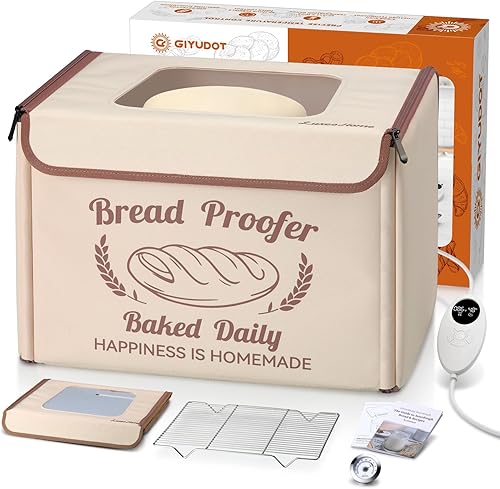
GIYUDOT Folding Bread Proofing Box (48H Timer)
A roomy, foldable proofing box with three heating zones, a viewing window and a 48-hour timer.
Why we picked it
This soft-sided proofer heats from three sides for even warmth and has a clear window so you can watch the rise without opening it. Its 16 × 12 × 12-inch interior fits large bowls or several dough containers, and it folds for storage.
A stainless rack keeps dough off the heated floor, and an automatic shutoff at 131°F prevents overheating. Owners say it's reliable, easy to set up and holds a steady temperature, and many say it took their sourdough to the next level.
Owners call it reliable and easy to set up with consistent temperature, and like the foldable, spacious design that fits large bowls. Many say it improved their sourdough.
What we like
- Large interior
- Viewing window
- Long 48-hour timer
- Strong ratings for the price
Watch out for
- Max 113°F (fine for proofing)
- Soft-sided build
Extra Large Dough Proofing Box (50–130°F)
An extra-large folding proofer that fits two large bowls and beeps when the timer ends.
Why we picked it
If you make big batches or use multiple bannetons, this XL proofer fits two large mixing bowls side by side. Three-sided heating avoids cold spots, and the temperature range up to 130°F is a little wider than most.
Its 24-hour timer includes an audible alarm, which helps avoid over-proofing. Owners say it heats fast, holds temperature consistently in cold houses and is bigger than expected.
Owners say it heats fast and holds temperature well in cold houses, fits two large bowls and folds for storage. They like the timer and consider it worth the money.
What we like
- Very roomy
- Timer with alarm
- Wider temperature range
- Folds flat
Watch out for
- Takes more counter space when open
- Newer brand with fewer ratings
Brød & Taylor Sourdough Home
A small countertop unit that heats and cools your sourdough starter, so you can feed it daily or just weekly.
Why we picked it
This isn't a dough proofer; it's a home for your sourdough starter. Because it can cool as well as heat, you can keep a starter warm and active for daily baking, or cool and slow for weekly feeding, without the fridge.
Owners like being able to dial the temperature down on weekdays and say it's well designed with a small footprint. A few report early failures. Pair it with a dough proofer if you also want to proof loaves.
Owners say it controls temperature well, letting them slow the starter on weekdays, and like its small footprint and design. Many call it a game changer; some report it broke early.
What we like
- Heats and cools
- Flexible feeding schedule
- Small footprint
- Strong, healthy starter
Watch out for
- Fits one jar only
- Not for proofing loaves
Foldable PID Bread Proofing Box (70–122°F)
A slim folding proofer with PID temperature control rated to within about 1°F.
Why we picked it
PID controllers adjust heating continuously instead of switching on and off, so temperatures stay steadier. This proofer is rated to hold within about 1°F between 70 and 122°F, and folds to just 45 mm for storage.
Owners say it heats evenly and speeds up the first rise. Some wish it went lower than 70°F for cool, slow fermentation, and opinions on value are mixed.
Owners find it easy to use and like the foldable design. It heats evenly and speeds up the first rise. Some say it can't go low enough, and value opinions are mixed.
What we like
- Very steady temperature
- Ultra-slim when folded
- Long power cord
- Water bowl for humidity
Watch out for
- Minimum 70°F
- Mixed value feedback
Also Worth Considering
Why Use a Proofing Box?
Yeast and sourdough cultures are sensitive to temperature. In a cool kitchen, dough can take hours longer to rise, and results change from day to day. A proofing box gives you:
- Predictable timing: dough rises on the schedule in your recipe.
- Better flavor and texture: steady temperature gives more even fermentation.
- Year-round consistency: winter bakes behave like summer bakes.
- Humidity: a water tray keeps the surface from drying and forming a skin.
- Extra uses: yogurt, kombucha, tempering chocolate and, with some models, slow cooking.
Proofing Temperature Chart
Most yeasted doughs rise well in the mid-70s °F. Here are common starting points; always follow your recipe.
Higher temperatures speed things up, but too warm can give weaker flavor, a slack dough and, for laminated pastry, melted butter layers.
Proofing in Your Oven Instead
Don't want another appliance? Your oven can work as a proofing box:
Proof setting
Built into many ovens
Many newer ovens have a Proof mode that holds a low temperature, often around 85–100°F. Look for the dough icon on your oven's controls; our oven symbols guide shows what it looks like.
Oven light trick
Oven off, light on
The bulb gently warms the closed oven. Check it with a thermometer first, as some lights make the oven too warm over time.
Pan of hot water
Warmth and humidity
Place a pan of just-boiled water on the bottom rack of the turned-off oven and the dough above it.
Microwave with hot water
Small batches
Put a mug of boiling water in the microwave with the bowl of dough and close the door. Don't turn it on.
The catch: you can't use the oven for anything else while dough is proofing, and you have to remember to take the dough out before preheating. A proofing box frees the oven and gives steadier, adjustable control.
How to Choose a Bread Proofing Box
1. Size
Check that it fits your largest bowl, a 9×5 loaf pan or your banneton. Choose an XL box or a shelf if you bake several loaves or trays of rolls.
2. Temperature range
A range of about 70–100°F covers most proofing. Lower settings help slow fermentation; higher settings help yogurt and slow cooking.
3. Humidity
A water tray or humidor stops dough drying out, especially on long proofs.
4. Timer and window
A timer with an alarm and a viewing window help avoid over-proofing.
5. Storage
Folding proofers store flat in a drawer or cabinet when you're not baking.
How to Use a Proofing Box
- Set up and preheatUnfold the box, add water to the tray if it has one, and set your temperature for about 10–15 minutes.
- Cover the doughUse a bowl with a lid, a proofing container or plastic wrap, even with humidity.
- Proof until ready, not by the clockCheck volume and use the poke test below.
- Shape and do the final proofReturn shaped loaves or rolls to the box for the second rise.
- Preheat your oven or Dutch ovenStart heating while the final proof finishes. See the best Dutch ovens for bread and enameled Dutch ovens.
- Clean and foldWipe out any spills, empty the water and fold it away.
How to Tell When Dough Is Proofed
- Volume: most bulk rises aim for roughly doubled dough, though sourdough recipes often call for less (for example, 50–75%).
- Poke test: flour a finger and press gently about half an inch into the dough. If it springs back slowly and leaves a slight dent, it's ready. If it springs back immediately, give it more time. If the dent stays and the dough sags, it's over-proofed.
- Look and feel: the dough should look airy, slightly domed and feel light.
Baking on convection? See convection bake vs bake for when the fan helps bread crust.
Bread Proofing Box FAQs
Is a bread proofing box worth it?
If you bake bread regularly, especially sourdough, or your kitchen is cool, yes. It gives consistent rise times and frees up your oven. Occasional bakers can use the oven's proof setting instead.
What temperature should a proofing box be?
Most bread dough proofs well around 75–78°F. Enriched doughs can go a little warmer, and laminated doughs should stay cool enough to keep the butter firm.
Do I need humidity when proofing?
It helps prevent a dry skin, which can restrict rise and affect the crust. Covering the dough well also works.
Can I proof dough in my oven?
Yes. Use the Proof setting if your oven has one, or the oven light or a pan of hot water with the oven off. Check the temperature with a thermometer.
How long does dough take to proof in a proofing box?
It depends on the dough, yeast amount and temperature. Many yeasted doughs double in about 1–2 hours at the right temperature; sourdough often takes longer.
Can I use a proofing box for sourdough starter?
Yes. Most proofers keep a starter warm and active. A dedicated starter home that can also cool, like Brød & Taylor's Sourdough Home, lets you slow it down between bakes.
Can a proofing box make yogurt?
Many can. Yogurt typically needs a steady temperature over 100°F, so check that your model reaches it.
What is the difference between proofing and fermentation?
Bulk fermentation is the first rise after mixing; proofing usually means the final rise after shaping. A proofing box helps with both.
Can you over-proof dough in a proofing box?
Yes. Warmth speeds fermentation, so check dough early. Over-proofed dough collapses, spreads and bakes up dense. A timer with an alarm helps.
Can I proof pizza dough in a proofing box?
Yes. Many bakers proof pizza dough balls in containers or on a shelf inside the box, especially before using an outdoor pizza oven.
Final Verdict
The Brød & Taylor Folding Proofer is the best bread proofing box for most bakers: precise, humid, versatile and easy to store. Get the shelf bundle if you bake in batches, and choose the GIYUDOT for a roomy proofer at a lower price.
Sourdough bakers will love the Sourdough Home for keeping a starter healthy on any schedule.
TopOvenPicks is reader-supported. When you buy through links on our site, we may earn an affiliate commission at no extra cost to you. Prices and availability change often, so always confirm details on Amazon.