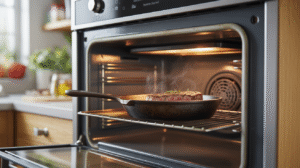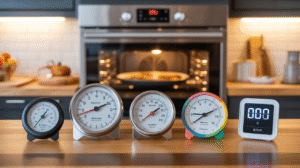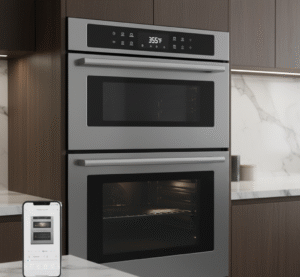
When it comes to outfitting your kitchen, one of the first and biggest decisions is whether to go with a gas oven vs electric. Each has its champions: gas ovens heat up fast and respond instantly to temperature changes, while electric ovens offer consistent heat and even baking results. Knowing the key differences can save you time, money, and frustration in the long run.
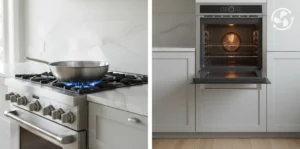 This guide is perfect for home bakers, busy families, apartment dwellers, and cooking enthusiasts who want a clear, practical comparison of gas ovens and electric ovens before making a purchase.
By the end of this article, you’ll know which type of oven suits your cooking style, kitchen setup, and budget, and we’ll highlight the best models across different categories, from smart countertop units to full-size ranges.
At a Glance: Quick Comparison
15-Second Summary
| Feature | Gas Oven | Electric Oven |
|---|---|---|
| Heat Source | Open flame burners | Electric heating elements |
| Temperature Control | Instant response, manual | Slow to change, precise |
| Evenness of Cooking | Hot spots possible | More uniform heat distribution |
| Installation | Requires gas line & venting | Needs 240V outlet (full-size) |
| Running Cost | Often cheaper per use | Slightly higher electricity cost |
| Ideal User | Serious cooks, fast adjustments | Bakers, even cooking, countertop ovens |
TL;DR: Best Picks
- Best Overall: Empava 30″ Electric Range reliable, roomy, versatile.
- Best Budget: MegaChef 47-Quart Electric Oven large capacity, affordable countertop option.
- Best for Gas Lovers: AAOBOSI 36″ Gas Range powerful burners, fast heating.
- Best for Small Kitchens: Typhur Sync Oven compact, smart, and multi-functional.
- Best Premium: Typhur Sync Oven high-tech, app-controlled precision cooking.
Buying Factors / How to Choose (Selection Criteria)
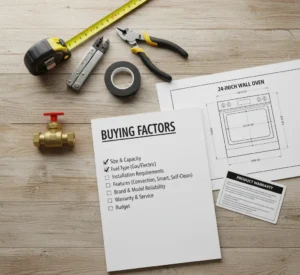 Choosing between a gas oven vs electric isn’t just about the fuel source it’s about how the oven performs, fits in your kitchen, and meets your cooking style. Below are the main factors to consider when making your decision.
Performance & Cooking Style
When comparing a gas oven vs electric, consider how you cook most often:
- Baking Evenness: Electric ovens generally deliver more consistent, even heat, ideal for cakes, cookies, and pastries. Gas ovens can have hot spots but excel at high-heat roasting and broiling.
- Searing & Broiling: Gas ovens provide instant high heat, perfect for searing meats. Electric ovens take longer to preheat but maintain steady temperatures.
- Roast Performance: Convection modes in electric ovens circulate air evenly, while gas ovens rely on radiant heat, giving food a slightly different texture.
- Convection vs Conventional: Most modern electric ovens offer true convection, giving an edge in even browning, while gas ovens may need fan-assisted convection to match.
Precision & Control
- Temperature Accuracy: Electric ovens usually hold temperatures precisely, reducing the risk of over- or under-cooking. Gas ovens heat fast but may fluctuate slightly.
- Preheat Time: [How to preheat] Gas ovens preheat faster due to instant flames, while electric ovens may take 5–15 minutes longer depending on size.
- Responsiveness: Adjusting a gas flame gives immediate feedback, whereas electric elements take longer to respond to temperature changes.
Capacity & Fit
- Oven Size: Full-size electric ranges may offer larger cubic feet, while countertop electric ovens and gas ranges vary.
- Internal Rack Positions: Check adjustable racks for flexibility; electric ovens often have more levels for baking multiple trays.
- Counter Clearance: Countertop electric ovens require at least 4 inches of space for proper ventilation. Gas ovens need space for safe airflow and venting.
Energy, Running Cost & Efficiency
- BTU vs Wattage: Gas ovens are rated in BTUs; electric ovens in watts. Gas can be cheaper to run per cooking session, while electricity costs vary by region.
- Energy Efficiency: Electric ovens maintain even temperatures, sometimes saving energy when baking long-term. Gas ovens use energy more efficiently for short, high-heat cooking.
- Cost-to-Run: Estimate monthly running costs by comparing average BTU usage for gas and kWh for electricity.
Installation & Practicalities
- Gas Line & Venting: Gas ovens require a properly installed gas line and venting system.
- Electrical Requirements: Electric ovens typically need a 240V outlet; countertop models may run on standard 120V.
- Space Considerations: Measure your kitchen space carefully; ensure proper clearance for airflow and safe operation.
Safety & Maintenance
- Safety Features: Gas ovens often include flame failure or thermocouple safety devices. Electric ovens avoid open flames but can overheat if misused.
- Cleaning: Electric ovens often feature self-cleaning or steam-clean options. Gas ovens may require manual cleaning, especially around burners.
- Ongoing Maintenance: Countertop electric ovens and smart devices may require regular descaling or app updates.
Smart Features & Extras
Modern ovens come with features beyond heat source:
- Probes & Temperature Sensors: Useful for precision cooking, often available on countertop electric or smart ovens.
- App Control & Alerts: Electric ovens increasingly integrate Wi-Fi or Bluetooth for remote monitoring.
- Rotisserie & Convection Fans: Enhance versatility; gas ranges may include broil/rotisserie attachments, while electric ovens may combine air frying and convection.
- Included Accessories: Baking trays, racks, probes, or crumb trays add value.
Price & Warranty
- Price vs Longevity: Gas ovens may cost more upfront but last longer with proper maintenance. Electric ovens vary widely in price depending on features.
- Warranty Expectations: Check manufacturer coverage for heating elements, sensors, and smart components. Full-size ranges may have longer warranties than countertop models.
Scorecard Template
Score each model 1–10 per category to compare gas oven vs electric objectively.
| Factor | Weight | Gas Oven Score | Electric Oven Score | Notes |
|---|---|---|---|---|
| Performance & Cooking Style | 25% | 9/10 | 8/10 | Baking, roasting, broiling |
| Precision & Control | 15% | 6/10 | 7/10 | Temp stability, preheat |
| Capacity & Fit | 10% | 8/10 | 8/10 | Oven size, clearance |
| Energy & Efficiency | 15% | 9/10 | 8/10 | Cost per use |
| Installation & Practicality | 10% | 7/10 | 9/10 | Setup complexity |
| Safety & Maintenance | 10% | 8/10 | 8/10 | Cleaning, flame/element safety |
| Smart Features & Extras | 10% | 9/10 | 9/10 | Probes, app, convection |
| Price & Warranty | 5% | 9/10 | 9/10 | Value for money, coverage |
Product Comparison Table
Comparing gas oven vs electric can be overwhelming, so here’s a side-by-side overview of the top models to help you decide quickly.
| Model Name | Type | Capacity | Power (BTU / Watts) | Key Features | Pros | Cons | Ideal For | Price / CTA |
|---|---|---|---|---|---|---|---|---|
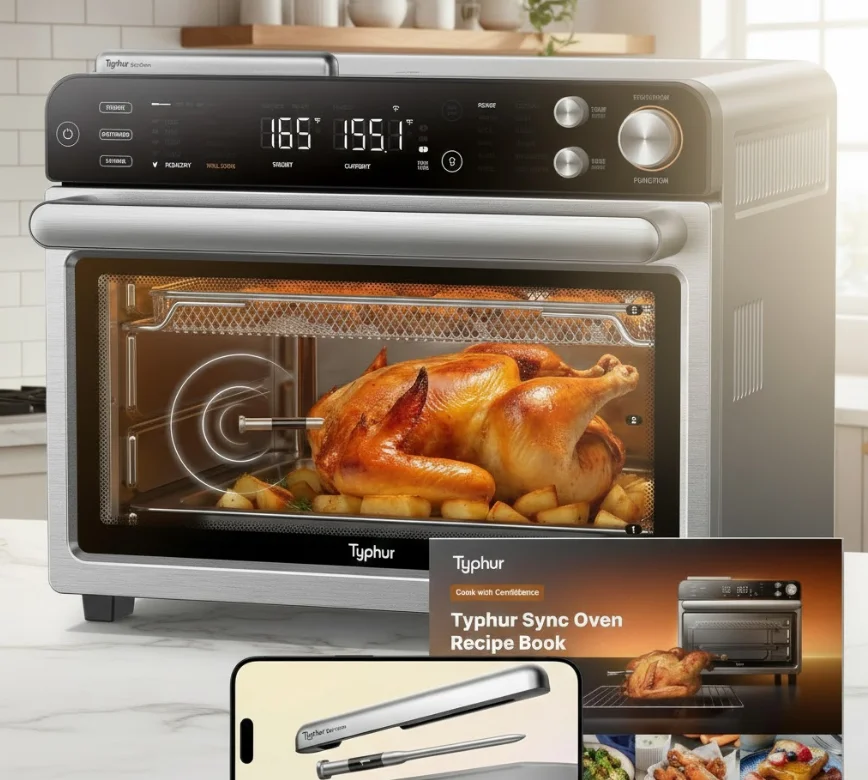
| Typhur Sync Oven | Electric / Countertop | 27 QT | 1750 W | 12-in-1 modes, Wireless Meat Probe, 360° Turbo Convection, App Control | Smart probe + auto shutoff, multi-mode, compact | Needs countertop space, dependent on app | Home cooks, tech-savvy bakers | Check Price |
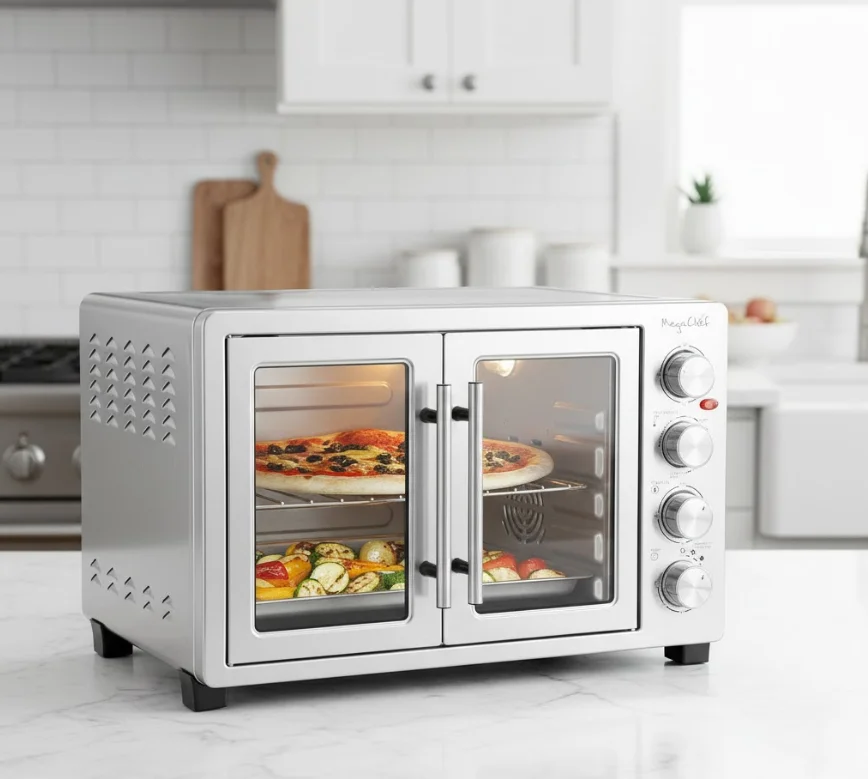
| MegaChef 47-Quart French Door Oven | Electric | 47.6 QT | 1800 W | French Door, Rotisserie, Convection, Interior Lamp | Large countertop capacity, rotisserie, easy monitoring | Limited cooking modes, countertop footprint | Families, batch cooking | Check Price |
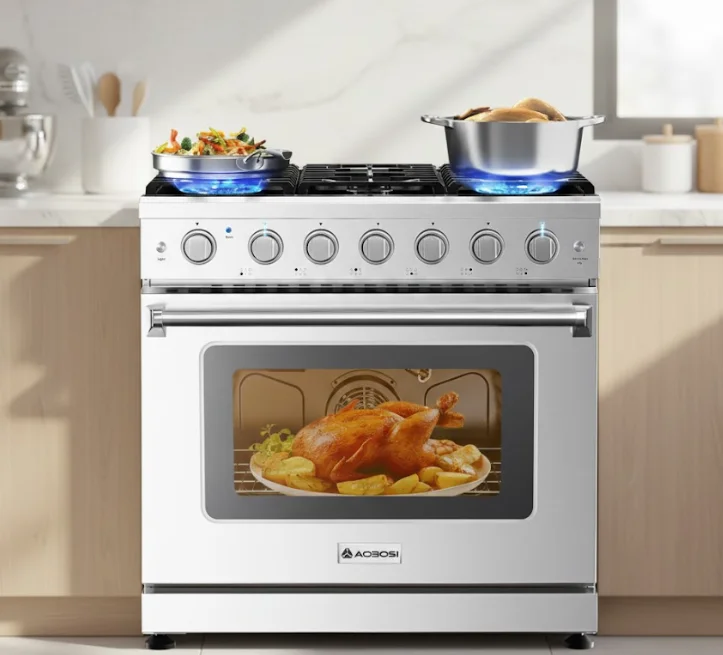
| AAOBOSI 36″ Front Control Gas Range | Gas | 6 Cu. Ft | 9,000–18,000 BTU | 6 burners, True Convection, Self-Clean, Convertible NG/LPG | Powerful burners, versatile heat control, large oven | Requires gas hookup, larger footprint | Gas lovers, multitasking cooks | Check Price |
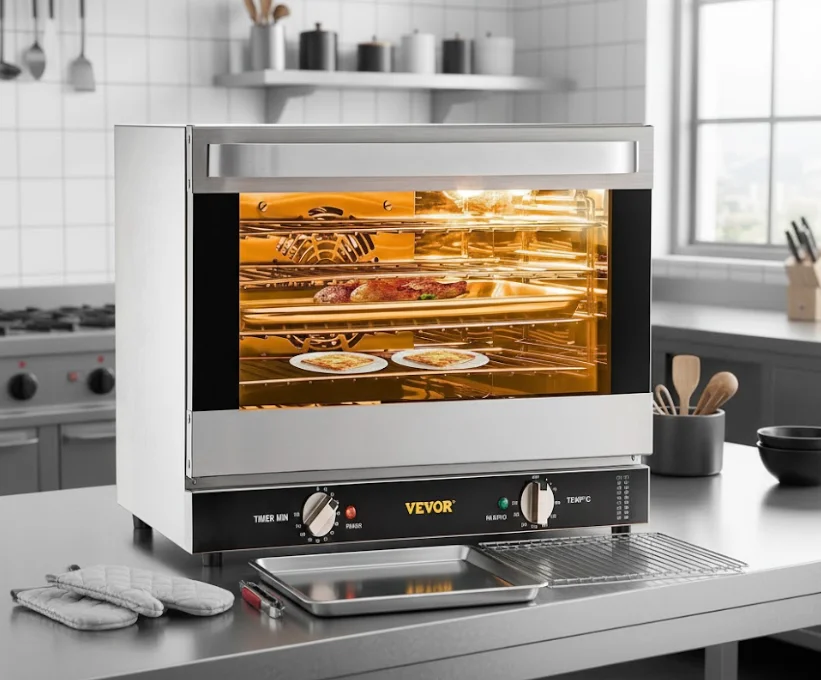
| VEVOR 4-Tier Convection Oven | Electric | 66 L / 60 QT | 1800 W | 4-tier baking, Front Glass Door, Programmable | Commercial-grade, even heat, spacious | Bulkier, countertop-only | Small commercial use, heavy batch baking | Check Price |
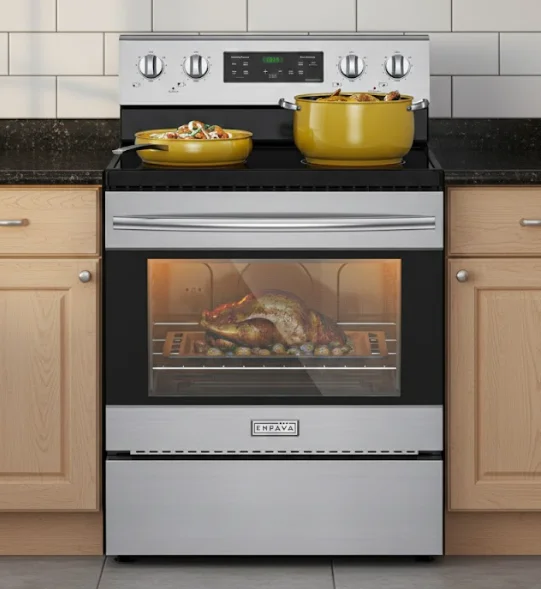
| Empava 30″ Electric Range | Electric | 4.8 Cu. Ft | 240 V | Radiant Ceramic Cooktop, Steam Clean, Freestanding & Slide-in | Large oven, multiple burners, steam clean | Power cord sold separately, needs 240V | Families, full-size kitchens | Check Price |
Table Notes & Sorting Tips
Sorting options (desktop-friendly):
- Best for baking: Empava 30″ Electric Range, Typhur Sync Oven
- Best for small kitchens: Typhur Sync Oven
- Best for precision: Typhur Sync Oven (smart probe), MegaChef (convection)
- Best value: MegaChef 47-Quart, Empava 30″ Electric Range
Affiliate CTA Strategy:
Include “Check Price” buttons with each product row linking to your Amazon affiliate URL.
Repeat CTAs in conclusion and next to verdicts in individual product reviews.
Detailed Reviews
Overview
This countertop electric oven from Typhur brings together air-frying, roasting, and smart temperature control via a built-in wireless probe.

- The wireless meat probe offers real-time temperature monitoring and auto shutoff, preventing overcooking.
- 360° turbo convection ensures even cooking and faster roast/air-fry times.
- Versatile 12-in-1 cooking modes make it a true multi-purpose oven.
- Magnetic docking for the probe, with ultra-fast charging very convenient.
- Compact but roomy, able to handle a 12″ pizza or a 6-lb chicken.

- Requires significant countertop space and clearance (recommendation of 4″ around).
- Not a full-size range limited to what a countertop oven can handle in size.
- Dependence on the Typhur app could be a downside if connectivity or software bugs occur.
- Limited to 1750 W, so may not match large conventional ovens in raw power.
Standout Features:
- Built-in wireless meat probe with auto shutoff (“Smart Remove-Temp”) rare for countertop ovens.
- Real-time monitoring via app + multi-stage programming.
- 360° convection fan for very even heat.
Best For: Home cooks who love tech, want precision cooking (especially when roasting meats), and don’t need a full-size oven.
Verdict (1 Sentence): If you’re looking for a high-tech, countertop electric oven that delivers precision roasting and air-frying, the Typhur Sync Oven is a smart, feature-rich choice.
MegaChef 47-Quart Electric French Door Rotisserie Oven
Overview
A large-capacity countertop electric oven that combines rotisserie, convection, and a French-door design for better access and visibility.
- Massive internal capacity for a countertop model great for large meals.
- Rotisserie function lets you roast whole chickens or meats easily.
- French doors make it easy to slide food in and out and reduce heat loss compared to drop-down doors.
- The interior lamp helps monitor roasting/rotisserie without opening the door.
- Adjustable temperature up to 450°F gives flexibility.
- Limited to standard convection / no “smart” probe or app control.
- Large footprint may be challenging in small kitchens.
- Fewer cooking modes compared to smart/all-in-one ovens.
- Manual knobs (vs digital) may feel less precise to some users.
Standout Features:
- Rotisserie spindle built right in, which is rare for countertop ovens.
- French-door design for better ergonomics and heat retention.
- Spacious capacity — easily handles large trays or roasts.
Best For: Families or batch cooks who want a sizable, no-nonsense countertop electric oven with rotisserie capability.
Verdict (1 Sentence): If you need a roomy electric countertop oven with rotisserie power and convenient French doors, the MegaChef 47‑Quart model delivers strong performance without the complexity of smart features.
AAOBOSI 36″ Front Control Gas Range (6 Burners, 6 cu ft Oven)
Overview
A full-size, powerful gas range that gives you six burners, a large oven, and true convection — ideal for serious home chefs who prefer gas.
- Huge flexibility with six burners and three different heat outputs great for multitasking.
- High BTU burner (18,000) is ideal for fast boiling or searing.
- Convertible gas system (NG/LPG) – provides installation flexibility.
- True convection helps with even baking and roasting.
- Self-clean feature reduces maintenance burden.
- The safety system (flame-out protection) offers peace of mind.
- Requires a gas line or LPG setup not ideal for all kitchens.
- Large size demands significant kitchen space.
- Higher initial cost and potentially higher maintenance compared to simple electric ovens.
- Gas ranges may have slightly less even heating than top-tier electric convection ovens.
Standout Features:
- Six-burner layout with very high BTU output for serious cooking.
- Convertible gas source (NG / LPG) gives flexibility.
- True convection oven combined with substantial capacity and self-cleaning.
Best For: Cooking enthusiasts, large families, or anyone who prefers the responsiveness and control of a gas flame.
Verdict (1 Sentence): For cooks who demand power, flexibility, and the traditional feel of a gas flame, the AAOBOSI 36″ gas range is an outstanding full-size choice.
VEVOR 4‑Tier 60Qt / 66 L Commercial Convection Countertop Oven
Overview
A commercial-grade electric convection oven built for high-volume baking, catering, or serious home bakers who need capacity and consistency.
- Very large capacity for a countertop oven great for batch baking or catering-style cooking.
- Efficient, all-around heat circulation via convection fan ensures even baking across tiers.
- Programmable timer and broad temperature range give flexibility.
- Durable stainless-steel construction built for heavy use.
- A tempered glass door allows visibility without opening and losing heat.
- Comes with multiple racks, a tray, and heat-resistant gloves.
- Bulky yet still countertop; takes up a lot of space.
- Not as “smart” as connected app ovens manual controls only.
- High energy use if run frequently, given its size.
- Might be overkill for casual home use or small households.
Standout Features:
- Four-tier layout rare for non-commercial ovens.
- High-capacity, consistent convection performance.
- Built for durability and high-volume cooking.
Best For: Small commercial kitchens, bakers doing large batch production, or home users who love to bake lots at once.
Verdict (1 Sentence): If capacity and consistency matter most, the VEVOR 4‑Tier Countertop Convection Oven is ideal for high-volume or commercial-style baking at home.
Empava 30″ Electric Range (4.8 cu ft, Radiant Ceramic Cooktop)
Overview
A sleek, full-size electric range with a spacious oven, four radiant cooktop elements, and steam-clean functionality.
- Large oven volume suitable for family meals, baking trays, or big roasts.
- The radiant ceramic cooktop offers precise temperature control and easy-to-clean surfaces.
- Built-in steam-clean avoids harsh chemicals and reduces the effort to clean oven interiors.
- Rear-mounted controls are safer and keep the cooktop workspace uncluttered.
- Durable stainless-steel construction and good design aesthetics.
- Option to be freestanding or slide-in provides installation flexibility.
- Needs a 240V outlet — not all kitchens are wired for that.
- Power cord is not included, meaning extra purchase/installation cost.
- The radiant cooktop gets very hot and remains hot for some time after use.
- Steam-clean may take longer than traditional self-clean cycles.
Standout Features:
- Steam-clean oven gentle and chemical-free cleaning.
- Large 4.8 cu ft baking cavity.
- Four ceramic elements for both power cooking and simmering.
Best For: Home cooks who prefer a full-size electric oven and want a reliable, well-built range without sacrificing capacity.
Verdict (1 Sentence): For those who want a powerful, roomy electric range with a clean design and practical features, the Empava 30″ Electric Range is a standout.
CTA / Affiliate Note: “Check the current price on Amazon.”https://www.amazon.com/dp/B0F1TM1NLW/
Side-by-Side Comparisons: Gas Oven vs Electric
When deciding between a gas oven vs electric, it’s important to evaluate key performance and usability factors. Here’s how the top models compare across critical areas.
Baking & Roasting: Which Holds Temperature & Browns Best?
Electric Ovens: Generally maintain even heat due to stable heating elements and convection fans. Ideal for baking cookies, cakes, and pastries. Models like the Empava 30″ and Typhur Sync Oven excel at consistent browning.
Gas Ovens: Heat rises from burners, so hot spots can occur. Great for roasting meats quickly with high heat but less even for delicate baking. The AAOBOSI 36″ Gas Range performs well with multi-burner roasting but may require rack adjustments. Takeaway: For precision baking, electric edges out gas; for fast roasting or broiling, gas can be preferable.
Speed & Responsiveness: Preheat + Heat Change
Gas Ovens: Heat up quickly and respond instantly to knob adjustments. Ideal for sautéing, searing, or rapid temperature changes.
Electric Ovens: Slower to preheat and adjust temperature, but once hot, they maintain stable heat. Smart models like Typhur Sync Oven can speed this with app monitoring and turbo convection. Takeaway: Gas ovens = faster responsiveness; electric ovens = steadier long-term temperature.
Precision Cooking: Probe & Thermostat Accuracy
Electric: Thermostats and integrated probes (like Typhur Sync Oven) offer ±0.5°F accuracy. Great for meat, poultry, or multi-stage baking.
Gas: Flame-based heat is less precise; manual monitoring is often needed. Some high-end ranges include probe-compatible ovens but less common than electric smart ovens. Takeaway: Electric ovens are superior for precision cooking; gas ovens excel in intuitive control for experienced cooks.
Safety & Reliability
Gas: Flame-out safety devices prevent leaks, but open flames pose fire risk. Proper ventilation is essential.
Electric: No open flame; risk of element burnout or overheating, especially with older models. Smart ovens with auto shutoff mitigate risk. Takeaway: Electric ovens are generally safer for small spaces; gas ovens require correct installation and vigilance.
Space & Installation
Countertop Electric: Typhur Sync, MegaChef, and VEVOR ovens are compact; easy to move but require ventilation space (~4″).
Freestanding Gas: AAOBOSI needs a gas line and enough room for safety clearance.
Slide-in Electric: Empava requires a 240V outlet but integrates seamlessly into kitchen cabinetry. Takeaway: Electric offers flexibility in placement; gas requires infrastructure but gives robust performance.
Maintenance & Cleaning
Electric: Steam-clean or self-cleaning ovens (Empava, Typhur) simplify upkeep. Air-fry residue can often be washed in dishwasher-safe trays.
Gas: Manual cleaning of burners and grates needed; self-cleaning available in some models but less common. Takeaway: Electric ovens are easier to maintain; gas ovens need routine cleaning but offer longevity with proper care.
This section allows readers to quickly compare performance, cost, and convenience when deciding between a gas oven vs electric.
Testing Methodology / How We Compared These Models
To provide an accurate comparison of gas oven vs electric, we evaluated each model using a structured methodology. This ensures that our recommendations are objective, reliable, and useful for both casual cooks and serious bakers.
Oven Not Turning On? 7 Causes & Easy Fixes
Tests to Run
Bake Test:
- Evaluate evenness, browning, and consistency.
- Compare results for cookies, cakes, and bread.
- Electric ovens (Empava, Typhur) often excel at even heat distribution; gas ovens (AAOBOSI) can show slight hot spots.
Roast Test:
- Assess cooking speed, juiciness, and browning of meat and vegetables.
- Gas ovens provide faster searing and high heat; electric ovens maintain consistent roasting temps.
Preheat Time:
- Measure time to reach target temperature (350°F / 180°C).
- Gas ovens preheat quickly; electric ovens are slightly slower, but smart convection models can shorten bake times.
Accuracy Check with Probe:
- Use an internal thermometer or built-in wireless probe to track temperature fluctuations.
- Electric smart ovens like Typhur Sync provide near ±0.5°F accuracy; gas ovens require manual monitoring for best results.
Energy Draw Estimate:
- Compare cost of operation per hour.
- Gas ovens use BTUs; electric ovens use watts.
- Helps users calculate monthly running costs depending on fuel type and frequency of use.
Score Weighting
| Category | Weight | Notes |
|---|---|---|
| Performance (Baking/Roasting) | 35% | Accuracy, consistency, speed |
| Versatility (Cooking Modes & Accessories) | 20% | Multi-mode capability, app control, probes, rotisserie |
| Energy Efficiency / Running Cost | 15% | Electricity vs gas cost per cooking session |
| Price / Value | 15% | Affordability vs features included |
| Warranty / Reliability | 15% | Manufacturer support, longevity, durability |
Each oven is scored in these categories to provide a balanced view of gas oven vs electric performance.
How to Interpret Our Scores
- High Performance Score: Indicates precise temperature control, even baking, and strong roasting performance.
- High Versatility Score: Means multiple cooking modes, smart controls, and useful accessories.
- Energy & Price: Reflect running cost efficiency and value for money.
- Warranty / Reliability: Shows long-term usability and peace of mind.
Users can weigh these scores according to their personal priorities, e.g., a baker may value performance higher, while a small kitchen owner may prioritize compact versatility.
FAQs (SEO & User Intent Driven)
Is a gas oven better for baking than electric?
Answer: Electric ovens generally provide more even, consistent heat, making them ideal for baking cakes, cookies, and pastries. Gas ovens excel in fast roasting and broiling, but may require rack adjustments for uniform baking.
Are electric ovens cheaper to run than gas?
Answer: It depends on your local energy costs. Gas ovens often have lower per-session costs, especially for short cooking tasks. Electric ovens may use more power, but convection and smart modes can improve efficiency.
Do electric ovens give more even heat than gas?
Answer: Yes. Electric ovens with convection fans distribute heat evenly across the cavity. Gas ovens rely on radiant heat, which can create hot spots, although some high-end models compensate with fan-assisted convection.
Can I switch from gas to electric or vice versa?
Answer: Typically no. Gas ovens require a gas line and ventilation, while electric ovens need a 240V outlet (for full-size ranges). Switching often involves significant kitchen modifications and professional installation.
Do countertop electric ovens (air fryers) replace a full-size oven?
Answer: They can handle small to medium meals and provide multi-functionality (air fry, roast, bake). However, they usually lack the capacity for very large roasts or multiple trays simultaneously. They’re ideal as secondary ovens or for small kitchens.
What features actually matter if I bake a lot?
Answer:
- Even heat distribution and convection
- Accurate temperature control
- Multiple rack positions
- Timers or smart probes for precise doneness
- Easy-to-clean interiors
Are smart ovens (probes, apps) worth it?
Answer: For precision cooking, yes. Smart probes and app control (like in Typhur Sync Oven) allow real-time monitoring, multi-stage cooking, and alerts to prevent overcooking. They add convenience, especially for meats and complex recipes.
Conclusion & Final Recommendations
Choosing between a gas oven vs electric ultimately depends on your cooking style, kitchen setup, and desired features. Here’s our breakdown of the top picks from our comparison:
Best Overall
Empava 30″ Electric Range Combines spacious 4.8 cu ft oven, versatile radiant ceramic cooktop, and steam-clean convenience. Ideal for families or serious home cooks who want consistent baking and roasting performance.
Best Budget
MegaChef 47‑Quart Electric French Door Oven Large capacity, rotisserie function, and French doors make it a great countertop option without breaking the bank. Perfect for batch cooking and family meals.
Best Premium
Typhur Sync Oven 27 QT High-tech, multi-functional countertop electric oven with wireless meat probe, app control, and turbo convection. Great for precision cooking, small kitchens, or smart-home enthusiasts.
Best for Gas Lovers / Small Kitchens / Baking
- Best for Gas Lovers: AAOBOSI 36″ Gas Range Powerful 6-burner setup with true convection oven; responsive flame control for serious cooks.
- Best for Small Kitchens: Typhur Sync Oven Compact footprint with high functionality; fits limited counter space.
- Best for Baking: Empava 30″ Electric Range Even heating, multiple racks, and precise temperature control make it perfect for cookies, cakes, and bread.
Quick Buyer Checklist
- Determine whether you prioritize even baking (electric) or fast roasting/searing (gas).
- Check your kitchen setup: gas line, 240V outlet, and countertop space.
- Consider capacity needs: small countertop vs full-size range.
- Factor in smart features if precision cooking or app monitoring matters.
- Evaluate budget and running cost based on electricity vs gas usage.