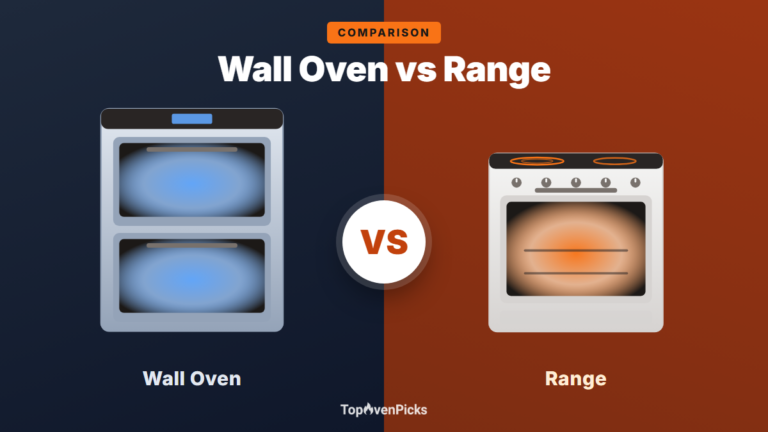
The standard oven size in the US is a 30-inch range: about 30 inches wide, 36 inches tall to the cooktop and 25–27 inches deep (not counting handles), with an oven capacity of roughly 4.8 to 6.3 cubic feet. Wall ovens come in 24-, 27- and 30-inch widths. Here are the dimensions for every common oven type and how to measure your space.
Quick Answer: Standard Oven Dimensions
| Oven type | Standard size | Typical capacity |
|---|---|---|
| Range (most common) | 30" W × 36" H × 25–27" D | 4.8–6.3 cu. ft. |
| Apartment range | 20" or 24" wide | About 2–3 cu. ft. |
| Pro-style range | 30", 36", 48" or 60" wide | Varies; often one or two ovens |
| Single wall oven | 24", 27" or 30" W × 27–29" H | 2–3.5 (24") / 4–5+ (27–30") |
| Double wall oven | 24", 27" or 30" wide, about 50"+ tall | Up to 8–10 cu. ft. combined (30") |
- Range sizes by width
- Standard range dimensions
- Freestanding vs slide-in vs pro
- Oven capacity explained
- What fits in a standard oven
- Wall oven sizes
- Microwave and countertop oven sizes
- Gas vs electric sizes
- Oven sizes outside the US
- How to measure for a new oven
- Clearances and installation
- Which size do you need?
- FAQs
Range Sizes by Width
Ranges are sold in a handful of standard widths so they fit standard cabinet openings. Drawn to scale below, the 30-inch range is by far the most common in American kitchens.
Widths drawn to scale. Heights are similar because all ranges are built to counter height.
The width you need is usually decided by your existing cabinet opening. Replacing a 30-inch range with another 30-inch model is simple; moving to 36 inches or wider means changing cabinets, and often the gas line, electrical and range hood too.
Standard Range Dimensions
| Dimension | Typical 30" range | Notes |
|---|---|---|
| Width | About 29.9–30" | Fits a 30" cabinet opening |
| Height | About 36" to the cooktop | Adjustable leveling legs; freestanding backguards add roughly 10" or more |
| Depth | About 25–27" (without handles) | Handles and knobs can add 1–3" |
| Depth with door open | About 45–50" | Plan walkway space in front |
| Oven capacity | About 4.8–6.3 cu. ft. | Larger on many newer electric ranges |
Manufacturers measure differently, so always use the exact specification sheet for the model you're considering. Depth figures that include handles or the backguard look bigger than general guides.
Freestanding vs Slide-In vs Pro-Style Ranges
| Type | Size and fit | Look | Good to know |
|---|---|---|---|
| Freestanding | 30" standard; finished sides | Raised backguard with controls | Fits almost anywhere; easiest replacement |
| Slide-in | 30" standard; sits flush with counters | No backguard; front controls | Cooktop edges overlap the counter; may need a filler strip behind |
| Front-control freestanding | 30"; finished sides | Slide-in look, lower cost | A middle ground between the two |
| Pro-style | 30", 36", 48", 60"; often deeper | Commercial look, big knobs | May stick out past counters; needs a powerful hood |
| Double-oven range | 30" wide, same footprint | Two oven cavities | Smaller upper oven; total capacity similar to a single |
Shopping for an induction model? Most induction ranges use the same standard 30-inch footprint. See our picks for the best induction ranges. Comparing luxury pro ranges? Read Thermador vs Wolf.
Oven Capacity Explained
Oven capacity is measured in cubic feet (cu. ft.) of usable interior space. It's the best way to compare how much an oven holds.
Typical oven capacity (cubic feet)
- Under 4 cu. ft.: compact; fine for one or two people and small dishes.
- 4–5 cu. ft.: average; handles most family meals and a mid-size turkey.
- 5–6+ cu. ft.: large; easier to bake on multiple racks and cook big holiday meals.
Capacity isn't everything. Rack positions, convection and how evenly the oven heats matter as much for baking several trays at once. Our convection vs conventional oven guide explains why.
What Fits in a Standard Oven?
A standard 30-inch range oven comfortably holds most home bakeware:
Half sheet pan
About 18" × 13"
Fits: yes, in almost every 30-inch range and 27–30-inch wall oven, with room for air to circulate. See the best cookie sheets.
9" × 13" baking dish
Standard casserole
Fits: yes; most 30-inch ovens fit two side by side on one rack.
Roasting pan with turkey
About 16" × 13" pan
Fits: yes in standard ovens. Remove the upper rack for tall birds. See the best roasting pans.
Full sheet pan
About 26" × 18"
Fits: no; full sheets are for commercial ovens.
Compact 24-inch ranges and wall ovens are tighter: many take a quarter sheet or jelly roll pan comfortably, and half sheets can be a squeeze. Measure the interior before buying large bakeware.
Wall Oven Sizes
| Wall oven | Widths | Height | Typical capacity |
|---|---|---|---|
| Single wall oven | 24", 27", 30" | About 27–29" | 2–3.5 cu. ft. (24"); 4–5+ cu. ft. (27–30") |
| Double wall oven | 24", 27", 30" | About 50"+ | Up to 8–10 cu. ft. combined (27–30") |
| Combination (microwave + oven) | 27", 30" | About 40–43" | Microwave on top, full oven below |
| Speed or steam oven | 24", 30" | About 18" | Roughly 1.2–1.7 cu. ft. |
Wall ovens are labeled by nominal width, but what matters for installation is the cutout: the opening in your cabinet. Cutouts are always narrower than the nominal size and vary by brand, so check the installation guide and measure your existing cutout before buying a replacement. A 30-inch wall oven from one brand may not drop into another brand's cutout without cabinet changes.
Considering a speed oven above a wall oven? Our speed oven vs microwave guide covers sizes and installation. Still choosing a layout? Compare wall oven vs range.
Microwave and Countertop Oven Sizes
| Appliance | Typical size | Capacity |
|---|---|---|
| Compact countertop microwave | About 17–20" wide | 0.5–0.9 cu. ft. |
| Mid-size countertop microwave | About 20–22" wide | 1.0–1.6 cu. ft. |
| Full-size countertop microwave | About 22–24" wide | 1.7–2.2 cu. ft. |
| Over-the-range microwave | 30" wide, about 16–17" tall | About 1.6–2.1 cu. ft. |
| Microwave drawer | 24" or 30" wide | About 1.2 cu. ft. |
| Toaster / countertop oven | About 15–21" wide | Fits 4–6 slices or a 12" pizza |
Short on counter space? See the best small microwaves, and check the interior and turntable size if you'll heat large plates or casserole dishes.
Do Gas and Electric Ovens Differ in Size?
Not on the outside: gas, electric, dual fuel and induction ranges all use the same standard widths and fit the same 30-inch opening. Inside, there can be small differences:
- Electric ovens often have slightly larger cavities at the same width, because there's no gas burner assembly under the oven floor. Many 30-inch electric ranges are 5.3 cu. ft. or more.
- Gas ovens typically have a bake burner under the floor and a broiler at the top or in a drawer below, which can take up a little space.
- Double-oven ranges split the space into a small upper oven and a larger lower oven within the same 30-inch footprint.
- Hookups differ: electric ranges usually need a 240V outlet; gas ranges need a gas line plus a standard 120V outlet. Switching fuel types means changing the supply, not the cabinet (see induction vs gas range).
Oven Sizes Outside the US
If you're shopping for a European brand, sizes are measured in centimeters. The standard European built-in oven is 60 cm wide (about 23.6 inches) and roughly 60 cm tall, close to a US 24-inch wall oven. Larger European ranges come in 90 cm (about 35.4 inches) widths, close to a US 36-inch range. European ovens list capacity in liters; divide by about 28.3 to convert to cubic feet (a 70-liter oven is about 2.5 cu. ft.). Always confirm US electrical requirements and cutouts before buying an imported model.
How to Measure for a New Oven
- Measure the opening widthMeasure between the cabinets at the top, middle and bottom, and use the smallest number. A standard opening is 30 inches.
- Measure the heightMeasure from the floor to the countertop. Ranges adjust slightly with leveling legs to match a standard 36-inch counter.
- Measure the depthMeasure from the back wall to the front edge of the counter. Note where gas lines or outlets sit, since they can stop a range from pushing back fully.
- Check the door swingMake sure the open oven door won't hit an island or opposite cabinets, and leave space to stand in front of it.
- Check the delivery pathMeasure doorways and hallways. Most ranges need about 30 inches of clear width; remove the oven door if needed.
- Confirm power or gasElectric ranges usually need a 240V outlet; gas ranges need a gas line and a standard 120V outlet for igniters and controls.
- Read the spec sheetCompare your measurements with the model's installation guide, including any required clearances and cutout sizes.
Clearances and Installation
- Above the cooktop: many manufacturers call for about 30 inches between the cooktop and unprotected cabinets above, or less with a listed range hood or microwave. Follow your range and hood instructions.
- Countertop height: standard counters are 36 inches, matching standard range height.
- Side gaps: freestanding ranges fit into a 30-inch opening; slide-ins need the countertop cut to the right depth and overlap the counter edges.
- Anti-tip bracket: every range must be secured with its anti-tip bracket to stop it tipping forward if someone leans on the open door.
- Wall ovens: need cabinet support rated for the oven's weight and the exact cutout dimensions.
- Ventilation: larger and pro-style ranges need a wider, more powerful hood.
Planning a replacement? Our guide to the best time to buy an oven covers sales, and how long ovens last helps decide whether to repair or replace.
Which Oven Size Do You Need?
| Your kitchen | Best size |
|---|---|
| Studio, ADU or RV | 20" or 24" range, or a countertop oven |
| Apartment or small kitchen | 24" range or 24" wall oven |
| Most family homes | 30" range (5+ cu. ft.) |
| Frequent bakers and entertainers | 30" double-oven range or double wall oven |
| Serious cooks, large kitchens | 36" or 48" pro-style range |
| Remodel with an island cooktop | 30" single or double wall oven |
Go bigger if you
- Host holidays and big dinners
- Bake several trays at once
- Have a large family
Stay compact if you
- Cook for one or two
- Have limited floor or cabinet space
- Rely on a microwave or countertop oven
Still choosing a brand? Our best oven brands guide compares reliability and value.
Standard Oven Size FAQs
What is the standard size of an oven?
The standard US range is 30 inches wide, about 36 inches tall to the cooktop and 25–27 inches deep without handles. Its oven typically holds about 4.8 to 6.3 cubic feet.
Are all ovens 30 inches wide?
No. 30 inches is the most common range width, but ranges also come in 20, 24, 36, 48 and 60 inches, and wall ovens come in 24, 27 and 30 inches.
What are the interior dimensions of a standard oven?
They vary by model, but a standard 30-inch range oven fits a half sheet pan (about 18 × 13 inches) or two 9 × 13 dishes side by side. Check the spec sheet for exact interior dimensions.
How tall is a standard oven?
Ranges are about 36 inches tall to the cooktop to match counter height. Freestanding models add a backguard. Single wall ovens are about 27–29 inches tall; double wall ovens about 50 inches or more.
How deep is a standard oven?
Most ranges are about 25–27 inches deep without handles and a few inches more with them. Pro-style ranges are often deeper and may stick out past counters.
What size is a standard wall oven?
Single wall ovens are 24, 27 or 30 inches wide and about 27–29 inches tall. Always check the cutout dimensions, which are smaller than the nominal width.
Can I replace a 30-inch range with a 36-inch range?
Only if you modify the cabinets. You'll also need to check the gas or electrical supply and upgrade the hood to cover the wider cooktop.
What is a good oven capacity for a family?
For a family of four, an oven of about 5 cubic feet or more handles everyday meals and holiday cooking comfortably. Frequent bakers may prefer a double oven.
What size is an apartment oven?
Apartment ranges are usually 20 or 24 inches wide with about 2 to 3 cubic feet of oven space. They fit smaller bakeware such as quarter sheets and 8-inch pans.
Do slide-in and freestanding ranges have the same size?
Both are typically 30 inches wide and fit the same opening, but slide-ins have no backguard, sit flush with counters and overlap the countertop edges, so the counter must be cut to suit.
The Bottom Line
For most homes, the standard oven is a 30-inch range, 36 inches tall and 25–27 inches deep, with roughly 5 cubic feet of space. Measure your opening, door swing and delivery path before you buy, and compare the exact spec sheet rather than nominal sizes, especially for wall oven cutouts.
About this guide
Researched and written by the TopOvenPicks editorial team. We compare manufacturer specifications and installation guides to help you choose ovens that fit real kitchens.
Sources: manufacturer sizing guides and installation specifications (including Maytag, KitchenAid and Whirlpool).
TopOvenPicks is reader-supported. When you buy through links on our site, we may earn an affiliate commission at no extra cost to you. Always confirm dimensions with the manufacturer's specifications before buying.