The key difference in a speed oven vs microwave is browning: a speed oven combines microwave energy with convection heat (and sometimes broil elements or halogen lamps), so it cooks fast and browns and crisps food. A microwave only heats food from within, so it's quick but can't brown. Here's how they compare and which one belongs in your kitchen.
Microwave
Microwave energy only
- Fastest for reheating, defrosting and drinks
- Can't brown, crisp, bake or toast
- Countertop, over-the-range, drawer or built-in
- Usually plugs into a standard outlet
- Costs far less
Speed oven
Microwave + convection (+ broil)
- Full microwave plus a real convection oven
- Browns, roasts and bakes, often faster than a wall oven
- Can work as a second oven
- Usually built into a wall or cabinet
- Costs several times more
Quick Answer: Speed Oven or Microwave?
- Choose a microwave if you mostly reheat leftovers, heat drinks, defrost and make popcorn, and want the simplest, cheapest option.
- Choose a speed oven if you're remodeling and want a second oven that also works as your microwave, or you're short on space and want one appliance that browns, bakes and microwaves.
- On a budget? A countertop convection microwave or air fryer combo gives you some speed-oven features without a built-in install.
- What is a speed oven?
- How each one cooks
- 12-point scorecard
- How fast is a speed oven?
- Which is better for each food
- Types of speed ovens
- Size and installation
- Kitchen layout ideas
- Cookware and accessories
- Speed oven cooking tips
- Speed oven myths
- Cost of ownership
- Pros and cons
- Which should you buy
- Our picks
- FAQs
What Is a Speed Oven?
A speed oven is a compact oven that combines two or more heat sources in one cavity so food cooks faster than in a regular oven while still browning. Every speed oven can work as a normal microwave and as a normal convection oven, and its signature "speed cook" mode runs both at once.
Most built-in speed ovens are roughly 1.2–1.7 cubic feet inside, similar to a mid-size microwave and much smaller than a full wall oven. For example, Bosch's 24-inch speed oven is about 1.6 cu. ft., and GE's Advantium is about 1.7 cu. ft., the largest in the category according to Yale Appliance. GE's Advantium adds halogen lamps above and below the food, which brown the surface very quickly and let it skip preheating.
How Each One Cooks
A microwave sends microwave energy into the food, which makes the water molecules vibrate and heat up. It's very fast, but the surface never gets hot and dry enough to brown, which is why microwaved pizza goes soft and roasted potatoes come out steamed.
A speed oven can use microwave energy to heat the inside of the food while a convection element and fan (and sometimes a broiler or halogen lamps) brown and crisp the outside. You can also run each mode on its own: microwave only for coffee, convection only for cookies, or combination for a chicken that's roasted in a fraction of the usual time.
New to convection? Our guide to convection vs conventional ovens explains how the fan changes cooking times and results.
Speed Oven vs Microwave: 12-Point Scorecard
| Factor | Microwave | Speed oven | Winner |
|---|---|---|---|
| Reheating leftovers | Fastest, but can turn soggy | Fast, and stays crisp | Speed oven |
| Drinks, soups, popcorn | Excellent | Excellent (microwave mode) | Tie |
| Defrosting | Excellent | Excellent | Tie |
| Browning and crisping | None (unless convection/air fry) | Excellent | Speed oven |
| Baking | Not suitable | Cookies, cakes, bread, pizza | Speed oven |
| Roasting meat and vegetables | Steams instead | Roasts, often faster than a wall oven | Speed oven |
| Works as a second oven | No | Yes | Speed oven |
| Purchase price | Low | High | Microwave |
| Installation | Plug in (countertop) | Built-in cabinet, dedicated circuit | Microwave |
| Ease of use | Press and go | More modes to learn | Microwave |
| Cookware | Microwave-safe only | Depends on mode; metal for convection only | Microwave |
| Kitchen look | Countertop clutter | Built-in, matches wall ovens | Speed oven |
The speed oven wins on what it can cook; the microwave wins on price, simplicity and installation. Two categories are a tie because a speed oven is also a full microwave.
How Fast Is a Speed Oven?
Manufacturers claim combination modes cook several times faster than a conventional oven; for the GE Advantium, retailers quote oven-quality results two to eight times faster. In a showroom demo reported by Yale Appliance, scalloped potatoes took 18 minutes in the Advantium versus about 50 minutes in a regular oven.
Two things make speed ovens fast: microwave energy heats the inside of the food at the same time as the outside browns, and many models need little or no preheating. A regular wall oven typically spends 10–20 minutes preheating before food even goes in. For large roasts, holiday turkeys or several trays of cookies, though, a full-size oven is still the better tool simply because of space.
Which Is Better for Each Food?
| Food | Better choice | Why |
|---|---|---|
| Coffee, tea, soup | Either | Both use microwave mode |
| Leftover pizza | Speed oven | Crisp crust instead of soggy |
| Frozen fries and nuggets | Speed oven | Convection crisps like an air fryer |
| Baked potato | Speed oven | Fluffy inside and crisp skin, fast |
| Roast chicken | Speed oven | Browned skin in much less time |
| Cookies and muffins | Speed oven | Convection bake; a microwave can't |
| Steamed vegetables | Either | Microwave steaming works well |
| Popcorn and defrosting | Either | Both have presets |
| Thanksgiving turkey | Neither | Too big; use a full-size oven |
If you mainly want better reheating and crisping on a budget, a countertop toaster oven might be enough. See our toaster oven vs microwave comparison.
Types of Speed Ovens
| Type | What it is | Good for | Watch out for |
|---|---|---|---|
| Built-in wall speed oven | Installed in a cabinet or wall, often stacked over a wall oven | Remodels; second oven; clean look | Needs cabinet cutout and electrical work |
| Halogen speed oven | Adds halogen lamps for fast browning (GE Advantium) | Fast browning, toasting, no preheat | Learning curve with presets |
| Over-the-range speed oven | Replaces an over-the-range microwave | Small kitchens | Shallow; vents a range poorly |
| Steam speed oven | Some luxury brands pair speed modes with steam in separate or combined units | Moist cooking, reheating, bread | Higher price; check features carefully |
| Countertop combo | Microwave with convection or air fry | Renters, budgets, no install | Smaller and less powerful than built-ins |
Brands that make built-in speed ovens include GE (Profile, Café and Monogram Advantium), Bosch, Miele, Wolf, Thermador, KitchenAid, JennAir and Fisher & Paykel. Comparing brands? See our best oven brands guide, which includes reliability data.
Size and Installation
Microwave
- Countertop: plugs into a standard outlet; just leave ventilation space around it.
- Over-the-range: mounts above the cooktop and doubles as a vent hood, usually on a dedicated 120V circuit.
- Drawer or built-in: installed in a base or wall cabinet with a trim kit.
Speed oven
- Width: usually 24 or 30 inches to line up with wall ovens.
- Height: about 18 inches, so it stacks neatly above a single wall oven or fits in a tall cabinet.
- Electrical: many run on a 120V circuit, while others need 240V. Yale Appliance notes that the 120V version of the GE Advantium is noticeably slower than the 240V version, so choose 240V when you can.
- Cutout: follow the exact cutout dimensions in the installation guide before you build cabinets.
- Venting: built-ins don't vent the cooktop, so you'll still need a range hood.
Plan the circuit before drywall closes during a remodel. Adding a 240V line later is much harder and more expensive.
Kitchen Layout Ideas
- Speed oven over wall oven: the most popular combination. You get a full-size oven for big cooking and a speed oven for weeknights and reheating, with no separate microwave needed.
- Speed oven plus range: a range for main cooking, plus a speed oven in a tall cabinet as a second oven and microwave.
- Speed oven as the only oven: works in small apartments, ADUs and condos if you don't bake big batches or roast large birds.
- Microwave drawer plus wall ovens: if you only need basic microwave tasks, a drawer keeps counters clear for less money.
- Countertop combo: renters and budget kitchens can get convection and air fry in a countertop microwave.
Planning a new oven purchase? Our guide to the best time to buy an oven covers the biggest sale periods.
Cookware and Accessories
What you can put in a speed oven depends on the mode:
- Microwave mode: microwave-safe glass, ceramic and plastic only. No metal.
- Convection or broil mode: oven-safe metal pans, glass and ceramic, just like a regular oven.
- Combination (speed) mode: use the racks, trays and pans supplied by the maker. Many speed ovens include a special tray or metal rack designed to be safe with microwaves; check the manual before using your own metal pans.
Speed oven cavities are smaller than wall ovens, so measure before buying bakeware. A quarter sheet or small casserole dish usually fits.
Tips for Cooking in a Speed Oven
- Learn five favorite presets firstSpeed ovens have dozens of programs. Start with the foods you cook most, such as chicken breasts, salmon, potatoes and frozen pizza, and learn those before exploring the rest.
- Use the supplied rack and trayCombination modes are designed around the maker's accessories, which sit at the right height and are safe with microwaves.
- Cut cooking times, not temperaturesWhen adapting a regular oven recipe in combination mode, start checking at about half the usual time and use a thermometer for meat.
- Keep food a similar sizeMicrowave energy heats small pieces faster, so cut vegetables and potatoes evenly for even results.
- Don't overcrowdThe cavity is small. Leave room around food so hot air can circulate and brown it.
- Clean after messy cooksGrease on the cavity walls can smoke during convection or broil. Wipe it out once it has cooled.
Speed Oven Myths
- "Speed ovens are just fancy microwaves." They include a real convection oven, so they can bake cookies, roast chicken and crisp pizza, which a standard microwave can't.
- "Food tastes microwaved." In combination mode, convection or halogen heat browns the surface, so food looks and tastes oven-roasted, not steamed.
- "You can't use metal at all." You can in convection-only mode. In microwave and combination modes, follow the manual and use the supplied accessories.
- "A speed oven replaces every oven." Only for small households. The cavity is too small for big roasts and batch baking.
Cost of Ownership
A speed oven costs several times more than a good countertop microwave, and installation can add cabinetry and electrical costs. But if it replaces both a built-in microwave and a second wall oven, the total can be competitive with buying two separate appliances.
- Energy: for short tasks, both use little energy. For small meals, a speed oven typically uses less energy than heating a full-size oven, because the cavity is small and cooking times are shorter.
- Lifespan: microwaves typically last around 9 years. Speed ovens have more parts (fans, elements and electronics), so repairs can cost more. See how long ovens last for typical lifespans and repair-or-replace advice.
- Service: choose a brand with good local service. Yale Appliance points to GE's large national service network as an advantage for the Advantium.
Pros and Cons
Speed oven pros
- Microwave and convection oven in one
- Browns and crisps, unlike a microwave
- Faster cooking with little or no preheat
- Serves as a second oven
- Clean, built-in look
Speed oven cons
- Much more expensive
- Built-in installation and wiring
- Small cavity for big roasts
- Learning curve for combination modes
- More parts that can need repair
Microwave pros
- Inexpensive and widely available
- Fastest reheating and defrosting
- Plug-and-play countertop models
- Very simple to use
Microwave cons
- Can't brown, crisp or bake
- Leftovers can turn soggy or rubbery
- Takes up counter space
- No metal cookware
Which Should You Buy?
| Your situation | Best choice |
|---|---|
| Remodeling with wall ovens | Speed oven above a single wall oven |
| Small kitchen, condo or ADU | Speed oven as your microwave and oven |
| Mostly reheating and popcorn | Microwave |
| Renting or on a budget | Countertop convection microwave |
| Big holiday cooking | Full-size oven plus a microwave or speed oven |
| Want crispy reheats without a remodel | Microwave plus a toaster or air fryer oven |
Our Picks
Built-in speed ovens are mostly sold through appliance dealers. If you want speed-oven features on your counter, or simply a good microwave, these are well-rated on Amazon:
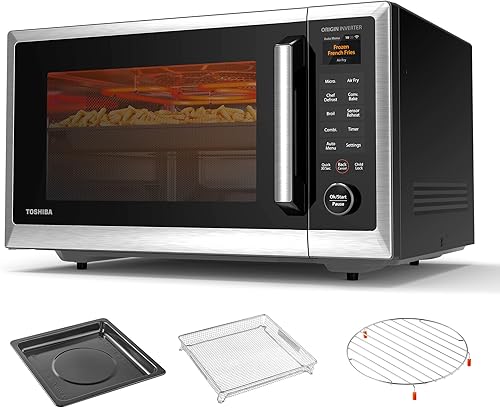


Countertop combos are smaller and less powerful than built-in speed ovens, and owner reviews on durability are mixed, so treat them as a budget alternative. Need a compact microwave instead? See the best small microwaves, or learn how to get the most from convection in our convection oven guide.
Speed Oven vs Microwave FAQs
What is the difference between a speed oven and a microwave?
A microwave only uses microwave energy, so it heats food fast but can't brown or crisp. A speed oven combines microwave energy with convection heat (and sometimes broil elements or halogen lamps), so it cooks fast and browns, roasts and bakes.
Can a speed oven replace a microwave?
Yes. Every speed oven has a full microwave mode for reheating, defrosting and popcorn, so you don't need a separate microwave.
Can a speed oven replace a wall oven?
For small households and everyday meals, it can. But its cavity is much smaller (roughly 1.2–1.7 cu. ft.), so it can't handle large turkeys, big roasts or several sheets of cookies at once.
Is a speed oven the same as a convection microwave?
They're closely related. Both combine microwave and convection. "Speed oven" usually refers to built-in models with stronger convection elements, more combination modes and sometimes broil or halogen heat, while "convection microwave" often means a countertop model.
Do speed ovens need 240V?
Not all of them. Many speed ovens run on 120V, while some, like certain GE Advantium models, come in 240V versions that cook faster. Check the installation guide for the exact model.
Can you use metal pans in a speed oven?
In convection-only mode, yes. In microwave mode, no. In combination mode, use only the racks and pans supplied or approved by the manufacturer.
Is a speed oven worth it?
It's worth it if you're remodeling and want a second oven and a microwave in one built-in space, or if you cook small meals often and want fast, browned results. If you mainly reheat and make popcorn, a microwave is enough.
Does a speed oven need a vent?
Built-in speed ovens are designed to vent through the front or trim and don't need a duct. They don't vent your cooktop, though, so you still need a range hood.
Do speed ovens preheat?
In convection mode they preheat like a small oven, but usually faster because the cavity is small. In combination modes, many recipes need little or no preheating, and halogen models like the GE Advantium skip it.
How long do speed ovens last?
There's little long-term data, but expect them to last at least as long as a microwave (around 9 years) with proper care. They have more components than a microwave, so choose a brand with good local service.
Final Verdict
A speed oven is the better appliance: it does everything a microwave does and also browns, roasts and bakes, often faster than a wall oven. It makes the most sense in a remodel, stacked above a wall oven or as the main oven in a small home.
A microwave is the better value if you mostly reheat, defrost and heat drinks. If you want some speed-oven features without a built-in install, choose a countertop convection microwave.
TopOvenPicks is reader-supported. When you buy through links on our site, we may earn an affiliate commission at no extra cost to you. Prices and availability change often, so always confirm details on Amazon.