Table of Contents
- Introduction to Baking Turkey in the Oven
- What You Need Before Baking a Turkey
- Choosing the Right Turkey for Oven Baking
- How to Prepare Turkey for the Oven
- Step-by-Step Guide: How to Bake Turkey in Oven
- Turkey Cooking Time Chart (Oven Baked Turkey)
- Tips for the Best Oven Baked Turkey
- Common Mistakes When Baking Turkey
- How to Carve Oven Baked Turkey
- What to Serve with Oven Baked Turkey
- Storing and Reheating Leftover Turkey
- FAQs
- Conclusion
Introduction to Baking Turkey in the Oven
Baking turkey in the oven is one of the most traditional and reliable ways to prepare a delicious, tender holiday meal. Whether you are cooking for a festive gathering or a simple family dinner, learning how to bake turkey in oven properly can help you create a juicy, flavorful centerpiece that everyone will enjoy.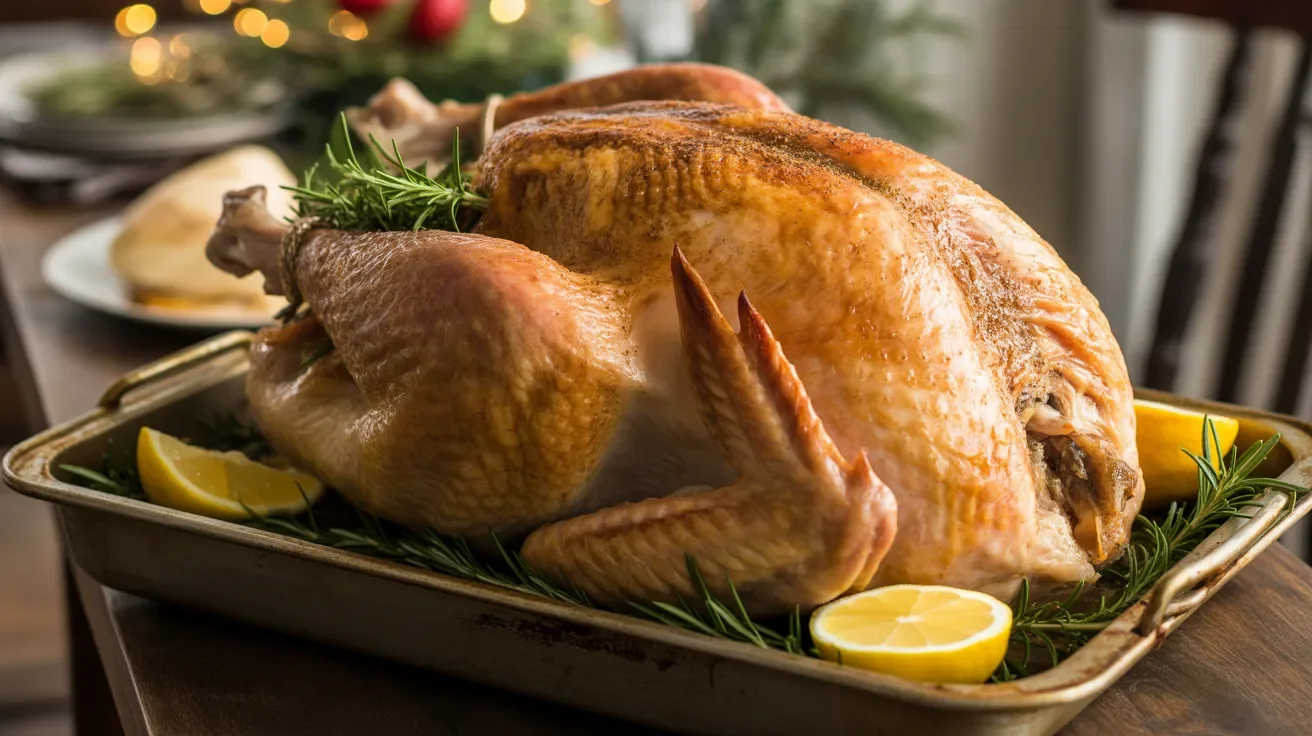
Why Oven-Roasted Turkey Is a Classic Holiday Centerpiece
For many families, oven-roasted turkey is the highlight of holiday meals. During celebrations like Thanksgiving and Christmas, a beautifully roasted turkey placed in the center of the table brings people together and symbolizes warmth, tradition, and sharing. The golden, crispy skin and juicy meat make oven baked turkey both visually impressive and satisfying. Because a whole turkey can serve many people, it naturally becomes the main dish around which other sides are served.Benefits of Baking Turkey in the Oven vs Other Cooking Methods
Baking turkey in the oven is popular because it is simple, reliable, and produces consistent results. Compared to grilling, smoking, or deep-frying, oven roasting is usually the easiest method for beginners. Some advantages of oven baking include:- Even cooking: The oven distributes heat evenly, helping the turkey cook thoroughly.
- Easy temperature control: You can maintain a steady roasting temperature.
- Crispy skin: Oven roasting helps develop a golden, crispy exterior.
- Beginner-friendly: The process requires minimal special equipment.
- Safer than frying: Oven cooking avoids the risks associated with hot oil.
Brief Overview of the Process Beginners Can Expect
If you are new to roasting poultry, learning how to bake turkey in oven may seem complicated, but the process is actually straightforward. In general, it involves a few key steps:- Thaw the turkey if it is frozen.
- Clean and prepare the turkey for seasoning.
- Season the turkey with butter, herbs, and spices.
- Place it in a roasting pan and bake at the correct temperature.
- Check the internal temperature to ensure it is fully cooked.
- Let the turkey rest before carving and serving.
When People Usually Bake Turkey
Turkey is commonly associated with special occasions and family gatherings. While it can be enjoyed any time of year, it is especially popular during:- Thanksgiving dinners
- Christmas celebrations
- Holiday parties
- Large family meals or weekend gatherings
What You Need Before Baking a Turkey
Before you start learning how to bake turkey in an oven, it is important to gather the right ingredients and kitchen tools. Preparing everything in advance makes the cooking process smoother and helps ensure your turkey turns out flavorful and perfectly roasted.Ingredients for Oven Baked Turkey
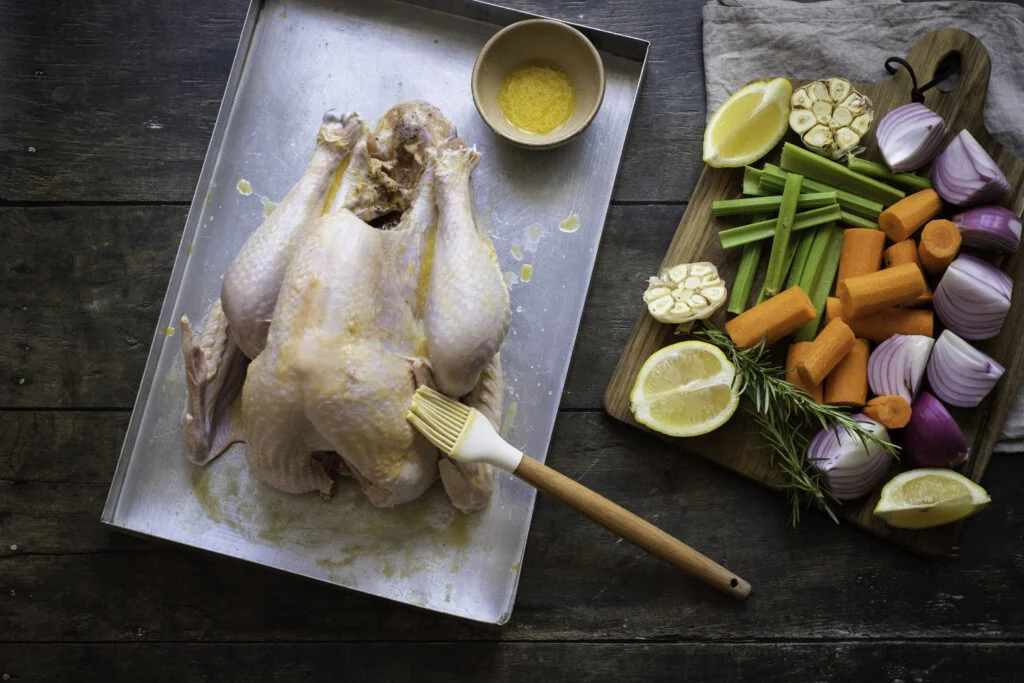 A delicious oven baked turkey does not require complicated ingredients. In fact, simple seasonings often produce the best flavor.
Here are the basic ingredients you will need:
A delicious oven baked turkey does not require complicated ingredients. In fact, simple seasonings often produce the best flavor.
Here are the basic ingredients you will need:
- Whole Turkey (Fresh or Frozen) The turkey is the main ingredient. Choose a size that fits your oven and the number of people you plan to serve.
- Butter or Olive Oil Butter or olive oil helps keep the turkey moist and helps the skin turn golden and crispy during roasting.
- Salt and Pepper These essential seasonings enhance the natural flavor of the turkey meat.
- Garlic and Fresh Herbs Herbs such as rosemary, thyme, and sage add aroma and depth of flavor. Garlic can also be rubbed on the turkey or placed inside the cavity.
- Onion, Lemon, and Celery (Optional Aromatics) These ingredients are often placed inside the turkey cavity to add subtle flavor and fragrance while the turkey roasts.
Essential Tools and Equipment
Using the proper tools makes baking a turkey easier and helps ensure safe cooking temperatures.- Roasting Pan A sturdy roasting pan with a rack allows hot air to circulate around the turkey for even cooking.
- Meat Thermometer A meat thermometer is one of the most important tools when learning how to bake turkey in oven. It helps you check the internal temperature to ensure the turkey is fully cooked and safe to eat.
- Aluminum Foil Foil can be used to cover the turkey if it begins to brown too quickly during roasting.
- Basting Brush or Spoon This tool is used to baste the turkey with melted butter or pan juices to keep the meat moist.
- Kitchen Twine (Optional for Trussing) Kitchen twine can be used to tie the turkey legs together, which helps the bird cook evenly and maintain its shape.
Choosing the Right Turkey for Oven Baking
Selecting the right turkey is an important step when learning how to bake a turkey in the oven. The size, type, and preparation of the turkey can affect both cooking time and overall flavor.Fresh vs Frozen Turkey
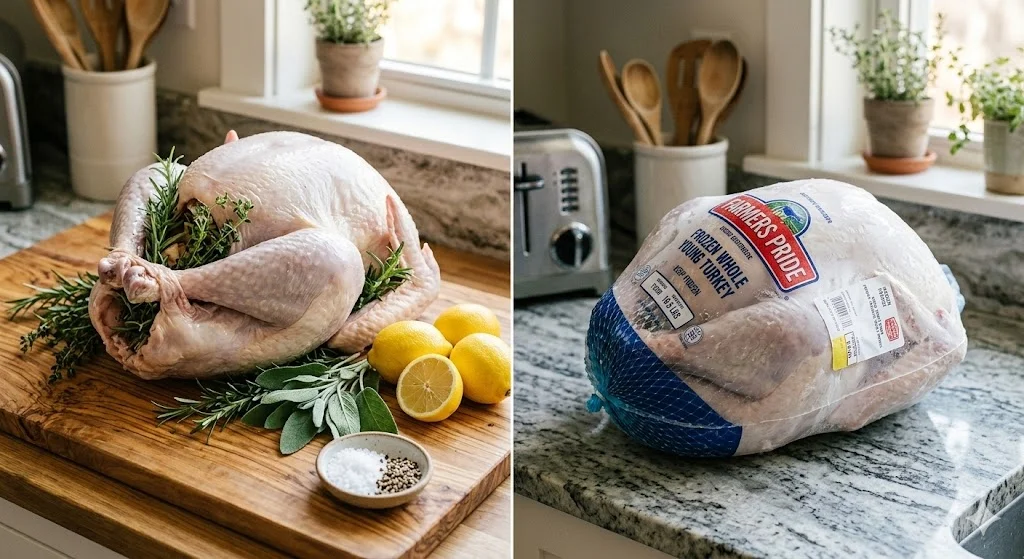 One of the first decisions you will make is whether to buy a fresh or frozen turkey.
Fresh Turkey
One of the first decisions you will make is whether to buy a fresh or frozen turkey.
Fresh Turkey
- Usually has slightly better texture and flavor
- Does not require thawing
- Must be cooked within a few days of purchase
- Often more expensive
- More widely available in stores
- Usually less expensive
- Can be stored in the freezer for longer periods
- Requires proper thawing before cooking
How Much Turkey Per Person
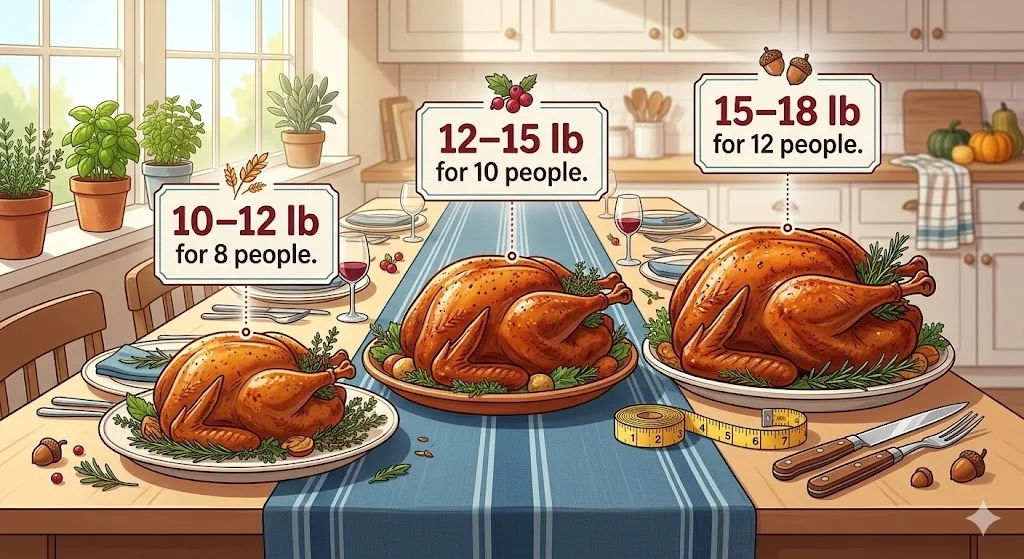 When planning a meal, it is important to choose the right size turkey so everyone has enough to eat.
A general guideline is:
When planning a meal, it is important to choose the right size turkey so everyone has enough to eat.
A general guideline is:
- 1 to 1.5 pounds of turkey per person
- 8 people → 10–12 pound turkey
- 10 people → 12–15 pound turkey
- 12 people → 15–18 pound turkey
Ideal Turkey Size for Home Ovens
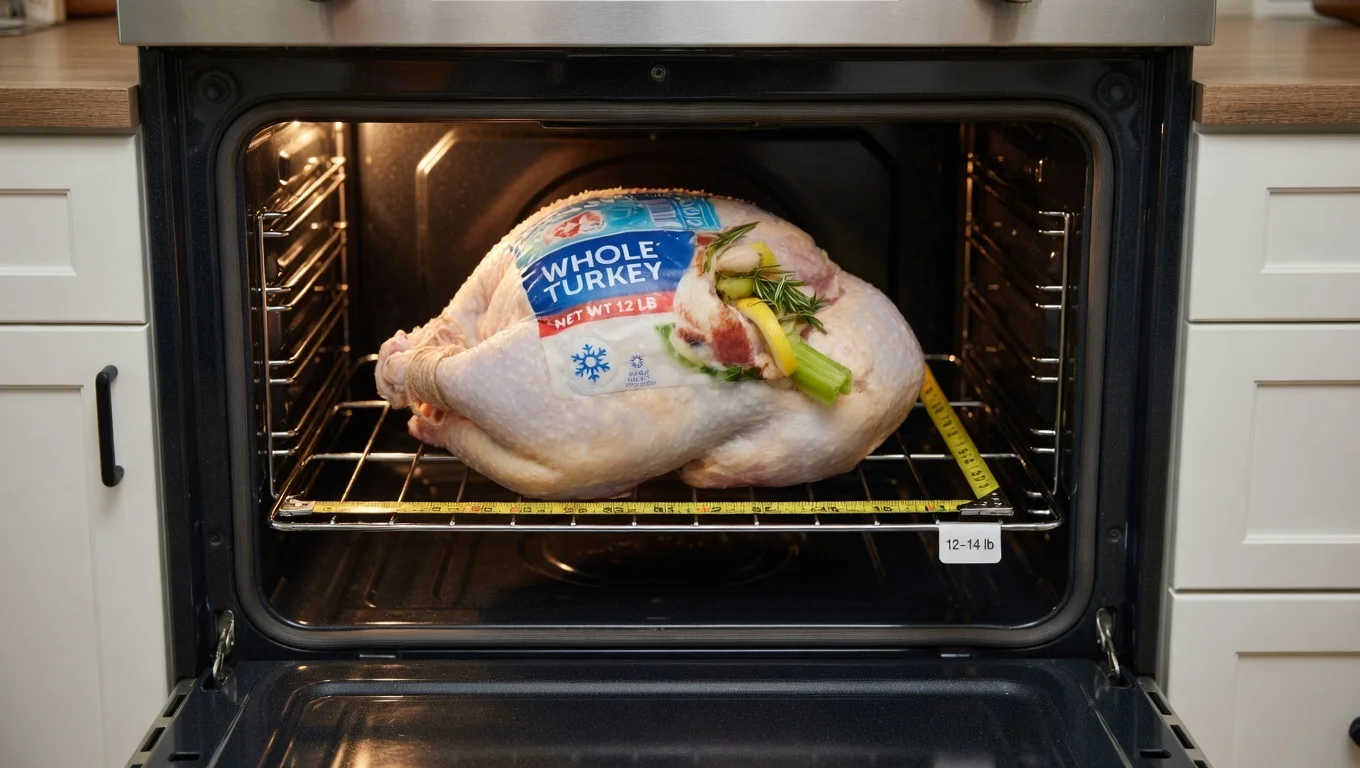 Most home ovens can comfortably fit a turkey between 12 and 20 pounds. Larger turkeys may be difficult to cook evenly and may not fit in smaller ovens.
For beginners learning how to bake turkey in oven, a 12–14 pound turkey is often ideal because:
Most home ovens can comfortably fit a turkey between 12 and 20 pounds. Larger turkeys may be difficult to cook evenly and may not fit in smaller ovens.
For beginners learning how to bake turkey in oven, a 12–14 pound turkey is often ideal because:
- It cooks more evenly
- It is easier to handle
- Cooking times are more manageable
How to Prepare Turkey for the Oven
Proper preparation is one of the most important steps when learning how to bake a turkey in the oven. Preparing the turkey correctly helps ensure even cooking, flavorful meat, and crispy skin. Before placing the turkey in the oven, you should thaw it safely, clean it properly, and season it well.How to Properly Thaw a Frozen Turkey
If you purchased a frozen turkey, it must be fully thawed before cooking. Cooking a partially frozen turkey can lead to uneven cooking and food safety risks.Refrigerator Thawing Method
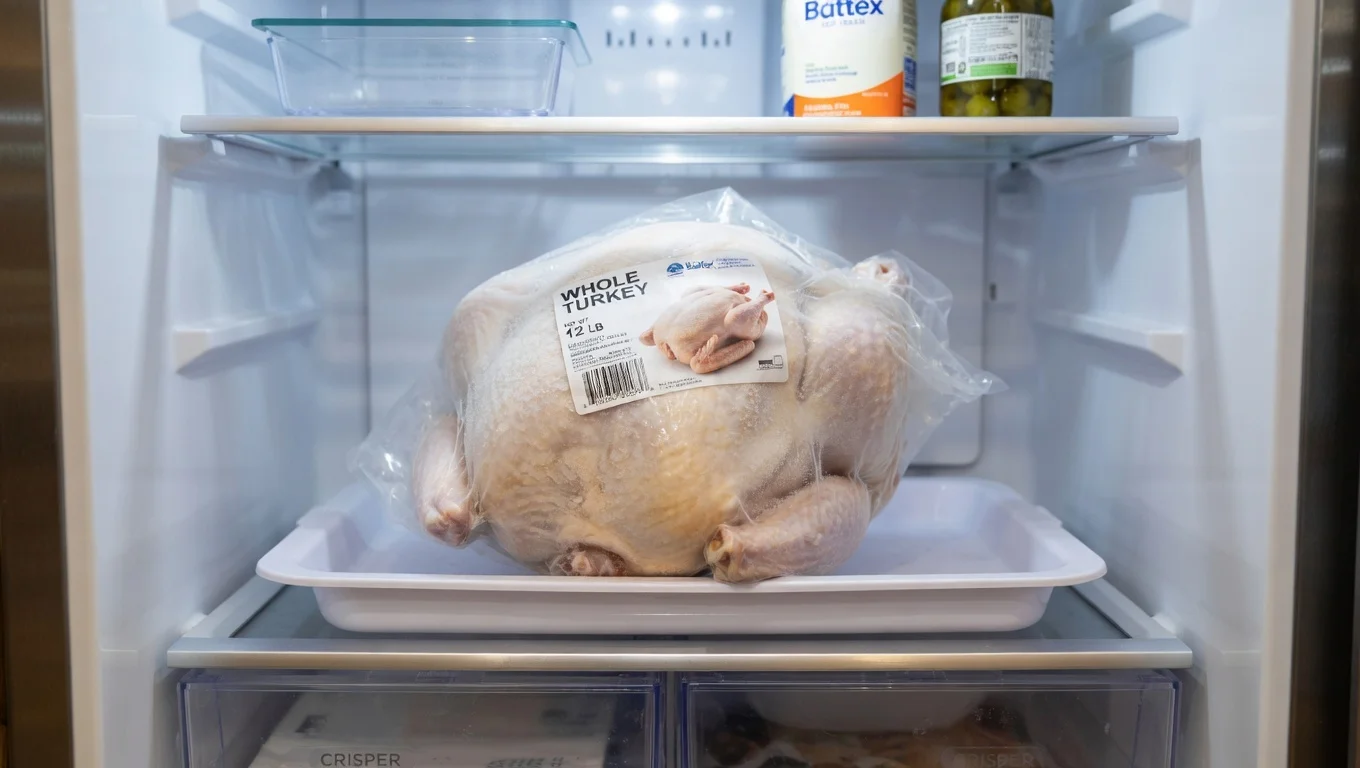 The safest and most recommended way to thaw a turkey is in the refrigerator.
Steps:
The safest and most recommended way to thaw a turkey is in the refrigerator.
Steps:
- Keep the turkey in its original packaging.
- Place it on a tray or pan to catch any juices.
- Put the turkey in the refrigerator on the bottom shelf.
- Allow enough time for it to thaw completely.
Cold Water Thawing Method
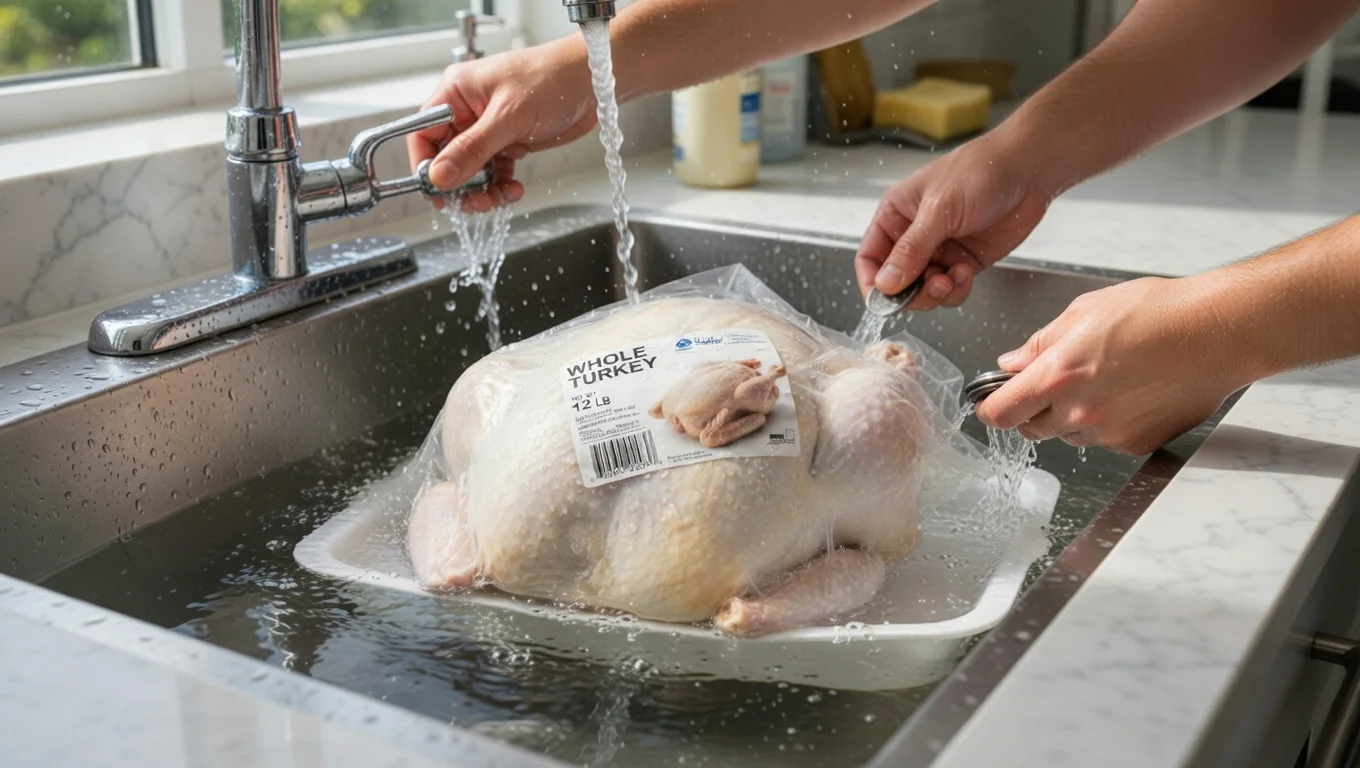 If you need to thaw the turkey faster, the cold water method works well.
Steps:
If you need to thaw the turkey faster, the cold water method works well.
Steps:
- Keep the turkey sealed in its packaging.
- Place it in a large sink or container filled with cold water.
- Change the water every 30 minutes.
- Continue until the turkey is fully thawed.
Safe Thawing Times
Thawing time depends on the size of the turkey. Approximate refrigerator thawing times:- 8–12 pounds: 2–3 days
- 12–16 pounds: 3–4 days
- 16–20 pounds: 4–5 days
- 20–24 pounds: 5–6 days
Cleaning and Preparing the Turkey
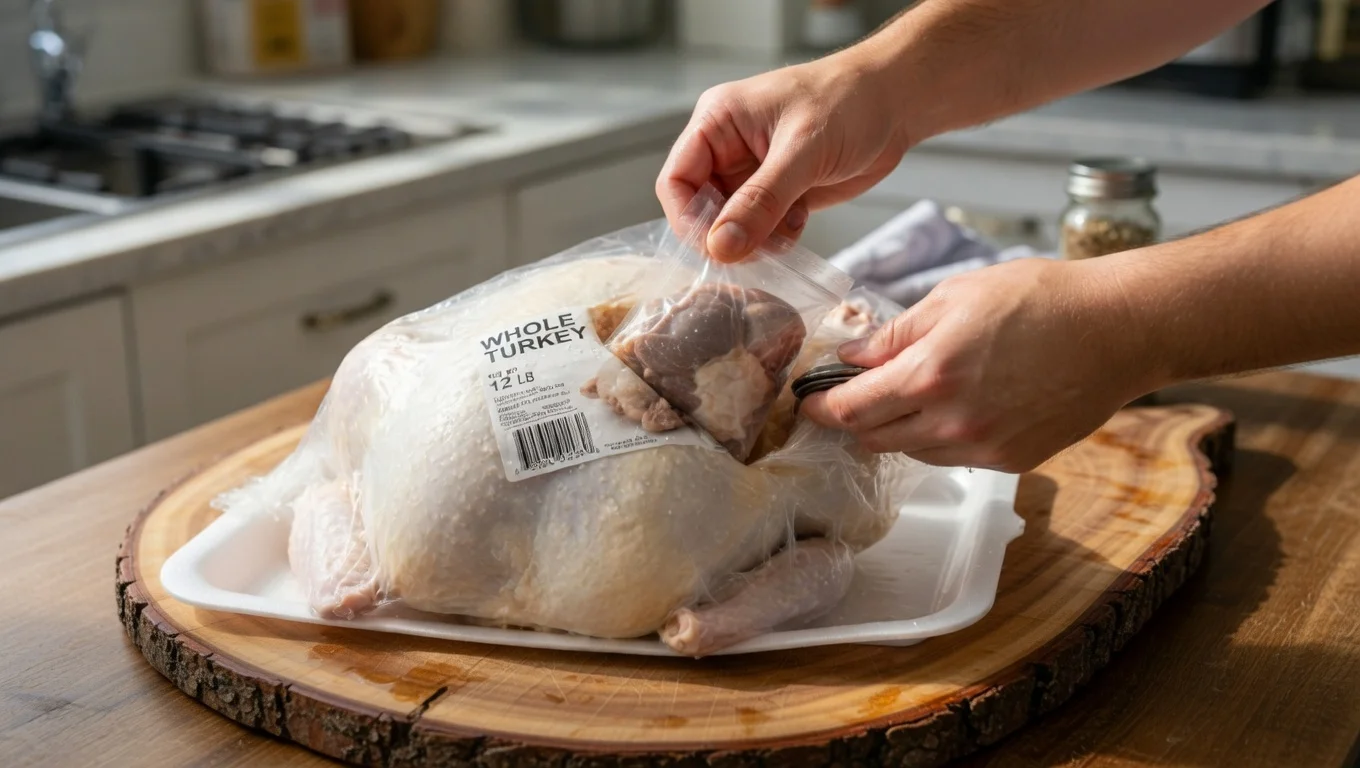 Once the turkey is thawed, the next step is preparing it for seasoning and roasting.
Removing Giblets
Most whole turkeys come with a small bag of giblets inside the cavity. These may include the neck, liver, heart, and gizzard. Steps to remove them:- Reach inside the cavity of the turkey.
- Locate the small bag of giblets.
- Pull it out and set it aside.
Patting Dry for Crispy Skin
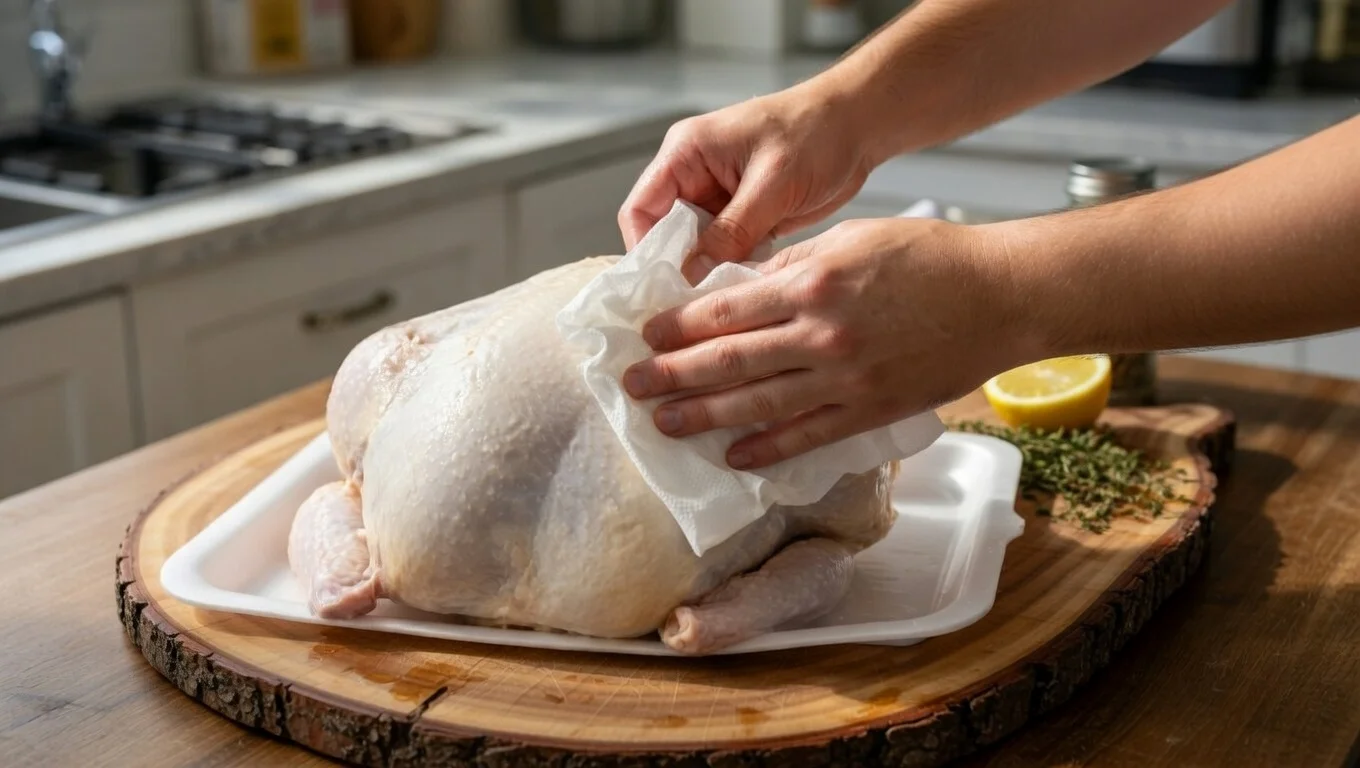
Drying the turkey is a simple but important step.- Use paper towels to pat the turkey dry, including the inside of the cavity. Removing excess moisture helps the skin roast properly and become golden and crispy in the oven.
Seasoning the Turkey
Seasoning adds flavor and aroma to your oven baked turkey. Even simple ingredients can create a delicious result.Butter Under the Skin
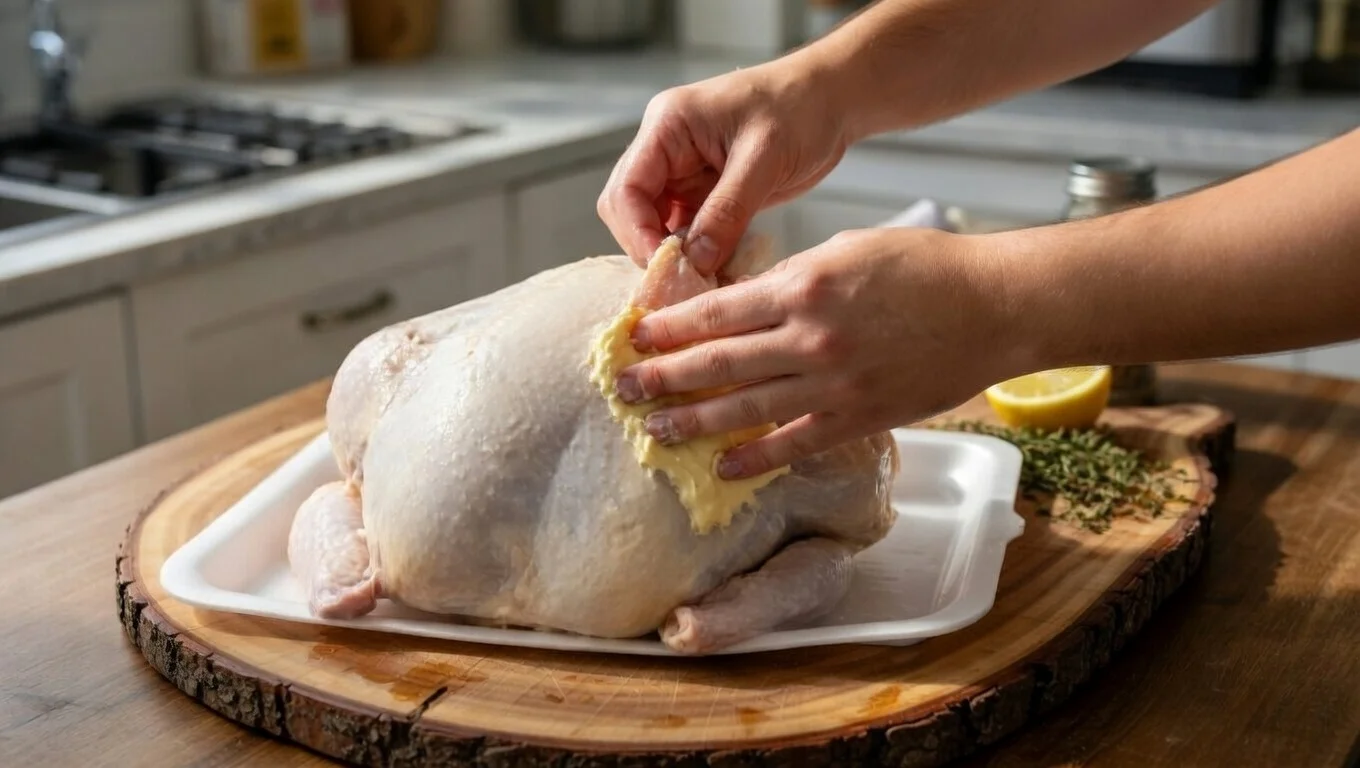
 Adding butter under the skin helps keep the meat moist and flavorful.
How to do it:
Adding butter under the skin helps keep the meat moist and flavorful.
How to do it:
- Gently loosen the skin over the turkey breast with your fingers.
- Spread softened butter underneath the skin.
- Rub some butter over the outside of the turkey as well.
Herb Seasoning Mix
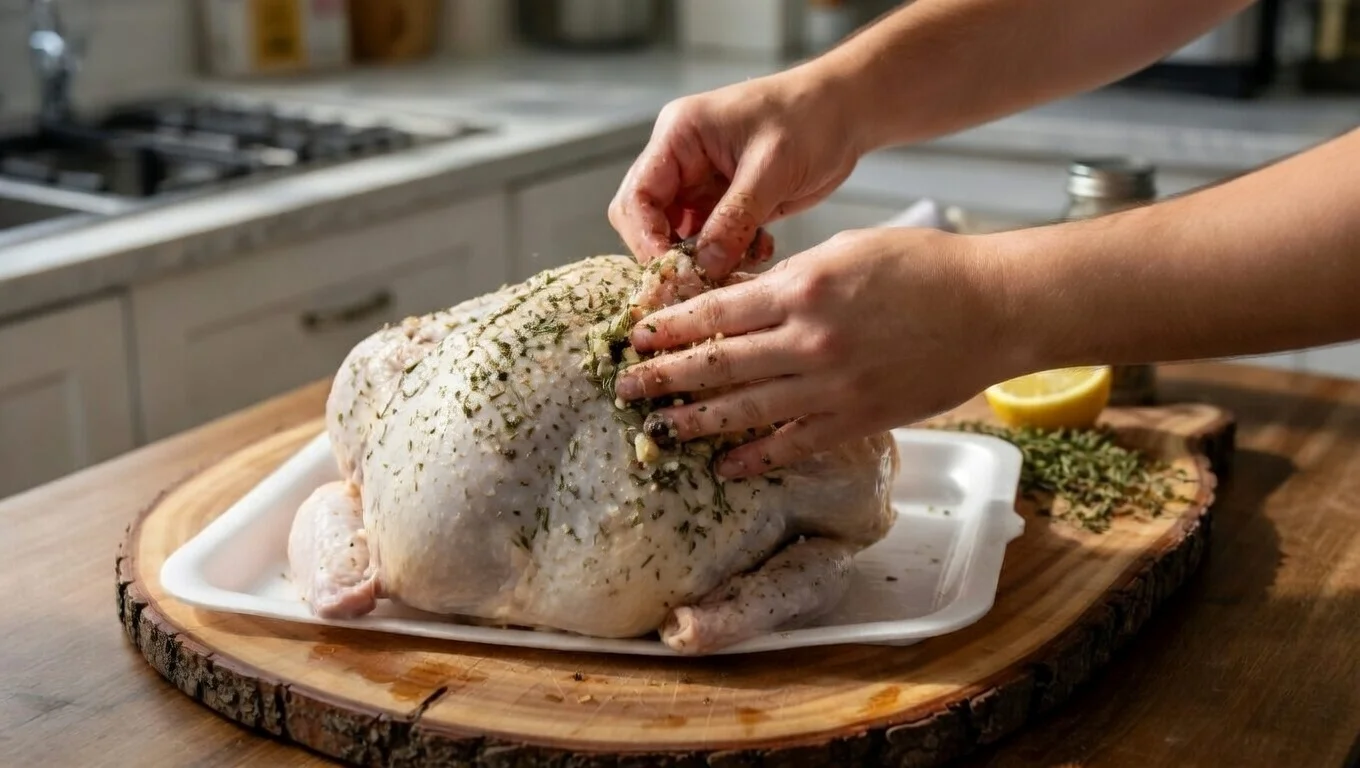
 A simple herb mixture can enhance the natural flavor of the turkey.
Common herbs include:
A simple herb mixture can enhance the natural flavor of the turkey.
Common herbs include:
- Rosemary
- Thyme
- Sage
- Garlic
- Salt and black pepper
Stuffing the Cavity with Aromatics
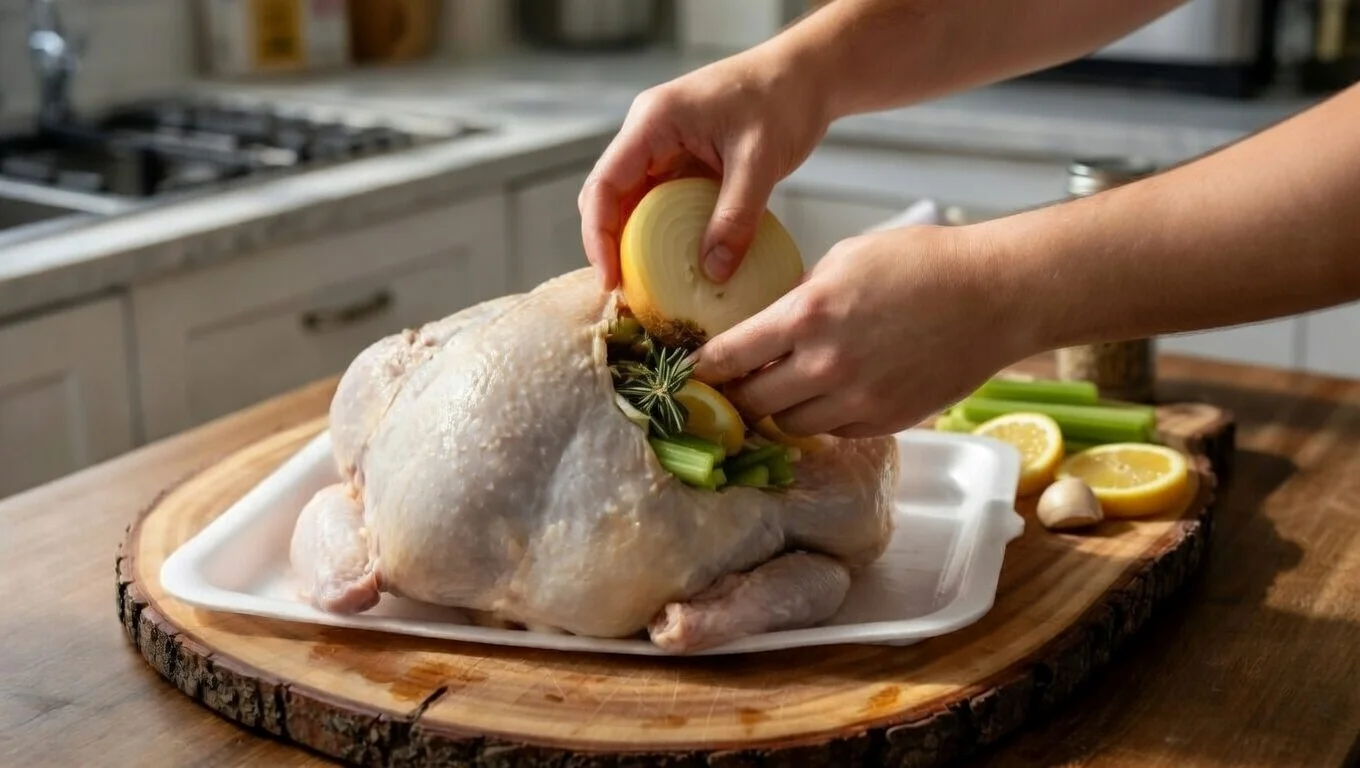
 Instead of traditional stuffing, many cooks place aromatics inside the turkey cavity to add flavor during roasting.
Popular options include:
Instead of traditional stuffing, many cooks place aromatics inside the turkey cavity to add flavor during roasting.
Popular options include:
- Onion halves
- Lemon slices
- Garlic cloves
- Celery pieces
- Fresh herbs
Optional Step: Trussing the Turkey
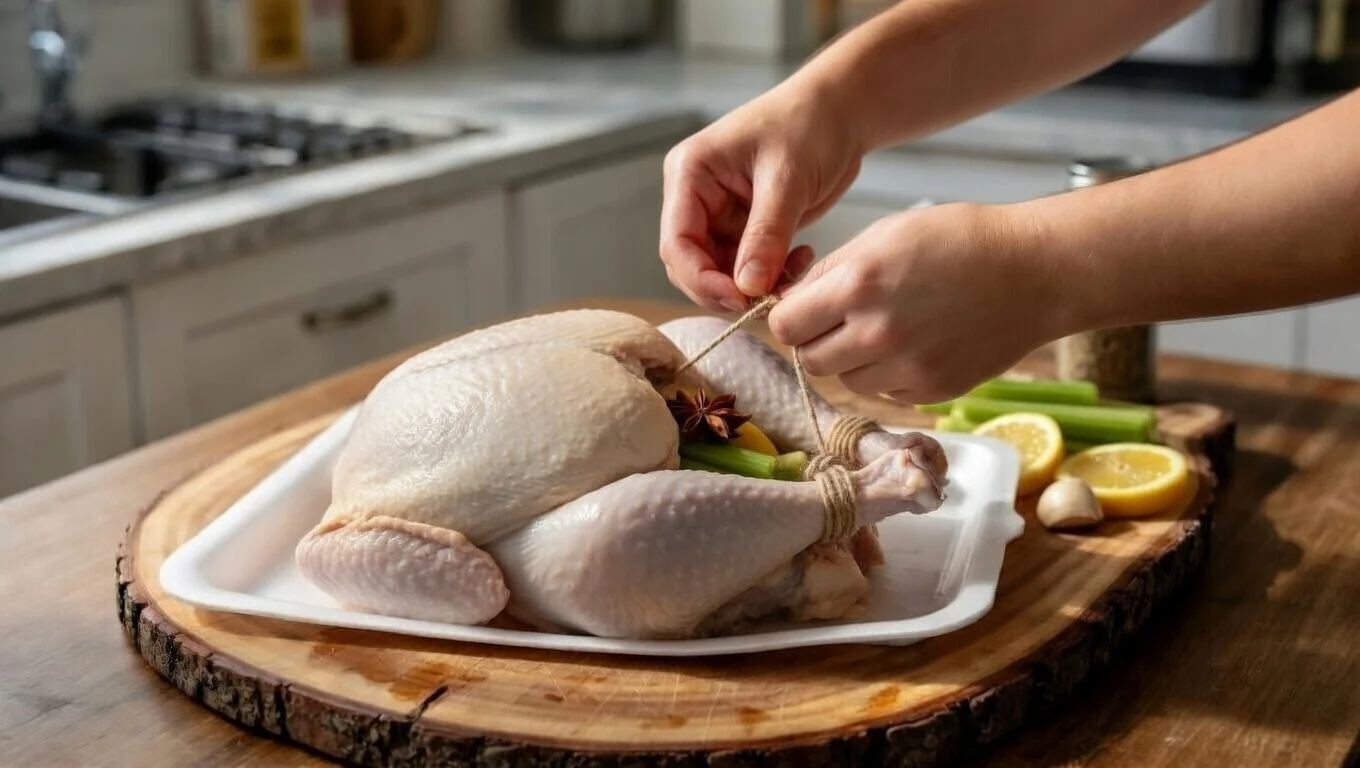
 Trussing means tying the turkey legs together with kitchen twine before roasting.
What Trussing Does
Trussing helps the turkey maintain its shape while cooking. It can also promote more even roasting by keeping the wings and legs closer to the body. Benefits of trussing include:- More even cooking
- Better presentation
- Prevents wings from burning
Simple Beginner Method
A simple trussing method is easy for beginners.- Cut a piece of kitchen twine about 2–3 feet long.
- Cross the turkey legs together.
- Wrap the twine around the legs and tie them securely.
- Tuck the wing tips under the body of the turkey.
Step-by-Step Guide: How to Bake Turkey in Oven
Now that the turkey is prepared and seasoned, it is time to start roasting. Following these steps will help you successfully learn how to bake turkey in the oven while keeping the meat juicy and the skin crispy.Step 1: Preheat the Oven
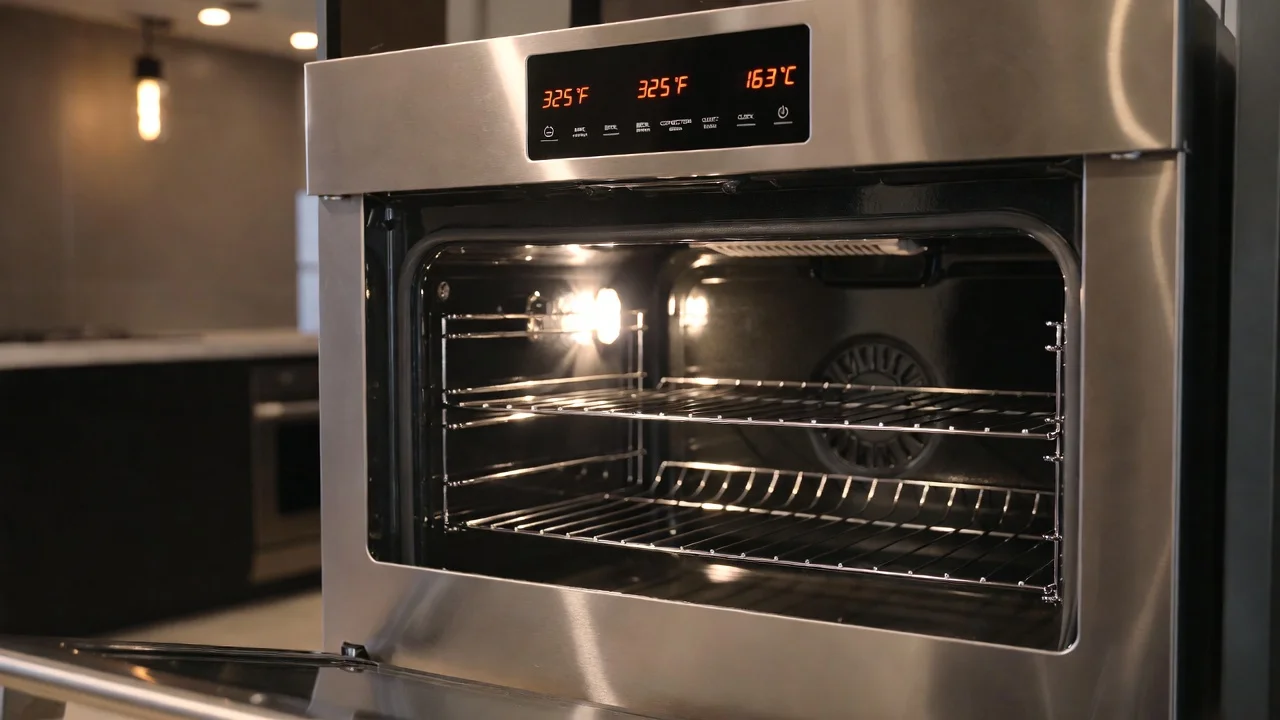
 Start by preheating your oven to the correct roasting temperature.
The recommended temperature for baking turkey is:
Start by preheating your oven to the correct roasting temperature.
The recommended temperature for baking turkey is:
- 325°F (163°C)
Step 2: Prepare the Roasting Pan
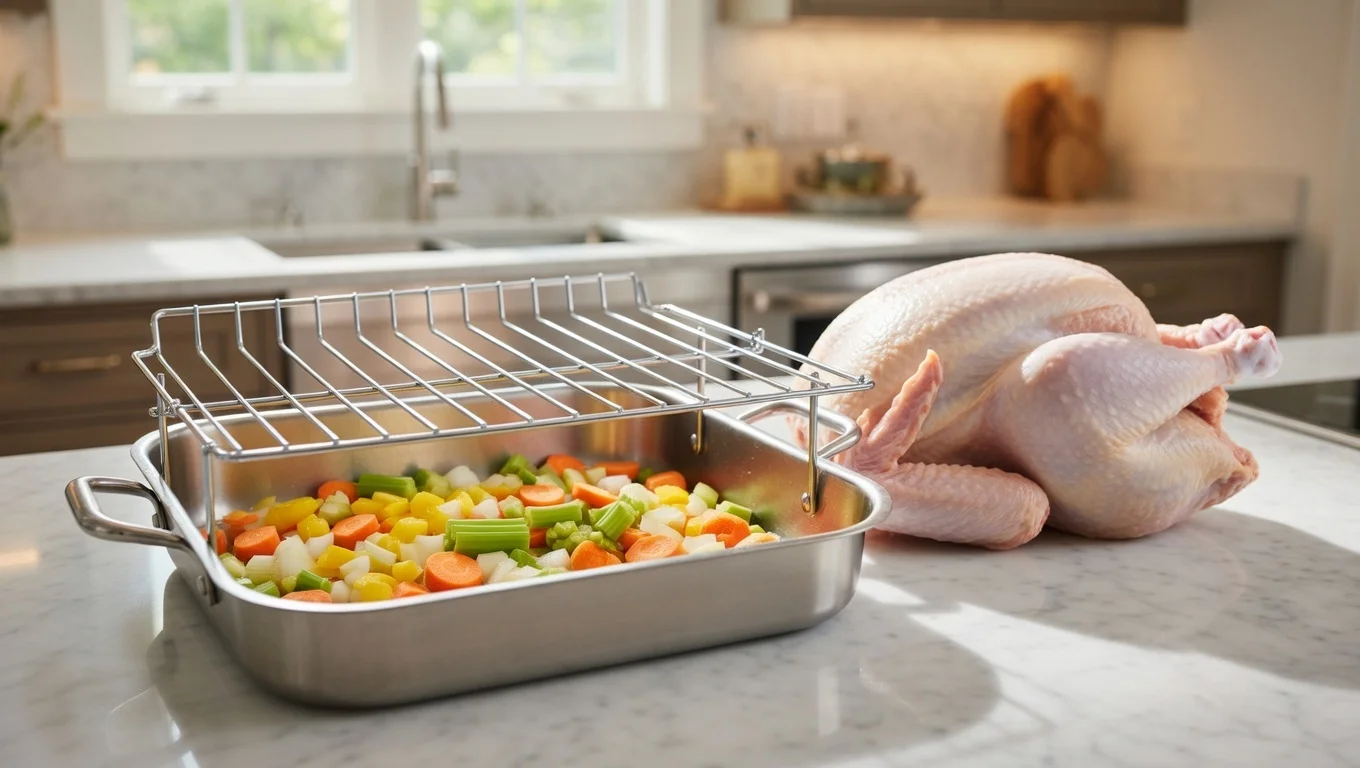
 A roasting pan helps the turkey cook evenly and keeps juices contained.
Rack Placement
Place a roasting rack inside the pan if you have one. The rack lifts the turkey slightly above the bottom of the pan, allowing hot air to circulate around the bird. This helps cook the turkey evenly on all sides.Adding Vegetables for Flavor
You can place vegetables at the bottom of the pan to add flavor to the turkey drippings. Common vegetables include:- Onions
- Carrots
- Celery
Step 3: Season and Position the Turkey
 Now place the turkey in the roasting pan.
Breast Side Up
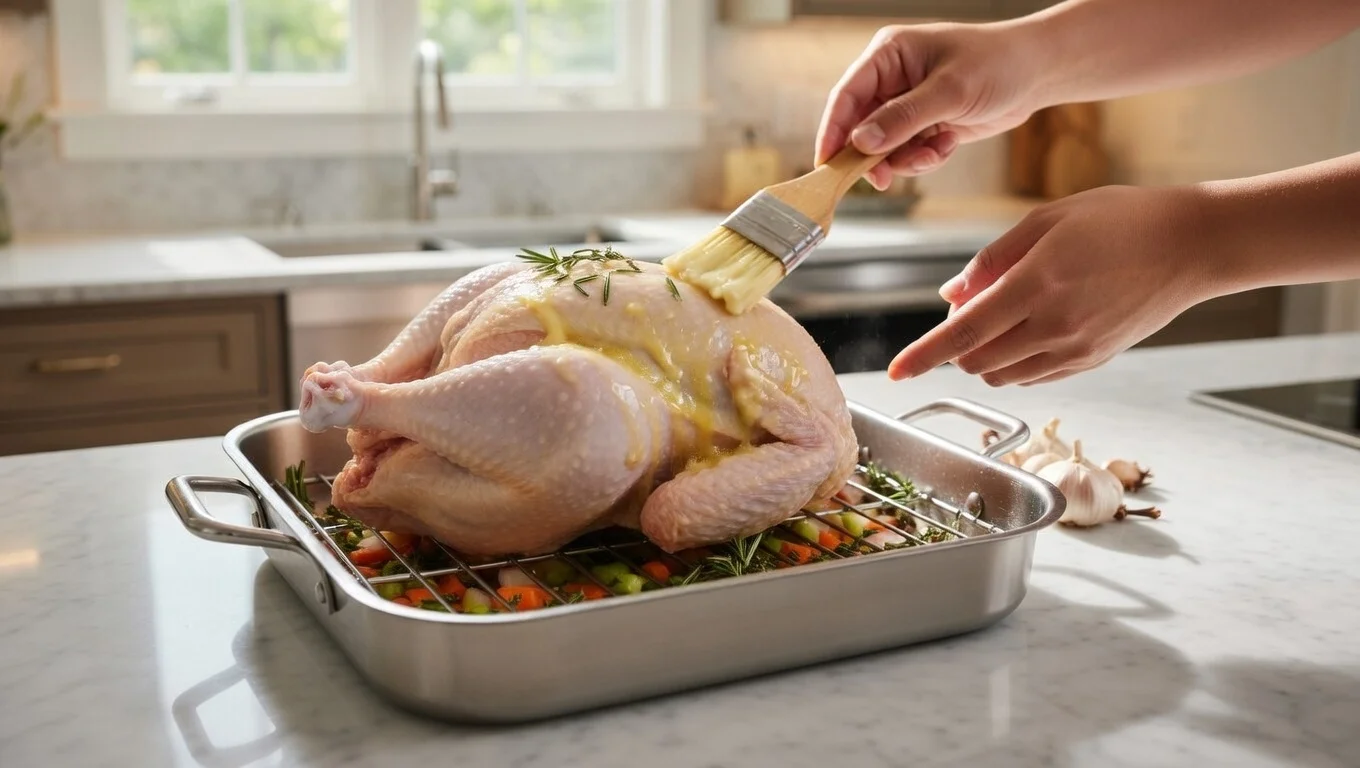
Position the turkey breast side up on the roasting rack or vegetables. This allows the breast meat to cook evenly and helps the skin brown properly.Butter Coating
Brush or rub melted butter over the outside of the turkey. This helps the skin become golden and crispy while adding flavor. At this point, the turkey is ready to go into the oven.Step 4: Bake the Turkey
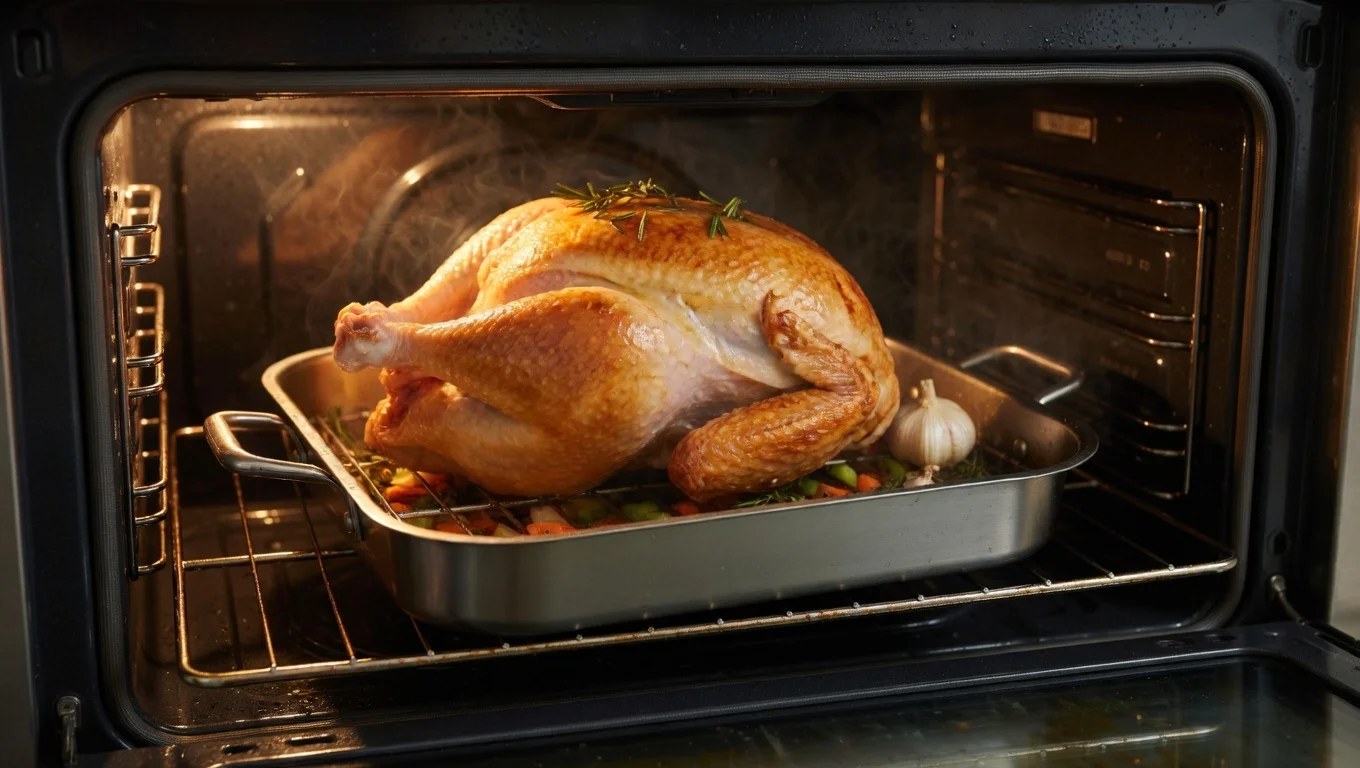
 Place the roasting pan in the center of the oven and begin roasting.
Cooking time depends on the size of the turkey.
Place the roasting pan in the center of the oven and begin roasting.
Cooking time depends on the size of the turkey.
Cooking Time Guidelines by Weight
Approximate roasting times at 325°F:- 10–12 lb turkey: 2¾ – 3 hours
- 12–14 lb turkey: 3 – 3¾ hours
- 14–18 lb turkey: 3¾ – 4¼ hours
- 18–20 lb turkey: 4¼ – 4½ hours
General Roasting Formula
A simple rule when learning how to bake turkey in oven is:- About 13–15 minutes per pound at 325°F
Step 5: Baste the Turkey (Optional)
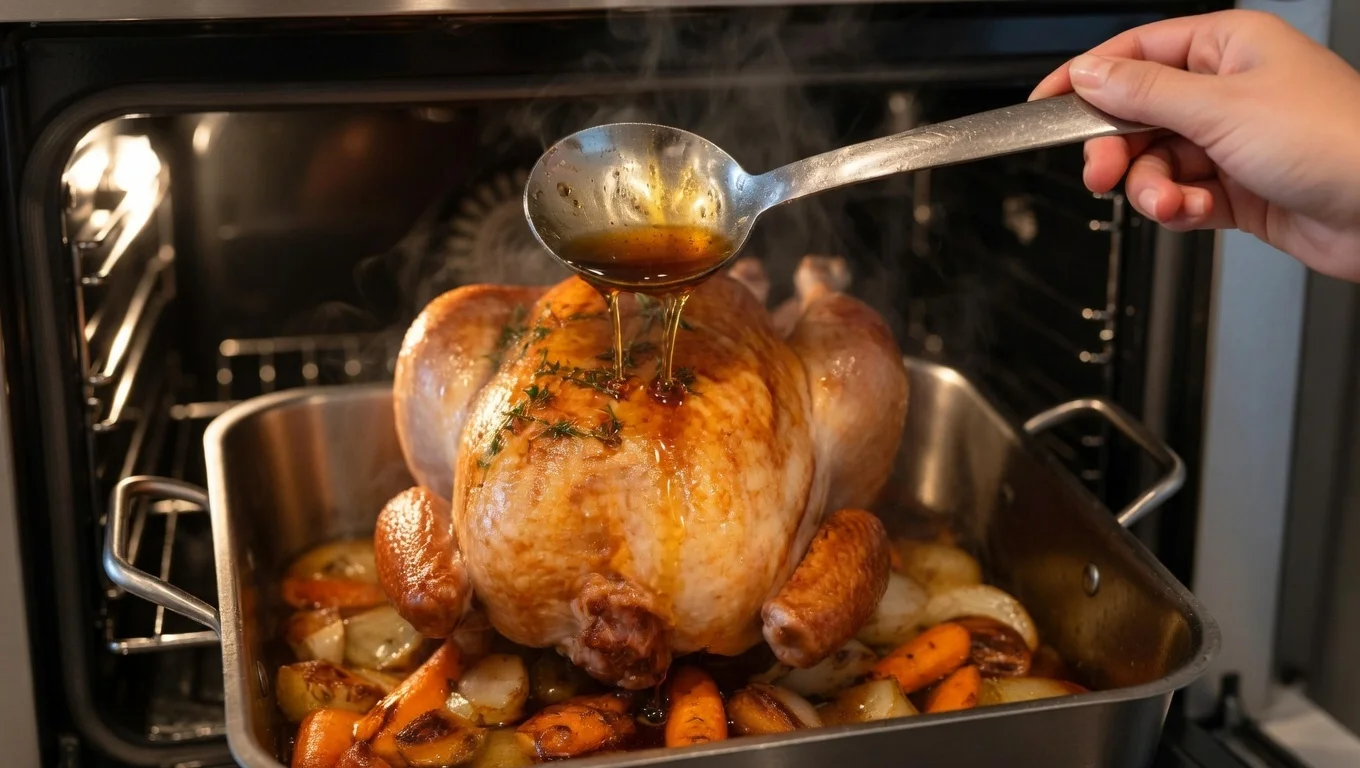
 Basting involves spooning or brushing pan juices over the turkey while it cooks.
When and How Often to Baste
You can begin basting after the turkey has been roasting for about 45–60 minutes. After that, baste the turkey every 30–45 minutes if desired. While basting can add flavor and color, it is optional. Opening the oven too often can lower the temperature and increase cooking time.Step 6: Check Internal Temperature
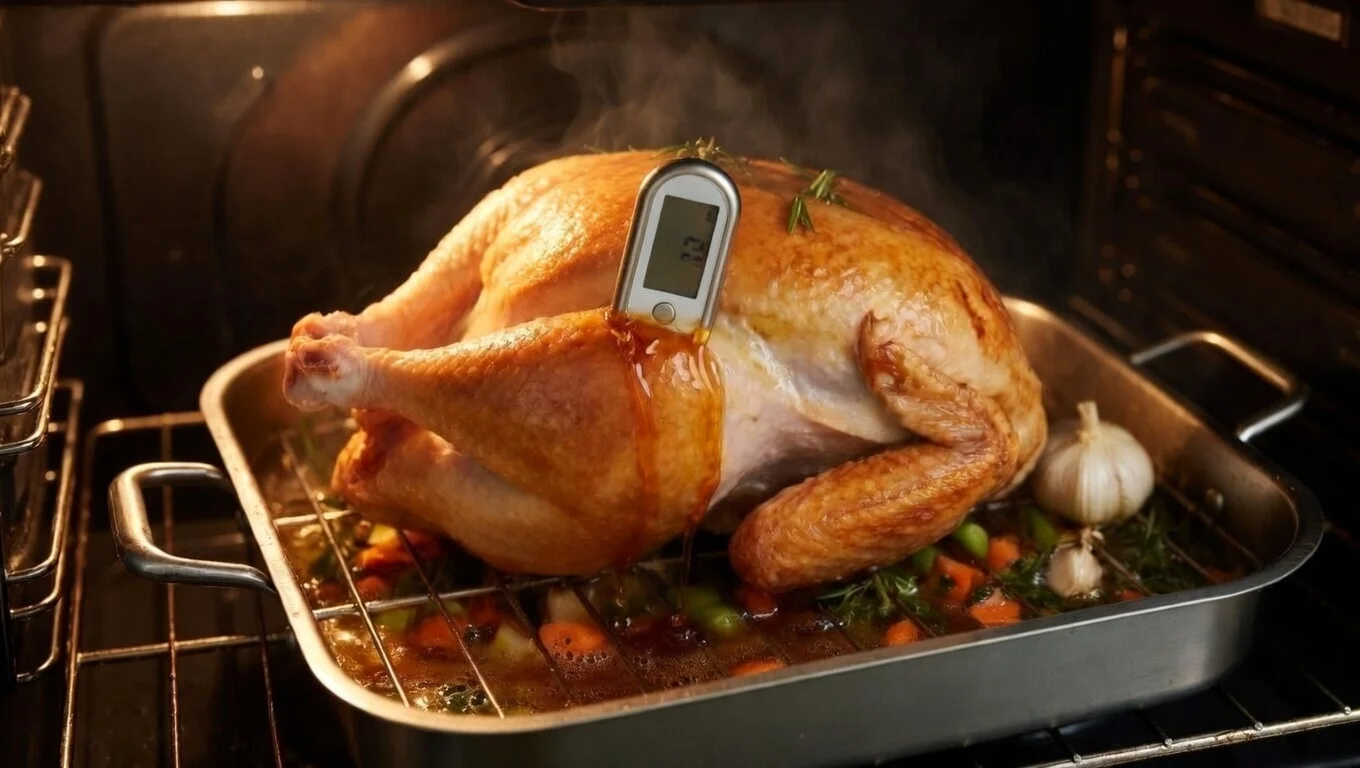
 The safest way to know if the turkey is fully cooked is to use a meat thermometer.
- Insert the thermometer into the thickest part of the turkey thigh, avoiding the bone.
- 165°F (74°C)
Step 7: Rest the Turkey Before Carving
 Resting the turkey is an important final step when learning how to bake a turkey in the oven.
Why Resting Is Important
During cooking, juices move toward the center of the meat. Resting allows those juices to redistribute throughout the turkey, making the meat more tender and flavorful. If you carve immediately, many of the juices will run out onto the cutting board.Ideal Resting Time
Let the turkey rest for 20–30 minutes before carving.- Cover it loosely with foil while it rests to keep it warm. After resting, the turkey will be easier to carve and much juicier to serve.
Turkey Cooking Time Chart (Oven Baked Turkey)
When learning how to bake turkey in oven, understanding the correct cooking time is very important. Turkey cooking time mainly depends on the bird’s weight and the oven temperature. Most recipes recommend roasting turkey at 325°F (163°C) for even cooking and juicy meat. The following chart provides a general guideline for roasting an oven baked turkey. Always use a meat thermometer to confirm the turkey reaches the safe internal temperature of 165°F (74°C).| Turkey Weight | Estimated Cooking Time | Oven Temperature |
|---|---|---|
| 10–12 pounds | 2¾ – 3 hours | 325°F (163°C) |
| 12–14 pounds | 3 – 3¾ hours | 325°F (163°C) |
| 14–18 pounds | 3¾ – 4¼ hours | 325°F (163°C) |
| 18–20 pounds | 4¼ – 4½ hours | 325°F (163°C) |
| 20–24 pounds | 4½ – 5 hours | 325°F (163°C) |
Tips for the Best Oven Baked Turkey
Even simple techniques can make a big difference when preparing oven baked turkey. These tips will help you achieve juicy meat, crispy skin, and a beautifully roasted bird.How to Get Crispy Turkey Skin
One of the best parts of a roasted turkey is the golden, crispy skin. To achieve this when you bake turkey in oven, follow these tips:- Pat the turkey dry before seasoning to remove moisture.
- Rub butter or oil over the skin to help it brown.
- Roast the turkey uncovered for most of the cooking time.
- Avoid covering the entire bird with foil unless necessary.
Preventing Dry Turkey Meat
Turkey breast meat can dry out if it is overcooked. To keep your oven baked turkey moist and tender:- Cook the turkey at 325°F instead of higher temperatures.
- Place butter under the skin for extra moisture.
- Do not overcook the turkey using a meat thermometer.
- Let the turkey rest before carving so the juices stay inside the meat.
Using Butter or Herb Rub
Butter and herbs add flavor and help the turkey develop a rich aroma while roasting. A simple herb butter mixture can include:- Softened butter
- Garlic
- Rosemary
- Thyme
- Sage
- Salt and pepper
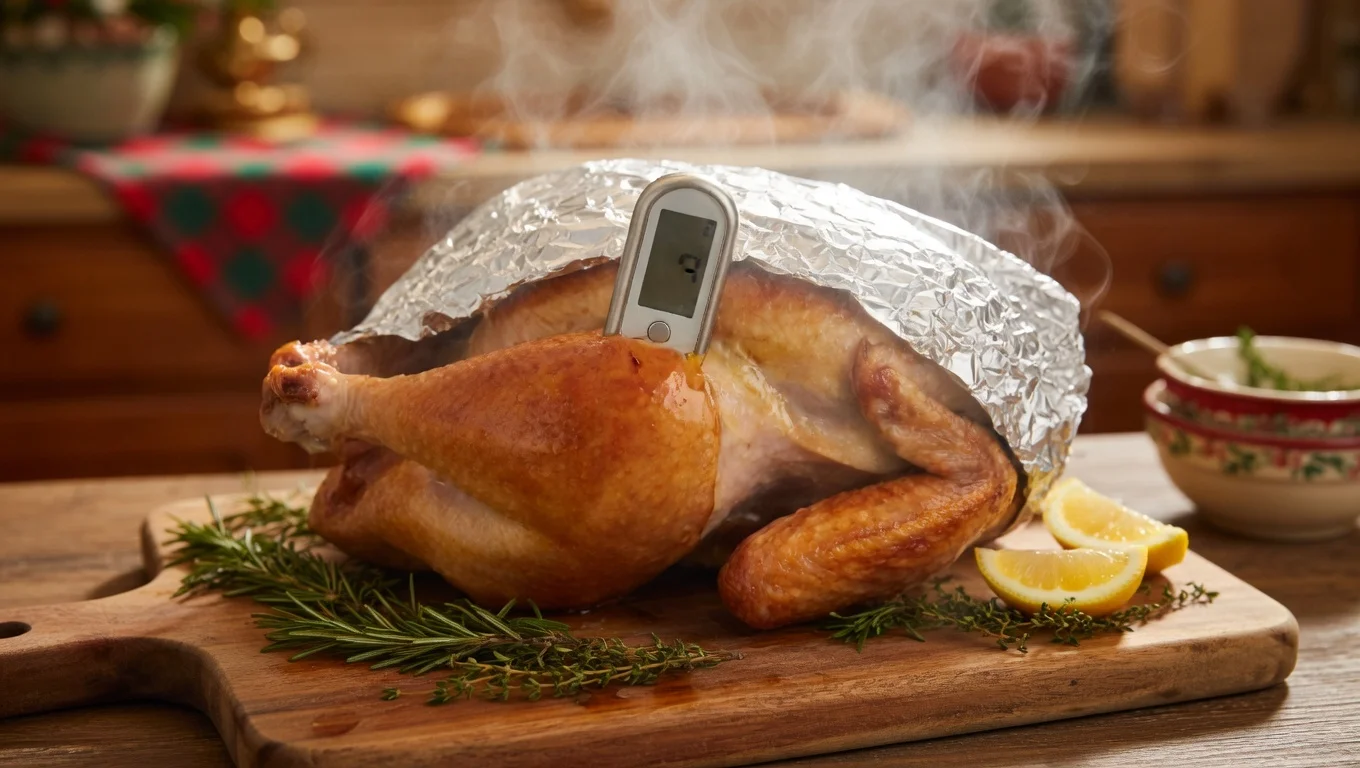
Covering Turkey with Foil
Sometimes the turkey skin may start browning too quickly while baking. If this happens:- Loosely cover the turkey breast with aluminum foil.
Letting Turkey Rest Before Serving
Resting the turkey after baking is an important step many beginners overlook. When you remove the turkey from the oven:- Cover it loosely with foil.
- Let it rest for 20–30 minutes.
Common Mistakes When Baking Turkey
Even experienced cooks can make small mistakes when roasting turkey. Avoiding these common errors will help ensure your oven baked turkey turns out perfectly.Not Thawing the Turkey Properly
One of the most common mistakes is trying to cook a partially frozen turkey. If the turkey is not fully thawed:- The outside may cook too quickly.
- The inside may remain undercooked.
Cooking at the Wrong Temperature
Cooking turkey at a temperature that is too high can cause the outside to burn while the inside remains undercooked. For best results, roast turkey at 325°F (163°C). This temperature allows the turkey to cook slowly and evenly.Skipping the Meat Thermometer
Many people rely only on cooking time, but this can lead to overcooked or undercooked turkey.- A meat thermometer is the most reliable way to check doneness. Insert it into the thickest part of the thigh.
Overbasting the Turkey
While basting can add flavor, doing it too often can actually slow down cooking. Each time you open the oven door:- Heat escapes
- The cooking process is interrupted
Carving the Turkey Too Soon
Cutting the turkey immediately after removing it from the oven is another common mistake. If you carve too soon:- Juices will run out of the meat
- The turkey may become dry
How to Carve Oven Baked Turkey
After you finish roasting, the next important step is carving the turkey properly. Learning how to carve oven baked turkey helps you serve clean, even slices and keeps the meat juicy. Proper carving also makes the turkey easier to portion for guests and creates a more appealing presentation on the table. Before carving, always allow the turkey to rest for about 20–30 minutes after removing it from the oven. Resting allows the juices to settle inside the meat, which prevents dryness and improves flavor.Tools Needed for Carving
Using the right tools makes carving faster, safer, and more precise. Here are the basic tools you will need:- Carving Knife A long, sharp carving knife is ideal for slicing turkey meat smoothly. A sharp knife helps create clean slices without tearing the meat.
- Carving Fork A carving fork helps hold the turkey steady while cutting. It also helps guide the knife while slicing.
- Large Cutting Board Use a sturdy cutting board with enough space to hold the whole turkey. A board with grooves can help catch juices and prevent mess.
- Serving Platter Prepare a large platter ahead of time to arrange the carved turkey slices for serving.
Step-by-Step Turkey Carving Method
Follow these simple steps to carve a turkey neatly and efficiently.Step 1: Remove the Legs
Hold the turkey steady with a carving fork. Cut through the skin between the body and the leg. Gently pull the leg outward and slice through the joint to remove it.Step 2: Separate the Thigh and Drumstick
Place the leg on the cutting board and cut through the joint that separates the thigh from the drumstick.Step 3: Remove the Wings
Pull each wing away from the body and cut through the joint to remove it.Step 4: Slice the Breast Meat
Make a long cut along one side of the breastbone. Then slice downward to create even slices of breast meat.Step 5: Arrange the Meat on a Platter
Place the sliced breast meat, thighs, drumsticks, and wings neatly on a serving platter. This method ensures clean slices and allows you to serve a beautifully presented oven baked turkey.Best Way to Serve Turkey
Serving turkey properly helps keep the meat warm, moist, and visually appealing. Some simple serving tips include:- Arrange breast slices in rows on a large platter.
- Place drumsticks and thighs around the edges.
- Garnish the platter with fresh herbs, lemon slices, or roasted vegetables.
- Serve the turkey with gravy on the side.
What to Serve with Oven Baked Turkey
A delicious oven baked turkey is often served with classic side dishes that complement its rich flavor. These sides help create a complete and satisfying holiday meal. Here are some popular dishes commonly served with roasted turkey.Mashed Potatoes
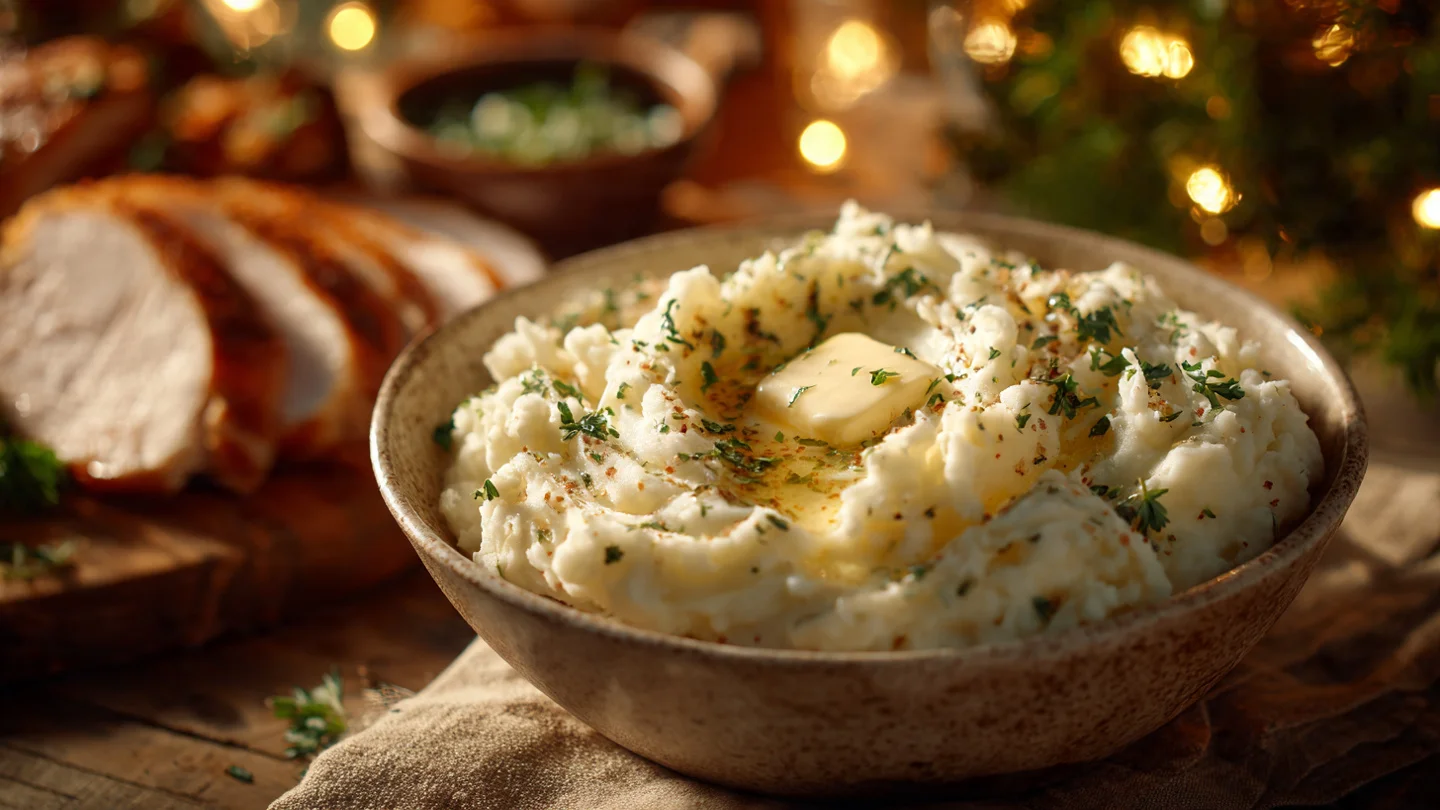
 Creamy mashed potatoes are one of the most traditional side dishes for turkey. They pair perfectly with turkey gravy and help balance the savory flavors of the meal.
Stuffing
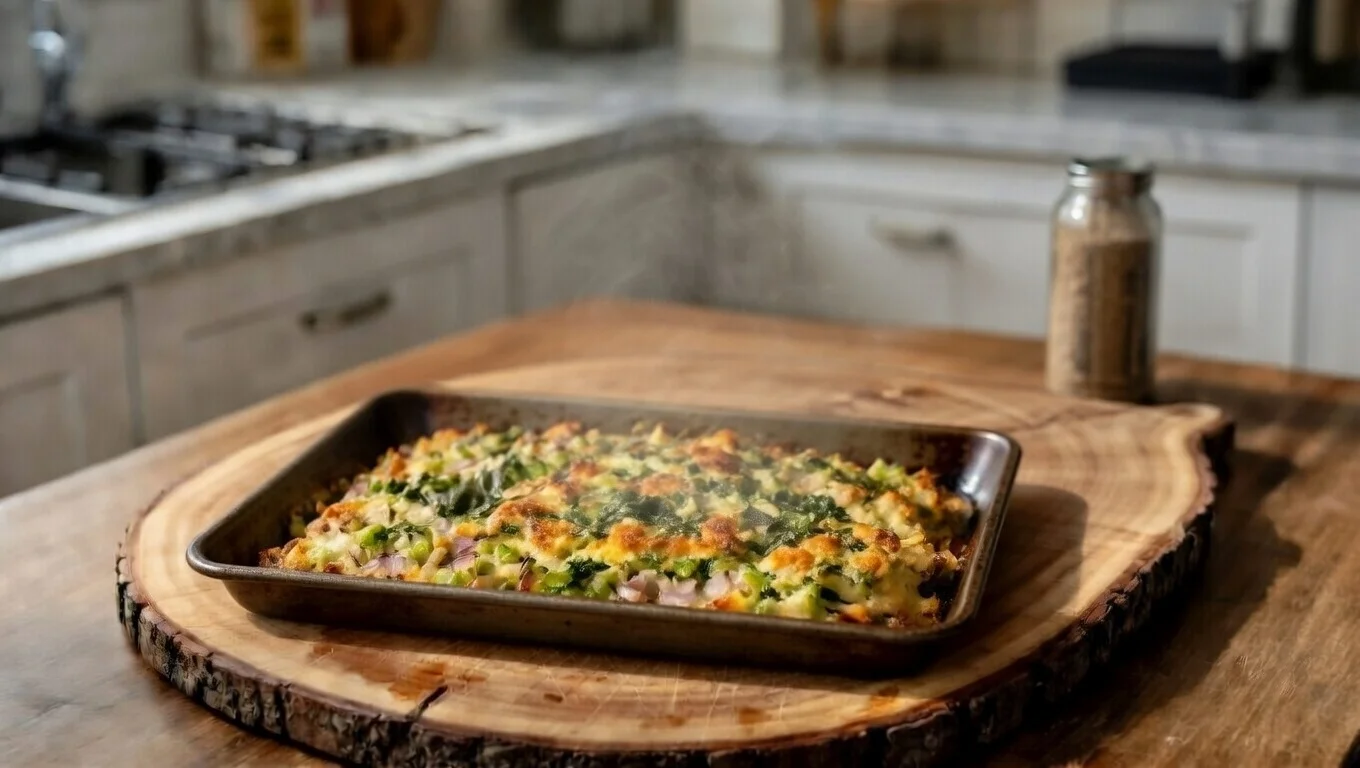
 Stuffing, sometimes called dressing, is another classic holiday dish. It is usually made with bread, herbs, onions, and celery, and it adds a hearty texture to the meal.
Gravy
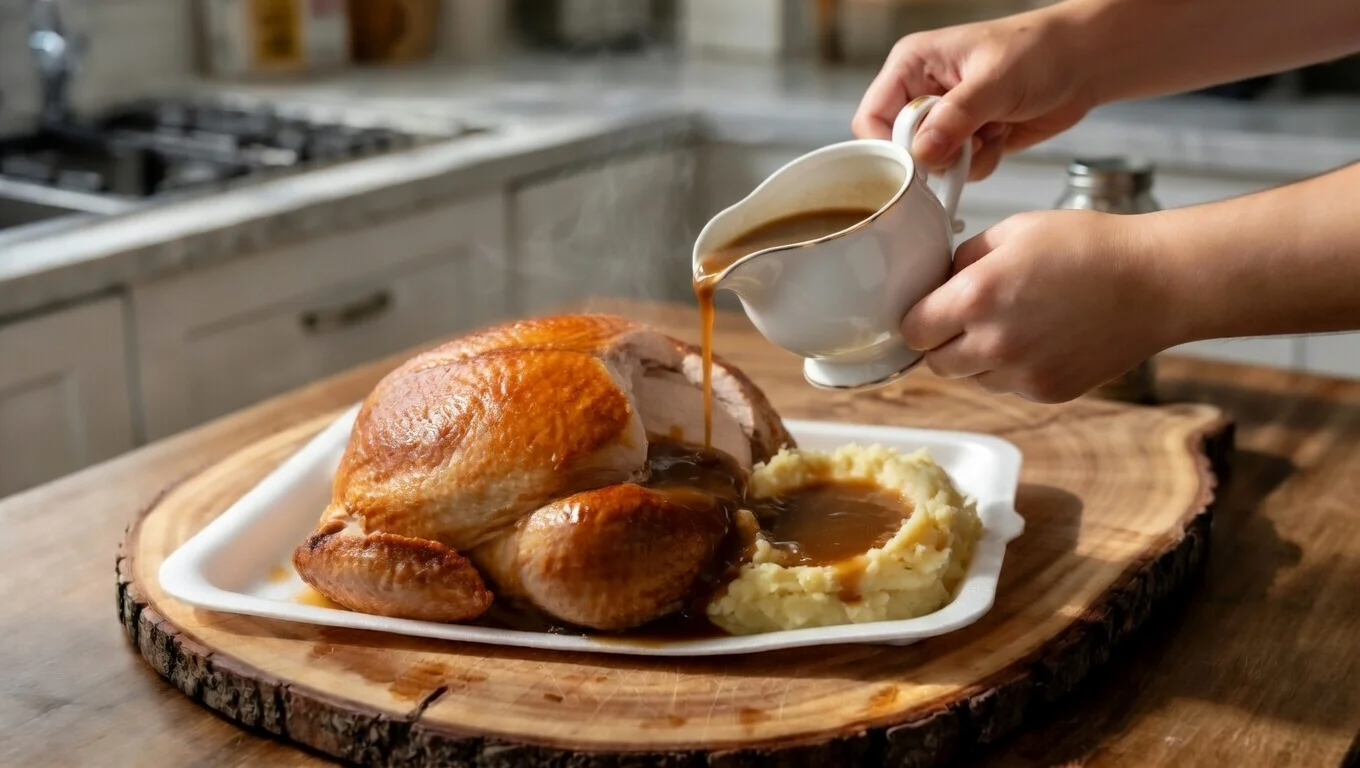
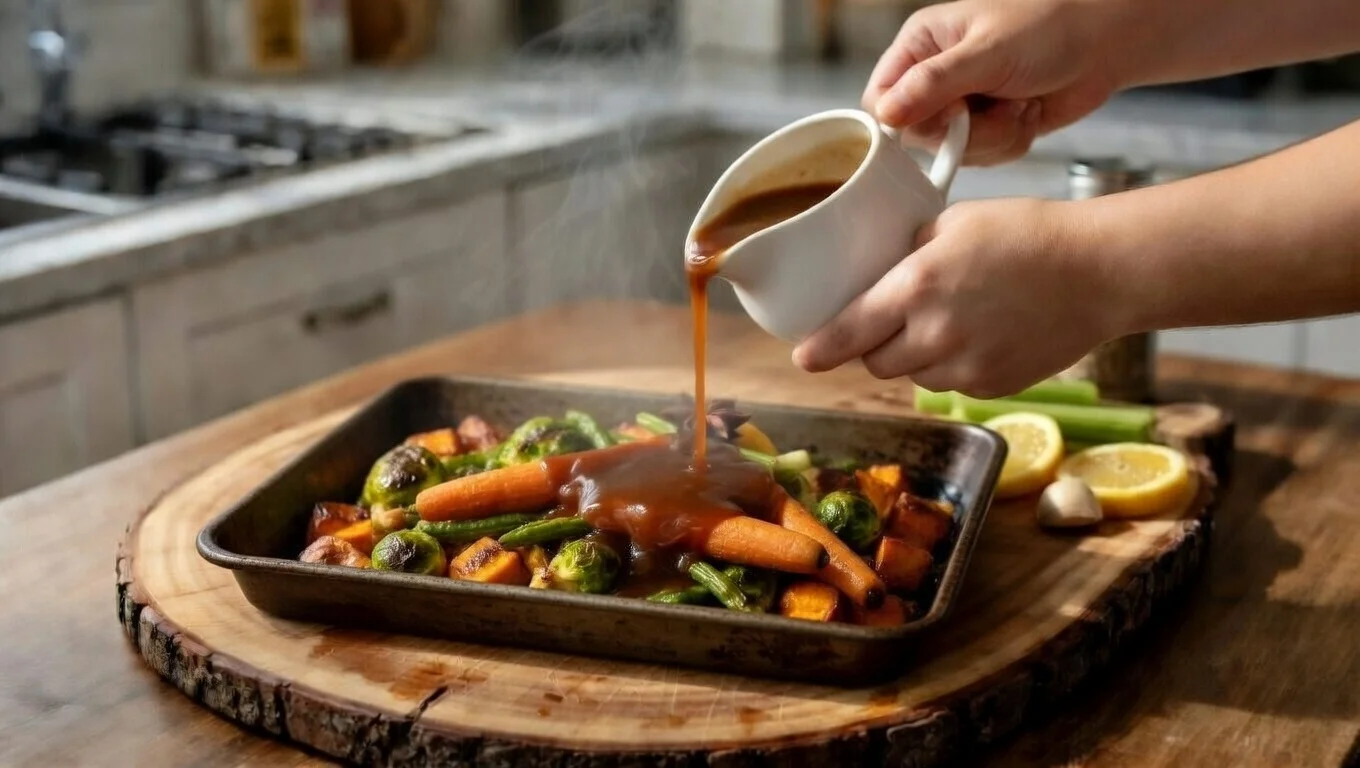
 Turkey gravy is made from the flavorful drippings in the roasting pan. Pouring warm gravy over sliced oven baked turkey and mashed potatoes adds extra richness and moisture.
Roasted Vegetables
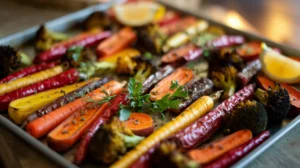
 Roasted vegetables such as carrots, Brussels sprouts, sweet potatoes, and green beans provide color and nutrition to the holiday table. Their natural sweetness complements the savory turkey.
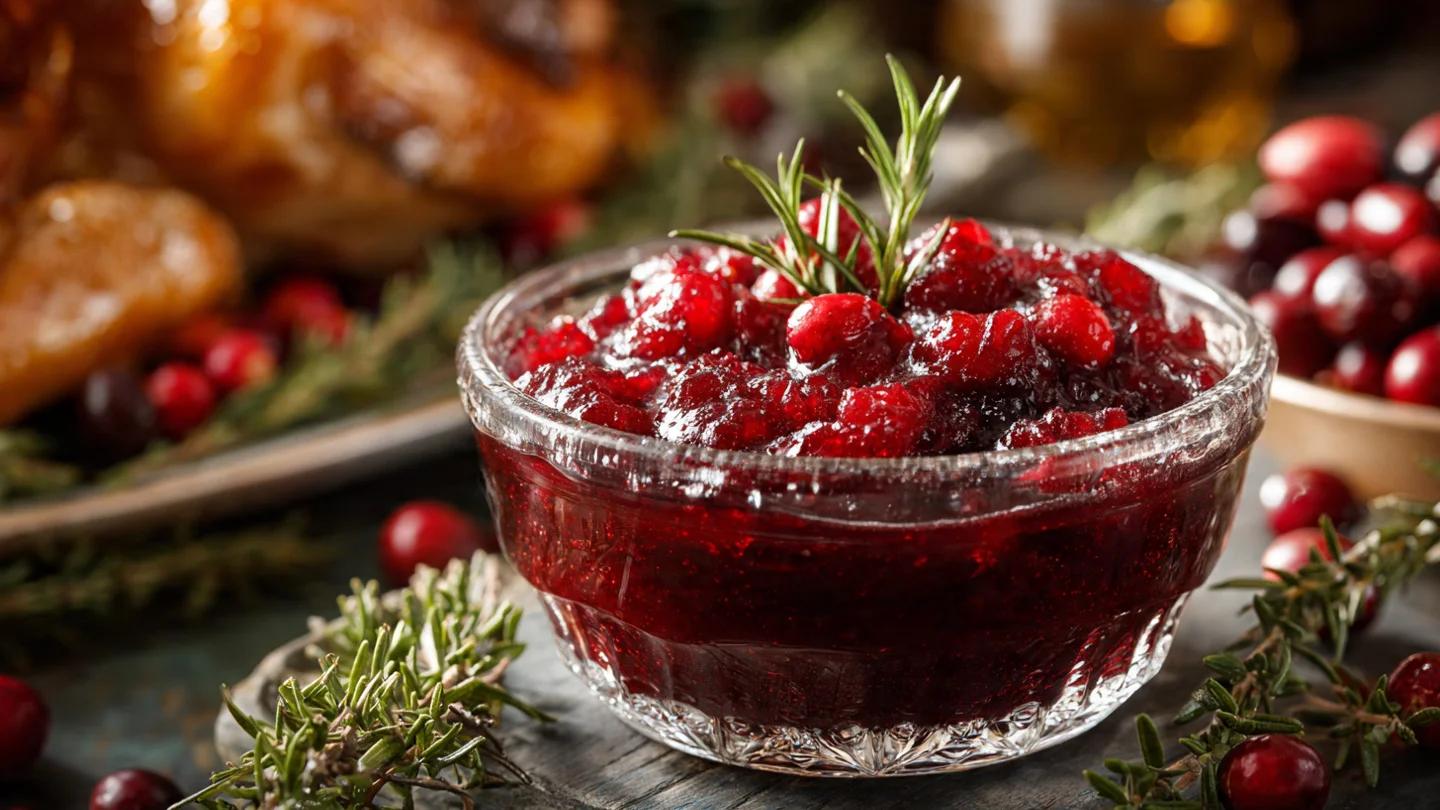
Cranberry Sauce
 Cranberry sauce adds a sweet and slightly tart flavor that balances the richness of the turkey. It is a traditional accompaniment during holiday meals.
Dinner Rolls
 Soft dinner rolls are perfect for soaking up gravy and making small turkey sandwiches with leftovers.
Together, these side dishes create a complete meal that pairs perfectly with roasted turkey.
Soft dinner rolls are perfect for soaking up gravy and making small turkey sandwiches with leftovers.
Together, these side dishes create a complete meal that pairs perfectly with roasted turkey.
Storing and Reheating Leftover Turkey
One of the best parts of cooking a large turkey is enjoying leftovers. Proper storage helps keep your oven baked turkey safe to eat and preserves its flavor for future meals.How to Store Cooked Turkey
After the meal, store leftover turkey as soon as possible to maintain freshness and food safety.Refrigerator Storage
Cooked turkey can be stored in the refrigerator for several days. Tips for storing in the refrigerator:- Allow the turkey to cool slightly before storing.
- Remove the meat from the bones if possible.
- Place the turkey in airtight containers or sealed bags.
- Store it in the refrigerator within 2 hours of cooking.
Freezer Storage
If you want to keep turkey longer, freezing is a good option. Freezing tips:- Slice or shred the turkey meat before freezing.
- Place it in freezer-safe containers or bags.
- Remove excess air to prevent freezer burn.
Best Way to Reheat Turkey Without Drying It Out
Reheating turkey correctly helps maintain moisture and flavor. Here are some simple methods to keep leftover turkey juicy.Oven Method
- Preheat the oven to 300°F (150°C).
- Place turkey slices in a baking dish.
- Add a little broth or gravy to keep the meat moist.
- Cover the dish with foil.
- Heat for about 15–20 minutes until warm.
Microwave Method
Place turkey slices on a microwave-safe plate, cover with a damp paper towel, and heat in short intervals to prevent overcooking.FAQs
Many beginners have questions when learning how to bake turkey in oven. Below are some of the most common questions along with simple answers to help you cook a delicious and safe oven baked turkey.How long does it take to bake a turkey in the oven?
The cooking time for turkey mainly depends on the weight of the bird and the oven temperature. When roasting at 325°F (163°C), a general rule is:- About 13–15 minutes per pound
- 10–12 lb turkey → about 2¾ – 3 hours
- 12–14 lb turkey → about 3 – 3¾ hours
- 14–18 lb turkey → about 3¾ – 4¼ hours
What temperature should turkey be cooked at?
The best temperature for roasting turkey is 325°F (163°C). This moderate temperature allows the turkey to cook evenly without drying out. Cooking at this temperature helps produce:- Juicy meat
- Even cooking
- Crispy golden skin
Should I cover my turkey with foil?
You do not need to cover the turkey with foil for the entire cooking time. Most cooks roast turkey uncovered so the skin can become golden and crispy. However, foil can be useful if the turkey starts browning too quickly. You can loosely place foil over the turkey breast during the last part of cooking if needed. This prevents the skin from burning while the inside finishes cooking.Do you cook turkey covered or uncovered?
In most cases, turkey should be cooked mostly uncovered. Roasting uncovered allows heat to circulate around the bird and helps the skin become crispy. If you keep the turkey covered the entire time, the skin may become soft instead of golden and crisp. A common method when you bake turkey in oven is:- Roast uncovered for most of the cooking time.
- Cover loosely with foil only if the top browns too fast.
How do I keep the turkey moist in the oven?
Keeping turkey moist is one of the most important goals when roasting. Here are a few simple ways to prevent dry turkey:- Rub butter or oil under the skin before roasting.
- Cook at 325°F instead of very high heat.
- Avoid overcooking the turkey.
- Use a meat thermometer to monitor doneness.
- Allow the turkey to rest for 20–30 minutes after baking.
Can I bake turkey without a roasting rack?
Yes, you can still bake turkey in the oven even if you do not have a roasting rack. Instead of a rack, you can create a base using vegetables such as:- Onions
- Carrots
- Celery