If you’re wondering how to bake bacon in oven, it’s easier than you think. Using this oven baked bacon recipe, you can get perfectly crispy, evenly cooked bacon with minimal mess all without standing over a skillet. Simply preheat your oven, lay the bacon on a lined baking sheet, and bake until it reaches your preferred crispiness.
Quick Answer — Bake Bacon in the Oven in 15–25 Minutes
Cooking time ranges:
- Thin-cut bacon: 15–18 minutes
- Thick-cut bacon: 20–25 minutes
Benefits of oven baked bacon:
- Hands-off cooking, no flipping required.
- Even crisping across every strip.
- Minimal splatter and easier cleanup.
- Great for batch cooking, perfect for breakfast for a crowd.
Why Oven Baked Bacon?
Advantages vs Stovetop and Microwave
Baking bacon in the oven offers several advantages over other cooking methods:
- Even cooking: Each slice cooks uniformly, reducing burnt edges.
- Less splatter: Keeps your stovetop clean and safer.
- Batch-friendly: Cook a large number of slices at once.
- Texture control: Adjust time and temperature for chewy or extra-crispy results.
What “Crispy” Means Here
Crispy bacon isn’t just about color, it’s about texture. With this oven baked bacon recipe, you’ll know it’s done when:
- The edges are golden brown and slightly curled.
- The surface has a firm, crisp snap but isn’t burned.
- It holds its shape when lifted with tongs.
These cues help ensure consistent results whether you’re making a single sheet or cooking for a crowd.
How to Fix Oven Light Not Working
Equipment & Ingredients (What You Need)
Ingredients
The key to perfect bacon is choosing the right type:
- Regular bacon: Standard thickness, cooks evenly and crisps nicely.
- Thick-cut bacon: Extra meaty, takes slightly longer to crisp, ideal if you like hearty slices.
- Center-cut bacon: Leaner, fewer fat streaks, cooks a bit faster than thick-cut.
- Turkey bacon: Lower fat option, browns differently, requires careful timing to avoid dryness.
Using the right bacon helps you get the best results with this oven baked bacon recipe.
Equipment
You don’t need fancy tools to bake bacon in the oven, but a few basics make the process smooth:
- Rimmed baking sheet: Prevents grease from spilling in the oven.
- Wire rack (optional): Allows fat to drip away for extra crispiness.
- Foil or parchment paper: Makes cleanup fast and easy.
- Tongs: For safely transferring bacon.
- Paper towels: To drain excess grease.
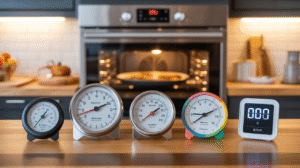
- Oven thermometer: Optional, but helpful for accurate cooking temperatures.
These items ensure your oven baked bacon recipe is mess-free and perfectly crispy every time.
Why a Rack vs No Rack
Using a wire rack is optional but can make a big difference:
With a rack:
- Pros: Fat drains away, bacon cooks evenly on all sides, crispier results.
- Cons: Slightly more cleanup and requires a second tool.
Without a rack:
- Pros: Fewer items to clean, simpler setup.
- Cons: Bacon sits in its fat, may be slightly greasier or less crispy.
Choose based on your texture preference and how much cleanup you want. Both methods work for learning how to bake bacon in oven.
Oven Baked Bacon Recipe — Quick Recipe Card (Printable)
Prep time: 5 minutes Cook time: 15–25 minutes (depending on thickness) Total time: 20–30 minutes Yield: 4–6 servings (8–12 slices)
Ingredients:
- 8–12 slices of bacon (any type you prefer)
- Optional: brown sugar, black pepper, or maple glaze
Method (single-line):
Preheat the oven to 400°F (200°C). Line a rimmed baking sheet with foil, place bacon in a single layer (rack optional), bake 15–25 minutes until desired crispiness, then drain on paper towels.
Temperature & Time Variations:
- Thin-cut bacon: 400°F for 15–18 minutes
- Thick-cut bacon: 400°F for 20–25 minutes
- Turkey bacon: 375°F for 12–18 minutes
Tip: Oven hot spots may require rotating the pan halfway through baking. Adjust time slightly for extra crisp or softer bacon.
How to Cook Bacon in Oven | 7 Easy Steps
Step-by-Step Guide — How to Bake Bacon in the Oven
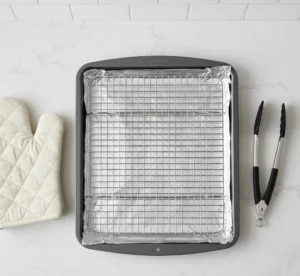 Follow this simple, foolproof method to make perfectly crispy bacon every time.
Step 1 — Prep the Oven and Pan
- Preheat the oven to 400°F (200°C) for standard crispiness.
- For chewier bacon, lower the temperature to 375°F (190°C).
- For extra-crispy bacon, increase to 425°F (220°C).
- Line your baking sheet with aluminum foil or parchment paper.
- Why: This makes cleanup quick and prevents grease from sticking. You can simply fold up the foil after baking to dispose of the bacon fat.
- Optional: Place a wire rack on top of the lined pan. This lifts the bacon so fat drips away, producing evenly crispy slices.
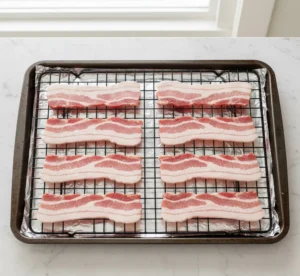 Step 2 — Arrange the Bacon
- Single layer is key: Lay the bacon strips flat on the pan without overlapping. Overlapping causes uneven cooking and chewy spots.
- Spacing matters: Leave a small gap between slices to allow heat circulation.
- Using a wire rack: Place the bacon directly on the rack so fat drips below. Make sure slices aren’t touching to get even crisping on both sides.
Step 3 — Bake
Cook the bacon based on thickness and type:
| Bacon Type | Oven Temp | Time Range |
|---|---|---|
| Thin / Regular | 400°F | 15–18 minutes |
| Thick-cut | 400°F | 20–25 minutes |
| Turkey bacon | 375°F | 12–18 minutes |
Tips during baking:
- You usually don’t need to flip bacon, especially on a wire rack.
- Rotate the pan halfway if your oven has hot spots to ensure even browning.
- Keep a close eye in the last few minutes; bacon can go from perfect to burnt quickly.
Step 4 — Drain and Rest
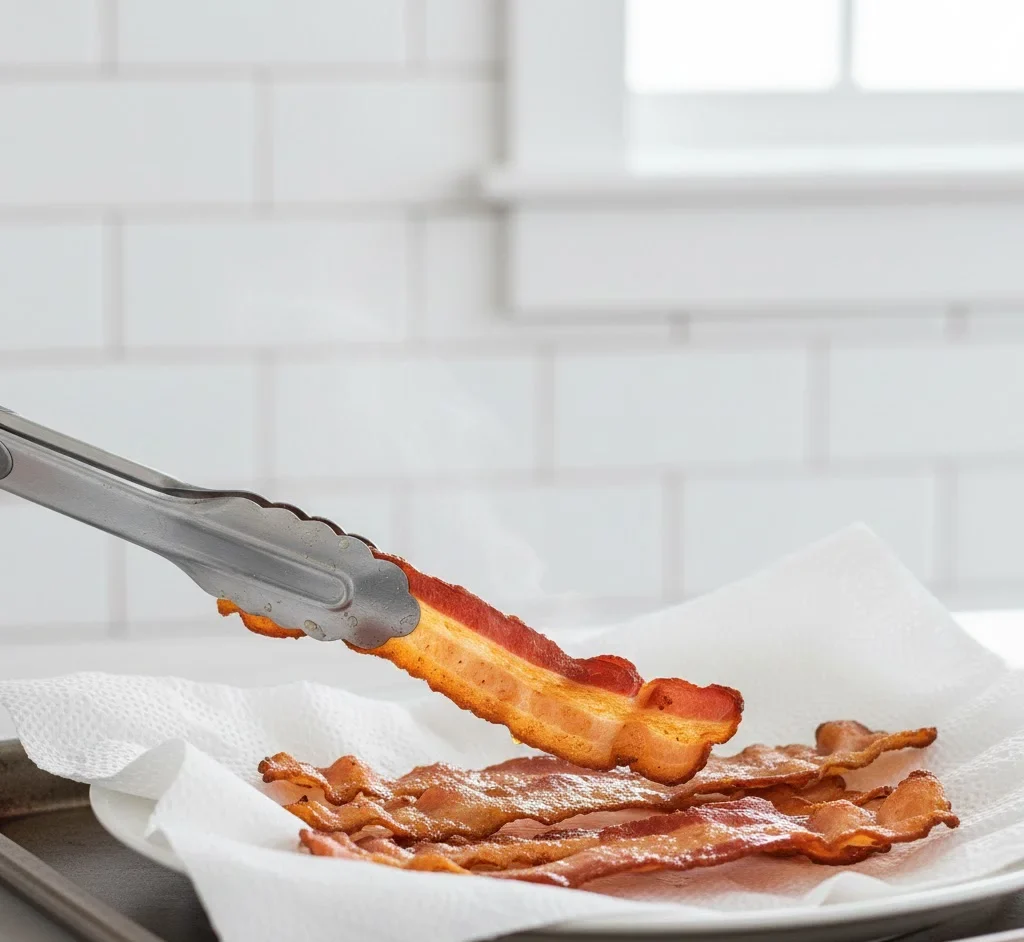
- Use tongs to transfer cooked bacon to a plate lined with paper towels or a wire rack.
- Let it rest for 2–3 minutes, bacon continues to crisp as it cools.
- Drain off excess fat carefully; save it if you want for cooking eggs or vegetables later.
Step 5 — Taste Test & Adjust
- Check for color and texture: golden-brown edges, slightly firm to touch, no raw fat.
- If bacon is under-cooked, return it to the oven for 1–2 more minutes.
- If it’s too dark, lower the temperature slightly next time or reduce cooking time.
- Adjust for personal preference: chewy, slightly crisp, or extra crunchy.
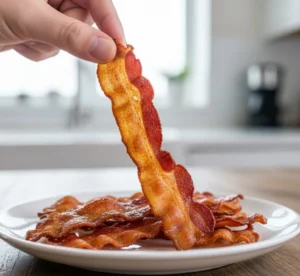 Following these steps, your oven baked bacon recipe will come out perfect every time no splatter, no mess, just delicious bacon!
Tips for Perfect Oven Baked Bacon (Pro Tips)
Making bacon in the oven is easy, but a few pro tips can take your oven baked bacon recipe from good to restaurant-quality crispy perfection. Here’s how to get the best results every time.
For Extra Crispy Bacon
- Temperature matters: Bake at 400–425°F (200–220°C) for maximum crispiness.
- Use a wire rack: Elevating bacon lets fat drip away, giving each strip a perfectly even crunch.
- Pat dry after baking: Place bacon on paper towels to remove residual grease — this keeps it crisp longer.
For Chewy Bacon
- Lower the heat: Bake at 375°F (190°C) for slightly softer slices.
- Shorten the cooking time: Check a few minutes earlier than usual to ensure the bacon stays tender but fully cooked.
- Avoid a rack if you prefer chewiness: Bacon sitting in a bit of its own fat stays moist and slightly chewy.
For Uniform Color
- Single layer: Don’t overlap slices; overlapping creates uneven browning.
- Similar thickness: Try to use slices of the same thickness so they finish at the same time.
- Rotate the pan: Move the sheet halfway through baking if your oven has hot spots to get even color across all slices.
For Less Mess / Easier Cleanup
- Line the pan with foil: Fold up the edges to catch grease.
- Pour off fat mid-cook for large batches: If baking multiple trays, carefully drain excess fat to prevent overflow and smoke.
- Use parchment paper for sticking-free cleanup: It also keeps your wire rack cleaner.
For Better Flavor (Simple Riffs)
- Sweet & smoky: Sprinkle lightly with brown sugar before baking.
- Peppery kick: Add freshly cracked black pepper or smoked paprika.
- Maple glaze: Brush a thin layer of maple syrup in the last 5 minutes for sweet, caramelized bacon.
Tip: Small flavor additions can be done directly on raw bacon slices before baking for fast, delicious variations.
With these tips, you’ll master how to bake bacon in oven every time, whether you like it extra crispy, chewy, or full of flavor.
Common Mistakes and How to Avoid Them
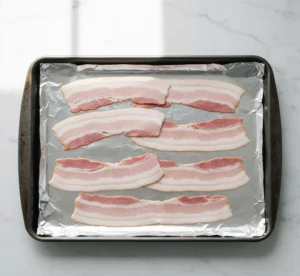 Even when you know how to bake bacon in oven, small mistakes can prevent you from achieving perfectly crispy results. Here are the most common issues and how to fix them.
Mistake: Overlapping Slices
What happens: Bacon slices that overlap cook unevenly. Some parts remain chewy or undercooked while others get too crispy or burnt.
How to fix it:
- Lay each strip in a single layer with a little space in between.
- If using a wire rack, ensure slices don’t touch, so fat can drip evenly.
- Proper spacing guarantees every piece cooks uniformly for a consistent oven baked bacon recipe.
Mistake: Wrong Temperature
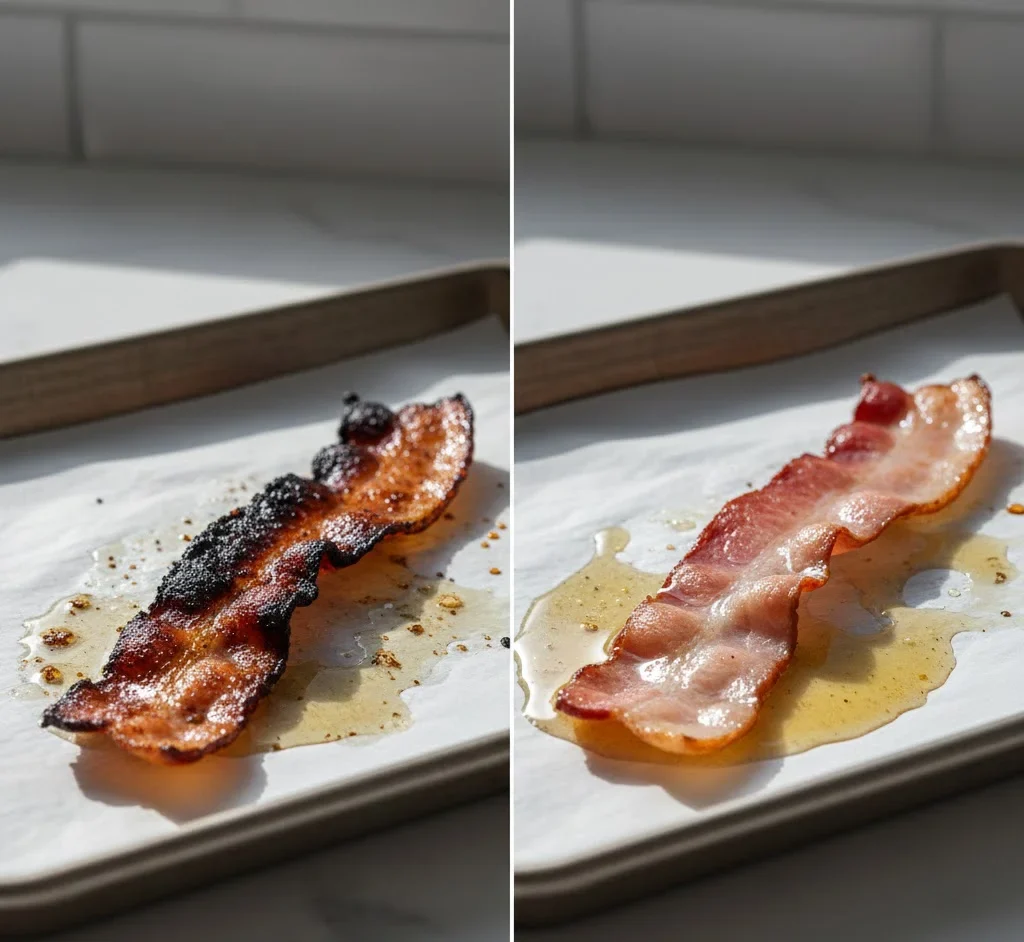
What happens:
- Too low: Bacon cooks slowly, stays greasy, and may not crisp properly.
- Too high: Bacon edges burn before the center is cooked.
How to fix it:
- Stick to the recommended range: 400°F (200°C) for most bacon.
- Adjust slightly depending on thickness: 375°F (190°C) for chewy, 425°F (220°C) for extra crispy.
Correct temperature ensures your bacon finishes evenly without burning.
Mistake: Skipping Resting/Draining
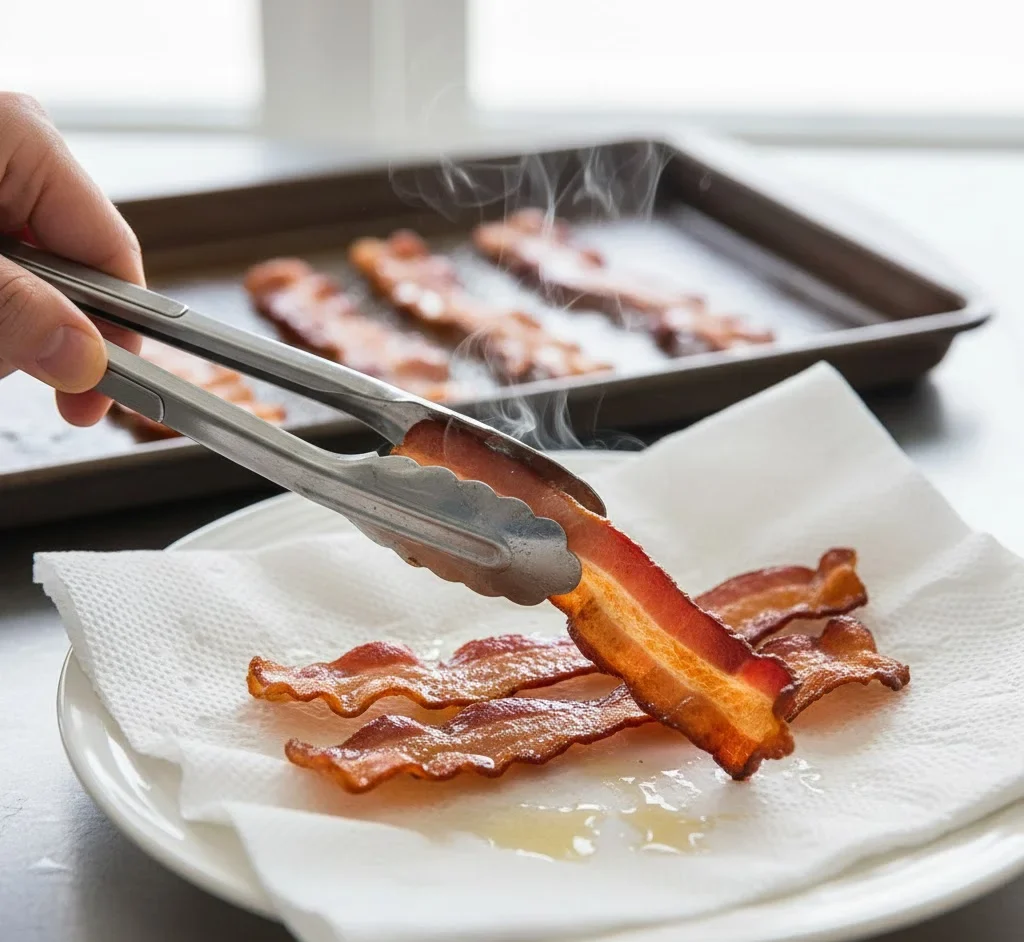
What happens: Bacon straight from the oven can be greasy, and hot strips can continue cooking unevenly on a plate.
How to fix it:
- Transfer cooked bacon to paper towels or a wire rack to drain excess fat.
- Let it rest 2–3 minutes this allows the bacon to crisp as it cools.
Draining is key for the perfect texture in any oven baked bacon recipe.
Mistake: Not Accounting for Thickness or Oven Hot Spots
What happens: Uneven slices or oven hot spots can result in burnt edges or undercooked centers.
How to fix it:
- Slice consistency: Use bacon slices of similar thickness for uniform cooking.
- Pan rotation: Halfway through baking, rotate the pan if your oven has hot spots.
- Adjust time: Thick-cut bacon may need a few extra minutes; thin bacon may finish faster than expected.
Accounting for these factors ensures predictable, delicious results every time you bake bacon in the oven.
Batch Cooking, Storage & Reheating
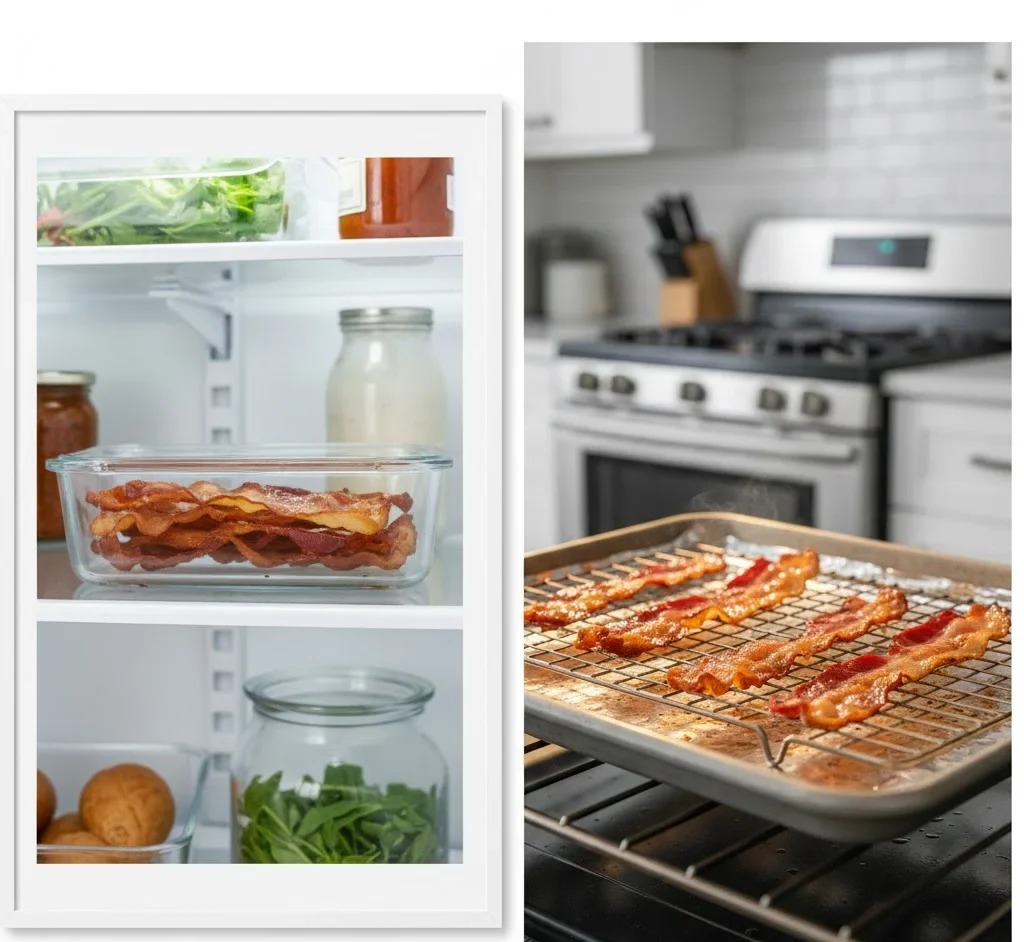
How to Bake Bacon for a Crowd (Sheet Pan + Multiple Racks)
Cooking bacon for a large group doesn’t have to be chaotic.
- Multiple racks: Place bacon on two or more wire racks over rimmed baking sheets.
- Single layer per rack: Ensure slices aren’t overlapping for even cooking.
- Timing: Cook racks one at a time or stagger placement in the oven. Rotate midway if needed.
Pro tip: Use the same foil lining and wire rack setup to keep cleanup minimal.
This approach makes it easy to serve crispy oven baked bacon for breakfast buffets, brunches, or holiday gatherings.
Refrigerating and Freezing Cooked Bacon
- Refrigeration: Store cooled bacon in an airtight container or zip-top bag for up to 5 days.
- Freezing: Lay strips in a single layer on a sheet pan, freeze until firm, then transfer to freezer-safe bags. Keeps up to 1 month.
Tip: Separate layers with parchment or wax paper to prevent sticking.
Proper storage ensures your oven baked bacon recipe stays fresh and ready for quick meals.
Reheating Methods
- Oven: Preheat to 350°F (175°C) and bake bacon on a sheet for 5–8 minutes until heated through and crisp.
- Microwave: Place bacon between paper towels and microwave 30–60 seconds, checking frequently.
- Skillet: Warm over medium heat for 1–2 minutes per side for crispy results.
Reheating preserves flavor and crispiness, perfect for meal prep or leftover breakfasts.
Flavor Variations & Recipe Ideas (Quick)
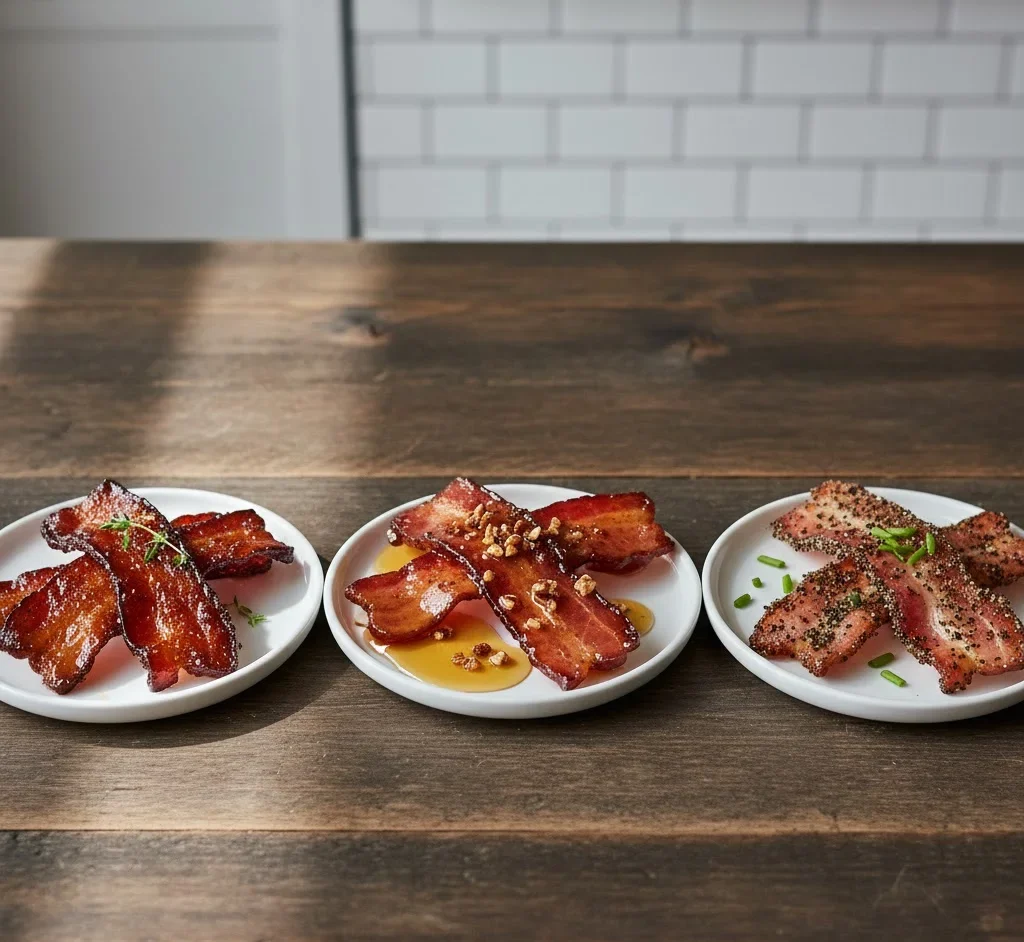
Give your bacon an extra twist with these simple oven baked bacon recipe variations:
Sweet (Brown Sugar + Cayenne)
- Sprinkle brown sugar over raw bacon slices, add a pinch of cayenne for heat.
- Bake as usual for a sweet-and-spicy treat.
Smoky & Peppery (Smoked Paprika + Cracked Pepper)
- Lightly coat bacon with smoked paprika and freshly cracked black pepper.
- Adds a smoky, savory depth without extra effort.
Candied Maple Bacon
- Brush a thin layer of maple syrup on bacon before the last 5 minutes of baking.
- Creates a caramelized, sweet finish that pairs with pancakes or oatmeal.
Using Leftover Bacon
Don’t let leftover bacon go to waste here are quick ways to use it:
- Salads: Crumble crispy bacon over green or grain salads.
- Breakfast bowls: Add chopped bacon to scrambled eggs, hash browns, or avocado toast.
- Sandwiches & wraps: Layer bacon in BLTs, club sandwiches, or breakfast burritos.
These variations and ideas make your oven baked bacon recipe versatile and fun for any meal.
FAQs — How to Bake Bacon in Oven
Q: What temperature should I use to bake bacon in the oven?
For most bacon, 400°F (200°C) works best. For slightly chewy bacon, lower to 375°F (190°C). For extra crispy bacon, increase to 425°F (220°C). Using the right temperature ensures even cooking and minimal splatter in your oven baked bacon recipe.
Q: How long to bake thick vs thin bacon?
- Thin/regular bacon: 15–18 minutes at 400°F (200°C)
- Thick-cut bacon: 20–25 minutes at 400°F (200°C)
- Turkey bacon: 12–18 minutes at 375°F (190°C) Check bacon toward the end of baking ovens varies and thickness affects cooking time.
Q: Can I bake bacon without a rack?
Yes! You can bake bacon directly on a foil- or parchment-lined sheet pan. It will still cook well, but slices may sit in their fat and be slightly less crispy. A wire rack helps achieve uniform crispiness, but it’s optional for this oven baked bacon recipe.
Q: Is oven baked bacon healthier than pan-fried?
Baking bacon is slightly healthier because excess fat drains away naturally on a rack, reducing overall grease. Pan-frying keeps bacon in its fat, which may increase fat content. Both methods are delicious. It’s mostly about texture preference.
Q: Can I reuse bacon grease from baking? (How to strain/store)
 Yes! Carefully pour cooled grease into a heat-safe container. Strain through a fine mesh or coffee filter to remove solids. Store in the fridge for up to 1 month or freeze for longer. Bacon grease is perfect for frying eggs, roasting veggies, or adding flavor to recipes.
Q: How to get bacon extra crispy without burning?
- Use 400–425°F (200–220°C) depending on thickness.
- Use a wire rack so fat drips away.
- Monitor closely in the last 2–3 minutes.
- Rotate the pan if your oven has hot spots. Following these steps ensures crisp bacon without burnt edges.
Q: Can I cook bacon on convection? (Adjust time/temp)
Yes! Reduce the oven temperature by about 25°F (15°C) compared to a conventional oven. Start checking a few minutes earlier, as convection ovens circulate heat and can cook bacon faster. This method works well for consistent crispiness in your oven baked bacon recipe.
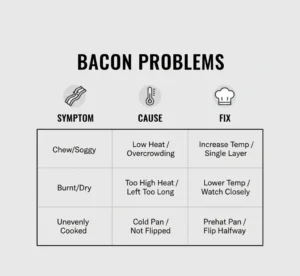
Troubleshooting Quick Reference (Mini Table)
| Symptom | Cause | Fix / Solution |
|---|---|---|
| Bacon soggy | Not enough cooking time or low oven temp | Return to oven on a wire rack for a few more minutes until crispy |
| Burnt edges | Oven too hot or bacon slices too thin | Lower oven temp slightly and reduce cooking time; monitor closely |
| Uneven cooking | Overlapping slices or uneven pan placement | Arrange in single layer, rotate pan halfway through baking |
| Greasy bacon | No rack used or insufficient draining | Drain on paper towels or a wire rack after baking |
| Bacon sticking to pan | No foil/parchment lining | Line pan with foil or parchment to prevent sticking and simplify cleanup |
| Browning too fast | Hot spots in oven | Rotate pan midway, check slices early, adjust oven temp as needed |
This mini table is a handy reference to fix common issues while learning how to bake bacon in oven and ensures your oven baked bacon recipe comes out perfect every time.
Conclusion (Friendly Wrap & Call to Action)
Baking bacon in the oven is a simple, mess-free way to get perfectly crispy slices every time. From thin to thick-cut, and even turkey bacon, this method gives you hands-off cooking, even browning, and easy cleanup.
Try the oven baked bacon recipe today and see how easy it is to make crispy bacon at home.
- Pin, save, or print the recipe for future breakfasts.
- Experiment with flavor variations like sweet, maple, or peppery bacon and share your results in the comments. We’d love to see your creations!
With these tips and the step-by-step guide, you’ll never go back to stovetop splatters again.