If your oven is not cooking evenly, you’re not alone; it’s one of the most common kitchen problems homeowners face. Uneven browning, raw centers, or one side burning faster than the other can make cooking frustrating, especially when you’re following recipes perfectly.
This guide walks you through everything you need to know: quick ways to diagnose the issue, step-by-step fixes you can try right now, the most common causes, mistakes to avoid, helpful tips, and clear answers to FAQs.
It’s written for beginners, home cooks, and anyone who just wants their oven to bake, roast, and heat food the way it should.
Before you start inspecting anything inside your oven, just remember one quick safety rule: always switch off the power or gas supply first.
How to Tell Your Oven Is Not Cooking Evenly
When your oven is not cooking evenly, it usually shows clear signs you just need to know what to look for. These simple checks will help you confirm whether the issue is real or just a cooking technique problem.
Common Symptoms
Here are the most obvious signs that your oven’s heat distribution is off:
- Uneven browning: One side darker, the other pale.
- Raw or undercooked centers: Especially in cakes, bread, or casseroles.
- Hotspots: Some areas burn faster while others barely cook.
- Front vs. back differences: Food near the door cooks slower than food near the back.
- Rack-related inconsistency: Items on the top rack may burn while the bottom stays undercooked.
- Multiple-pan problems: When baking two trays, one may finish much earlier than the other.
If you notice any of these repeatedly, the oven likely isn’t heating evenly.
Quick Checks to Confirm the Issue
You don’t need tools or special skills just try these simple checks:
- Basic Visual Check
- Preheat the oven for 15 minutes.
- Place a baking tray inside and look for uneven glow or flame variations (gas/element differences).
- Oven Thermometer Test
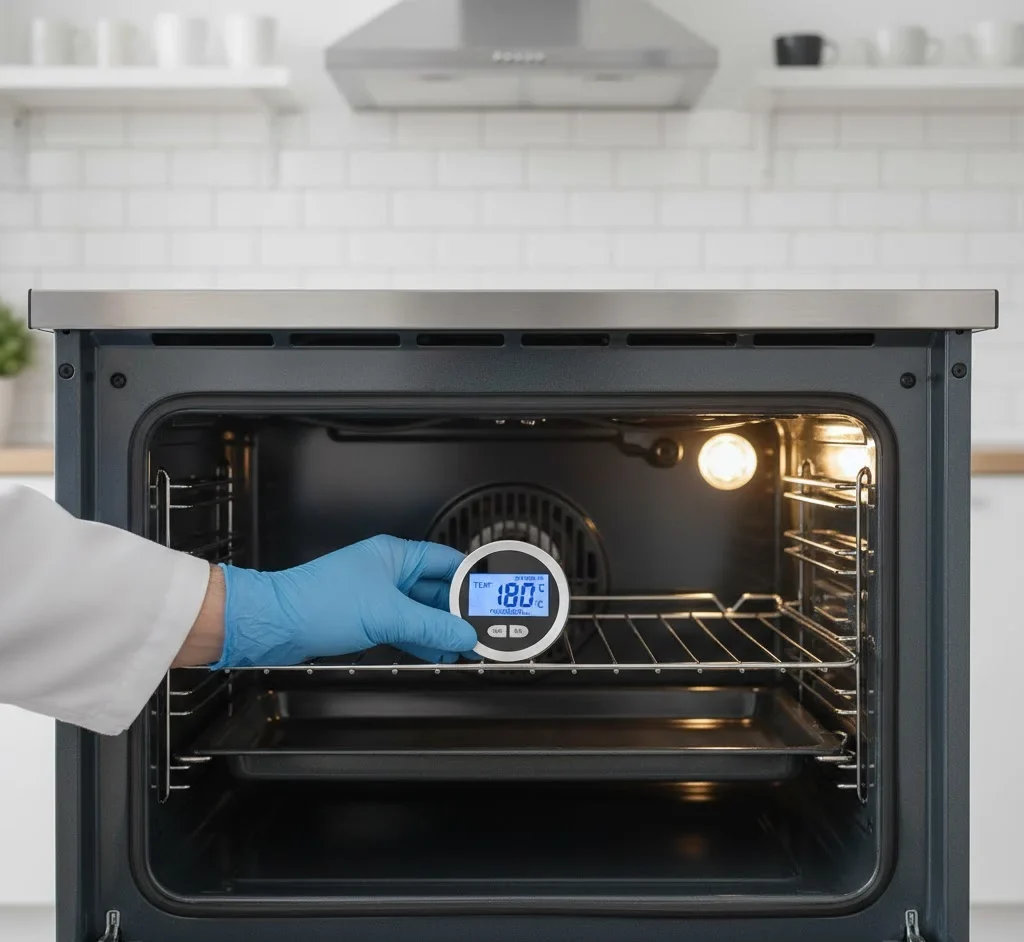
- Put an oven thermometer in the center rack.
- Preheat to a set temperature (e.g., 350°F / 180°C).
- Compare the displayed temperature to the set temperature.
- Repeat on the top and bottom racks to see if readings vary.
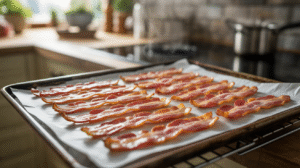
- Toast or Cookie Test
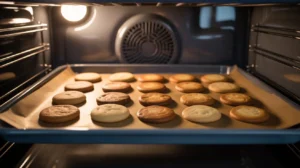
- Line a baking sheet with slices of bread or a tray of plain cookies.
- Bake for 5–10 minutes.
- Check for patterns: darker areas reveal hotspots, pale areas show cold spots.
- Rack Position Test
- Bake the same item on different racks.
- If results change drastically, airflow or element positioning may be the problem.
These quick checks help you pinpoint whether the issue is real and where the problem might be.
Tools You’ll Need
You won’t need advanced tools just a few basics most homes already have:
- Oven thermometer (essential for accurate testing)
- Baking sheet or tray
- Foil (for the bread mapping test)
- Flashlight (to inspect the heating elements or gas flames)
- Screwdriver (optional, for checking loose parts or sensor screws)
- Multimeter (optional, for advanced electrical testing only if you’re comfortable)
Once you’ve run these simple checks, you’ll have a much clearer idea of what’s causing the uneven cooking and which fixes to try next.
Main Causes: Why an Oven Is Not Cooking Evenly
If your oven is not cooking evenly, the issue usually comes down to a few common problems. Understanding the cause makes it much easier to choose the right uneven cooking oven fix without wasting time or replacing unnecessary parts. Here are the most frequent reasons this happens and what each one means.
1. Bad Temperature Calibration
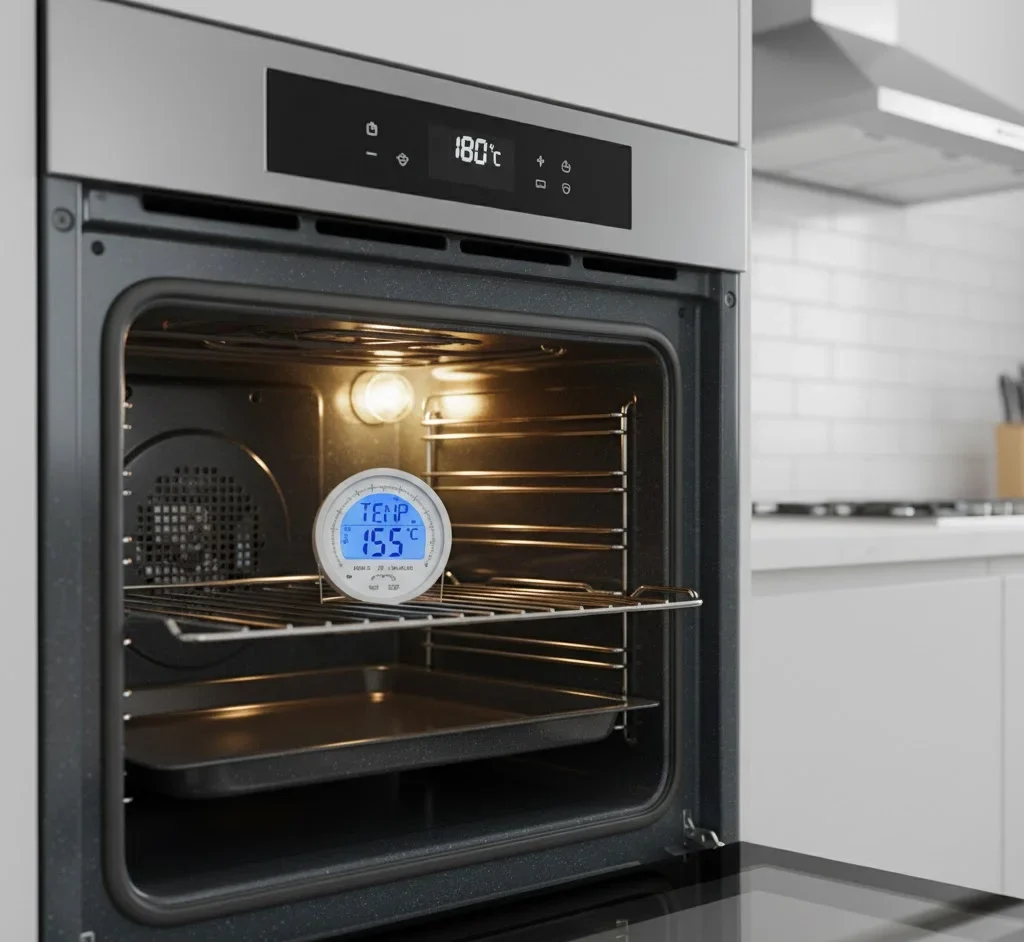
Modern ovens can drift from their factory settings over time. If the internal temperature doesn’t match what you set, food cooks too fast in some areas and too slow in others.
What it means: Your oven may heat 25–75°F hotter or cooler than the display shows, causing inconsistent results.
Signs:
- Recipes finish too early or too late
- Uneven browning
- Big temperature swings on an oven thermometer
2. Faulty Heating Element (Electric ovens)
An electric oven needs both the top and bottom elements to heat evenly. If one burns out or partially fails, heat can pool on one side or only at the top/bottom.
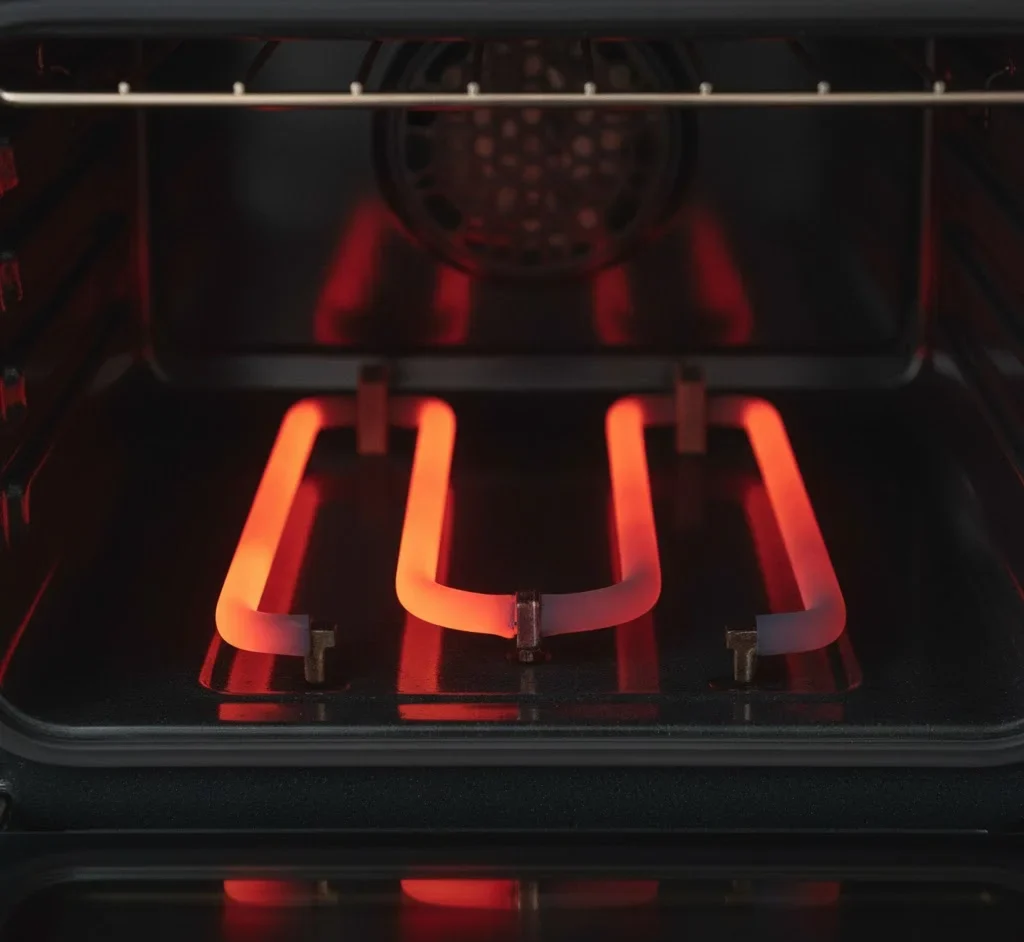
What it means: The oven may only be cooking from a single heat source, creating obvious hot and cold spots.
Signs:
- One element doesn’t glow red
- Food burns on top but stays raw underneath
- Long preheat times
3. Malfunctioning Convection Fan
If your oven has a convection feature, the fan helps distribute heat evenly. When it slows down, becomes blocked, or stops working, heat can’t circulate properly.
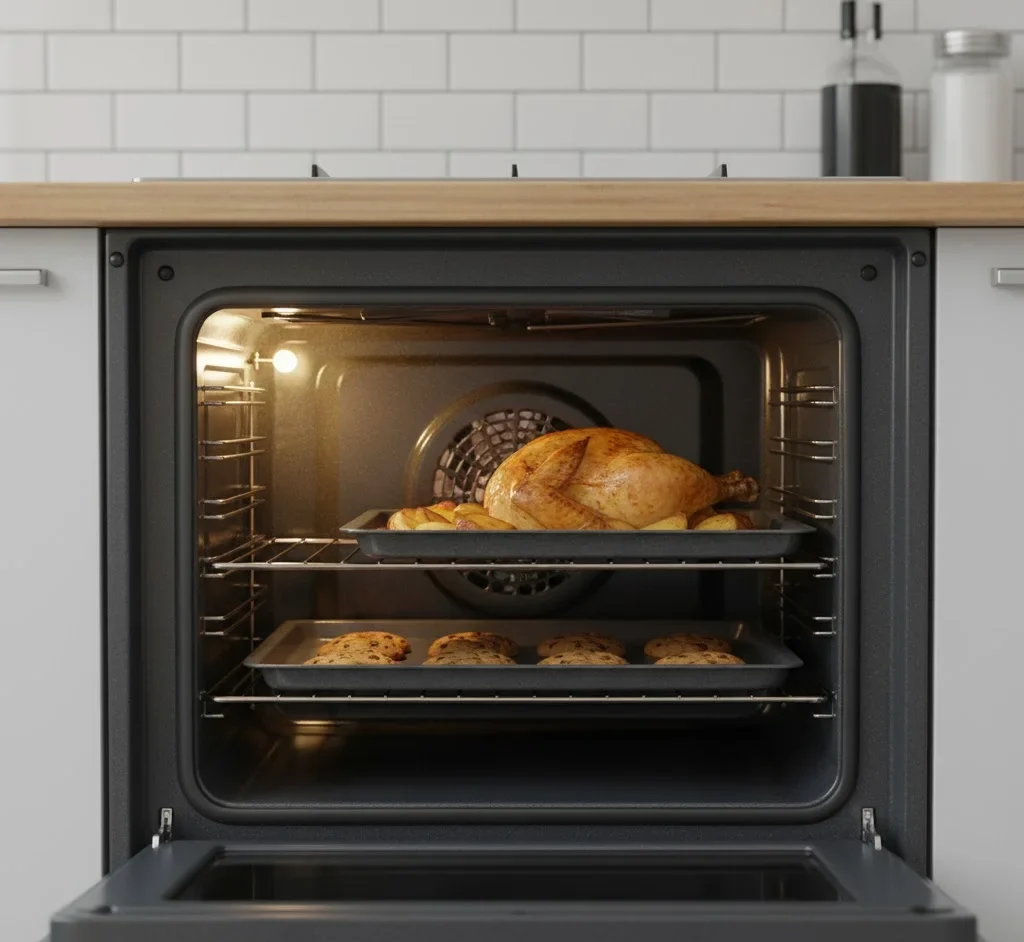
What it means: You’ll see uneven browning, especially on multi-rack bakes.
Signs:
- Loud or humming fan
- Fan not spinning
- Uneven results even with convection on
4. Hot Spots in the Oven Cavity
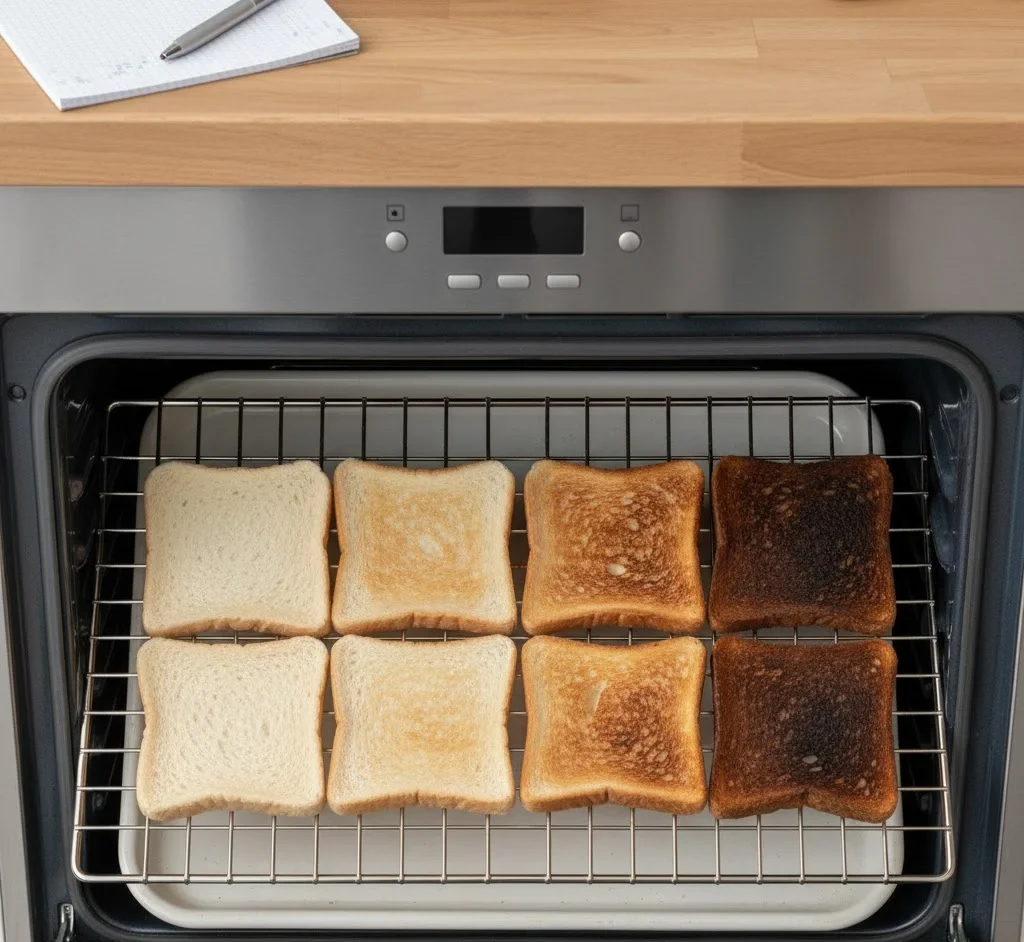
Every oven naturally has hot and cold areas, especially older models. Over time, insulation shifts or internal parts warp, increasing the imbalance.
What it means: Food placed in certain spots always cooks faster, even when you rotate pans.
Signs:
- Toast or cookie test shows darker corners
- One side of the tray always burns
5. Wrong Rack Placement or Overloading
Placement matters. Too high or too low can expose food to direct heat. Overloading limits airflow, making even cooking impossible.
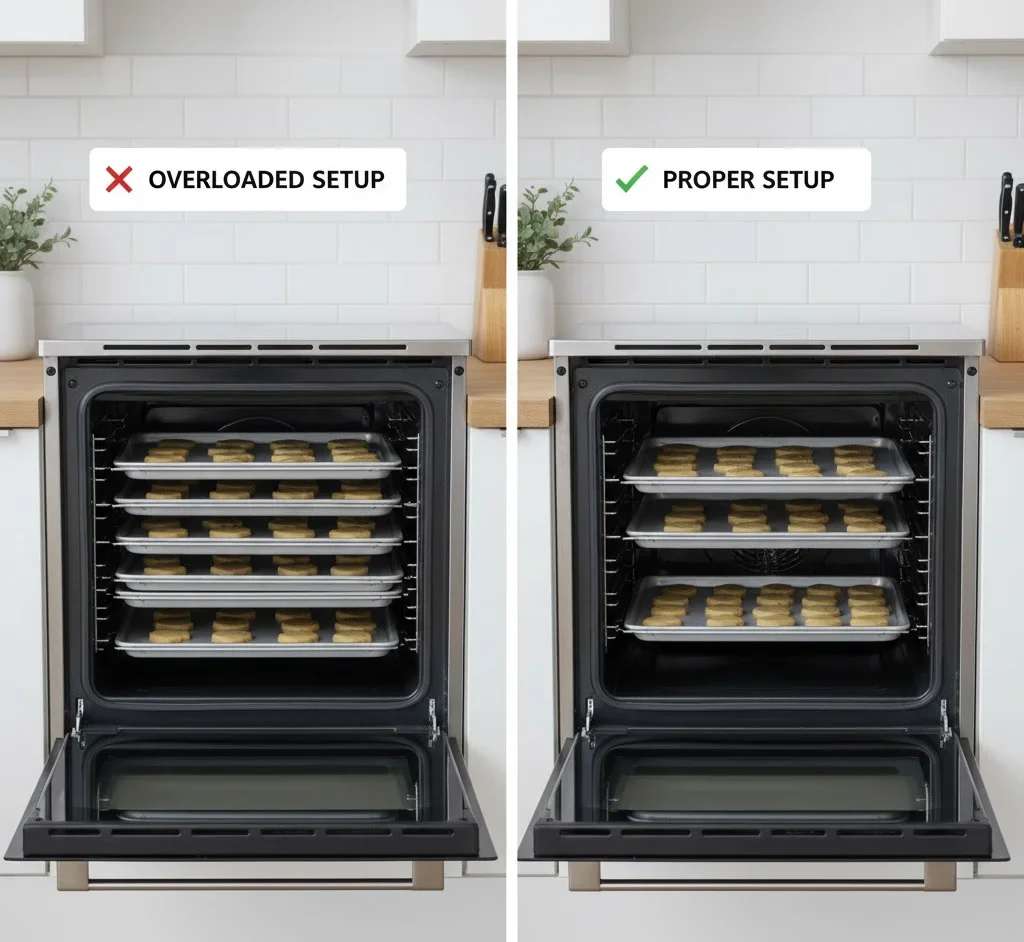
What it means: The oven can’t push hot air around your food properly.
Signs:
- Top rack burns, bottom stays pale
- Multiple trays cook at different speeds
- Crowded pans produce soggy or uneven results
6. Poor Cookware Choice
Not all pans conduct heat the same. Thin, warped, or dark pans absorb heat differently and can cause uneven baking.
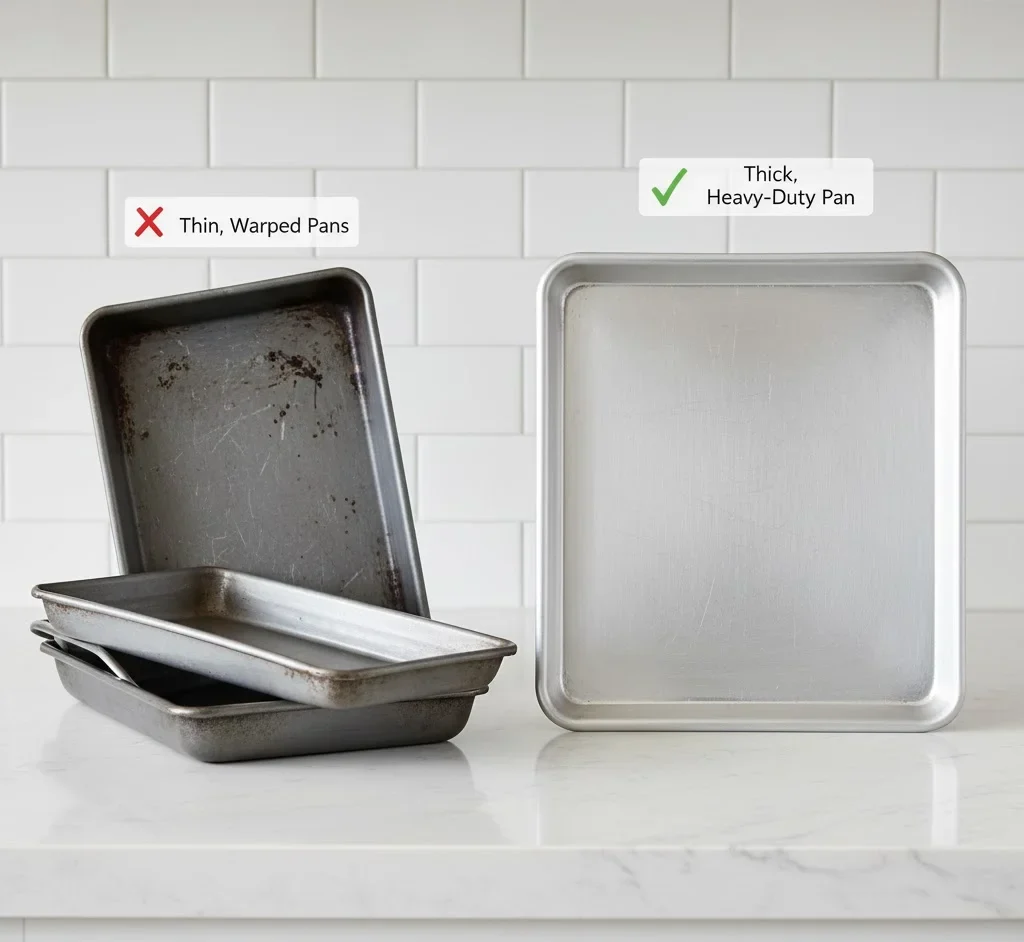
What it means: The issue may not be the oven but how your pan interacts with heat.
Signs:
- Hot edges and undercooked centers
- Warped baking sheets
- Dark non-stick pans burning bottoms
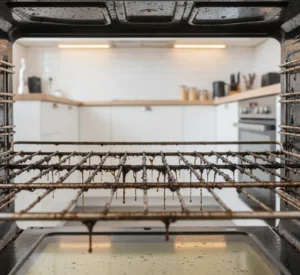
7. Dirty Oven
Built-up grease, burned food, or debris can block airflow and even disrupt heat from the elements or burners.
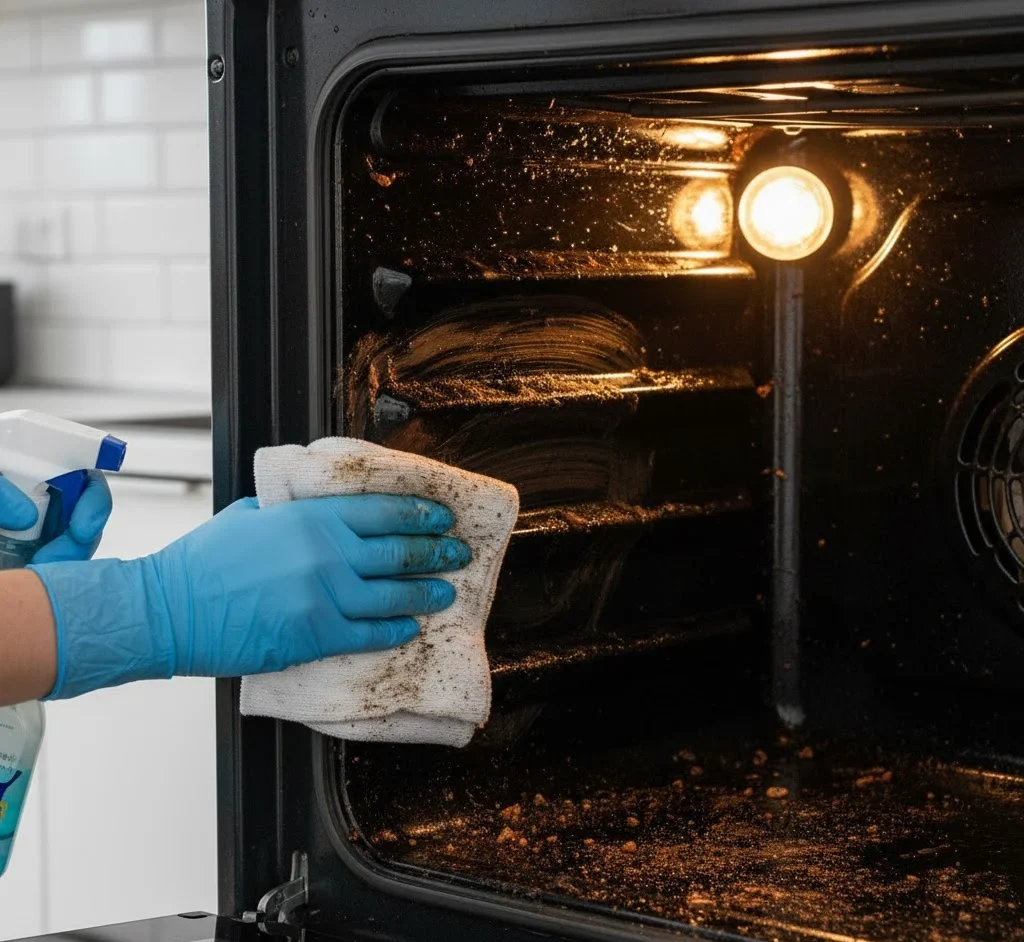
What it means: Layers of grime act like insulation, creating uneven heat pockets.
Signs:
- Smoking
- Stubborn hot spots
- Reduced heat output
8. Door Seal or Gasket Leaks
A worn or damaged gasket lets hot air escape especially near the front of the oven leading to cooler spots.
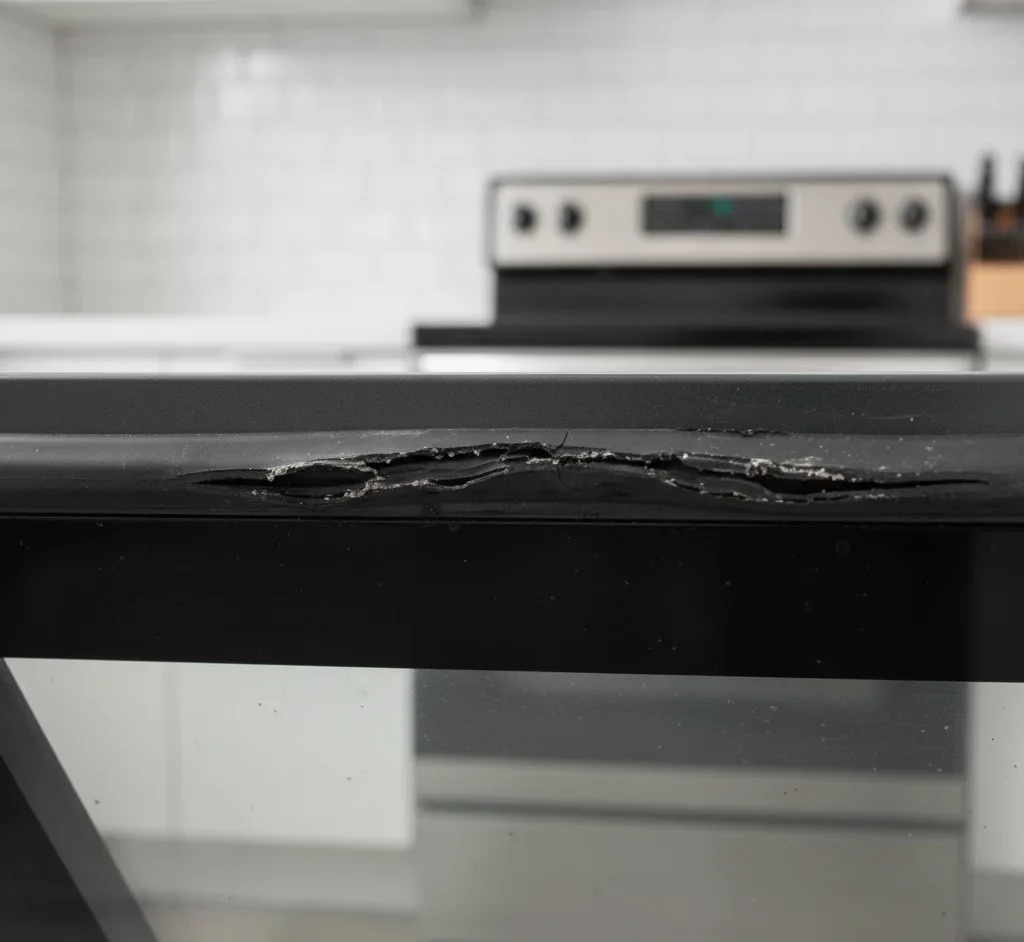
What it means: Heat escapes through gaps, so the oven can’t stay evenly heated.
Signs:
- Visible tears or looseness
- Door not closing firmly
- Food near the front cooks slower
9. Electronic Control Board Problems
The control board regulates temperature. When it malfunctions, it may misread sensors or send incorrect signals to heating components.
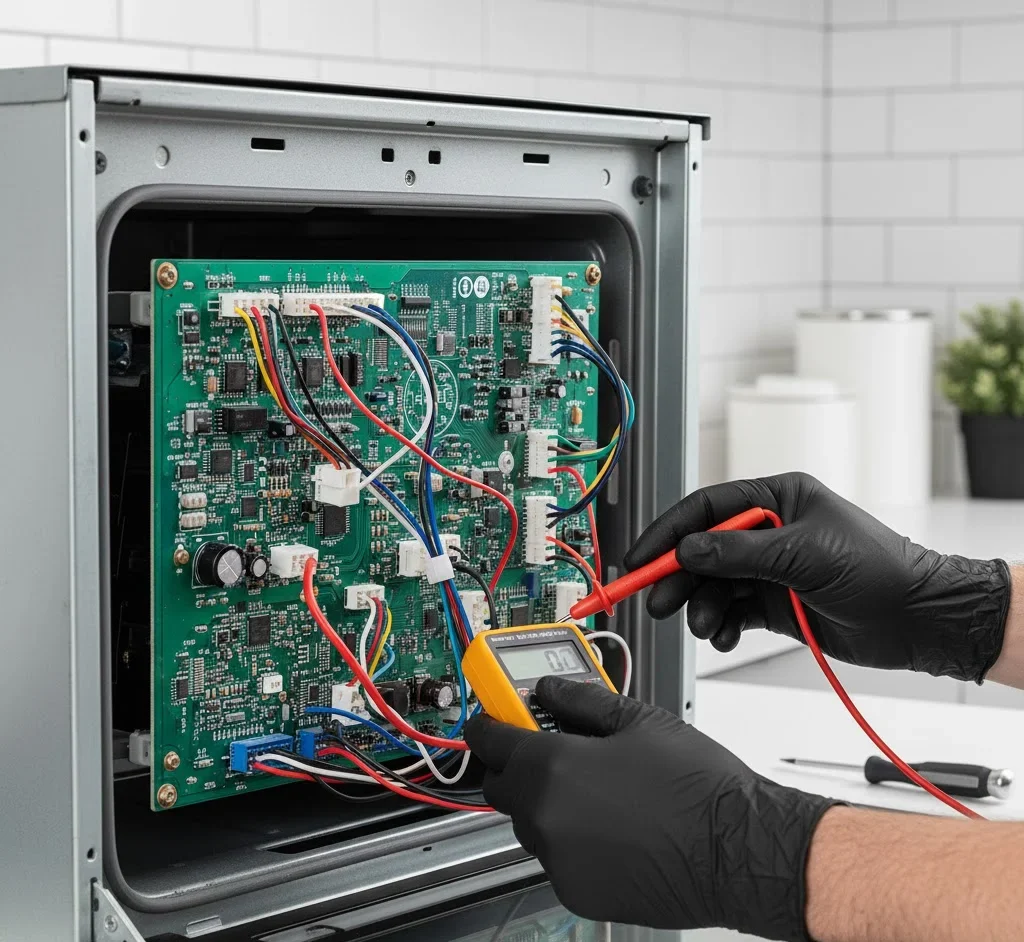
What it means: Your oven may overheat, underheat, or swing wildly between temperatures.
Signs:
- Random temperature spikes
- Error codes
- Unpredictable cooking results
10. Uneven Gas Flow (Gas Ovens)
If you have a gas oven, uneven flame distribution or partial blockage can create hot and cold zones.
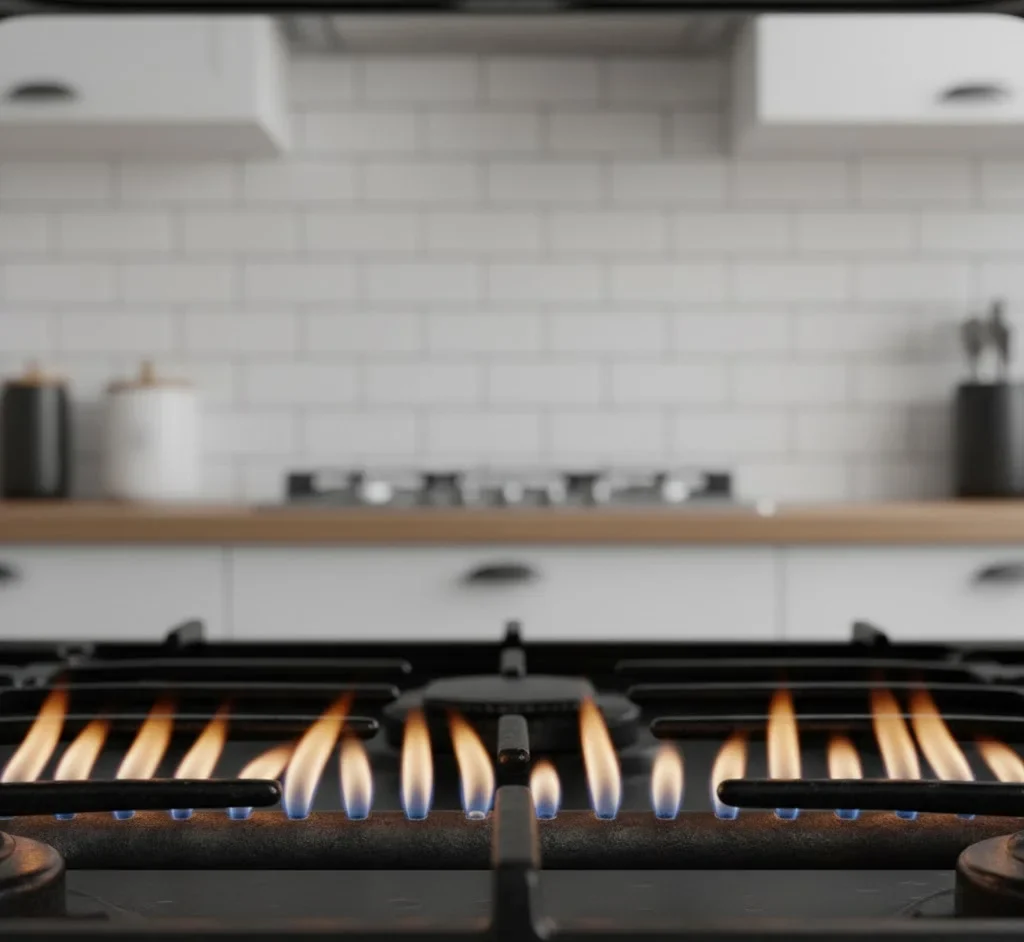
What it means: The flame isn’t spreading uniformly across the burner.
Signs:
- Yellow or weak flame
- Slow preheat times
- Patchy cooking patterns
11. Electrical Supply Issues (Electric Ovens)
Low voltage or wiring issues can cause heating elements to underperform.
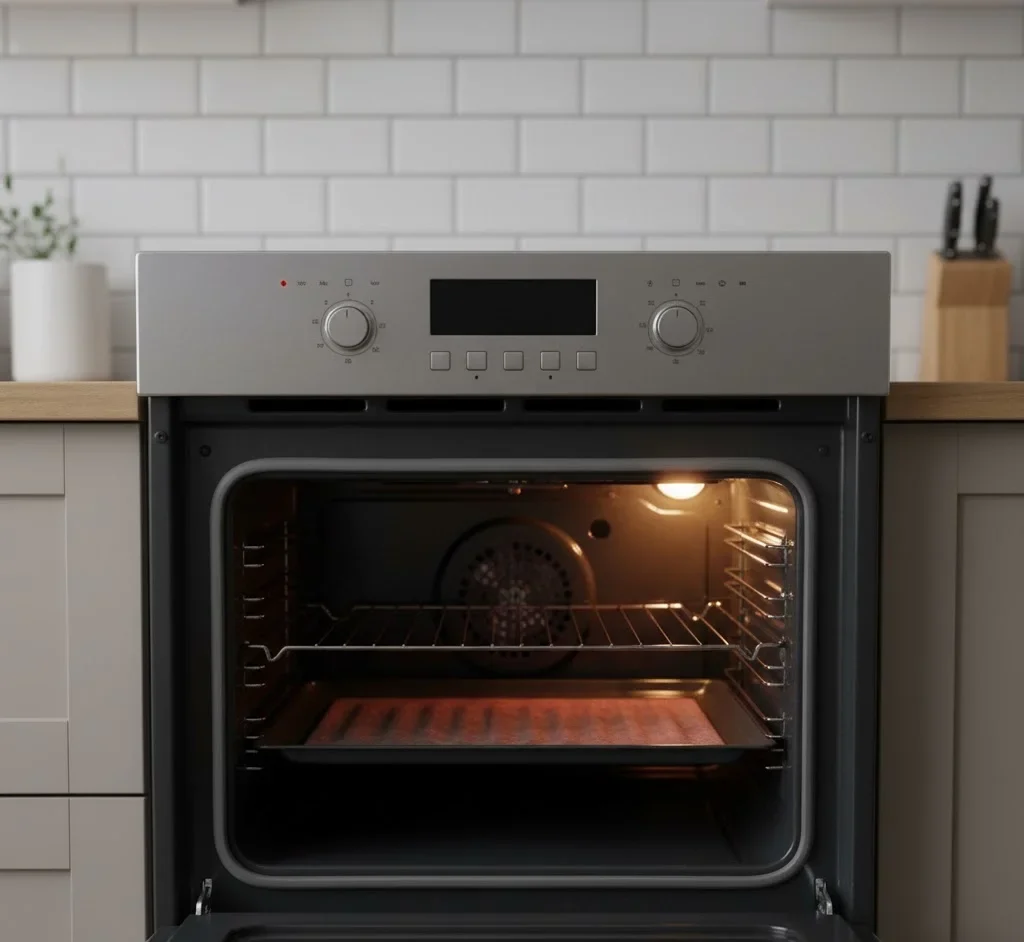
What it means: Your oven never reaches or maintains a stable temperature.
Signs:
- Dim indicator lights
- Slow heating
- Temperature drops during cooking
12. Design Limitations (Small or Older Ovens)
Some ovens, especially compact or older models, naturally have weaker insulation, inconsistent heat circulation, or outdated components.
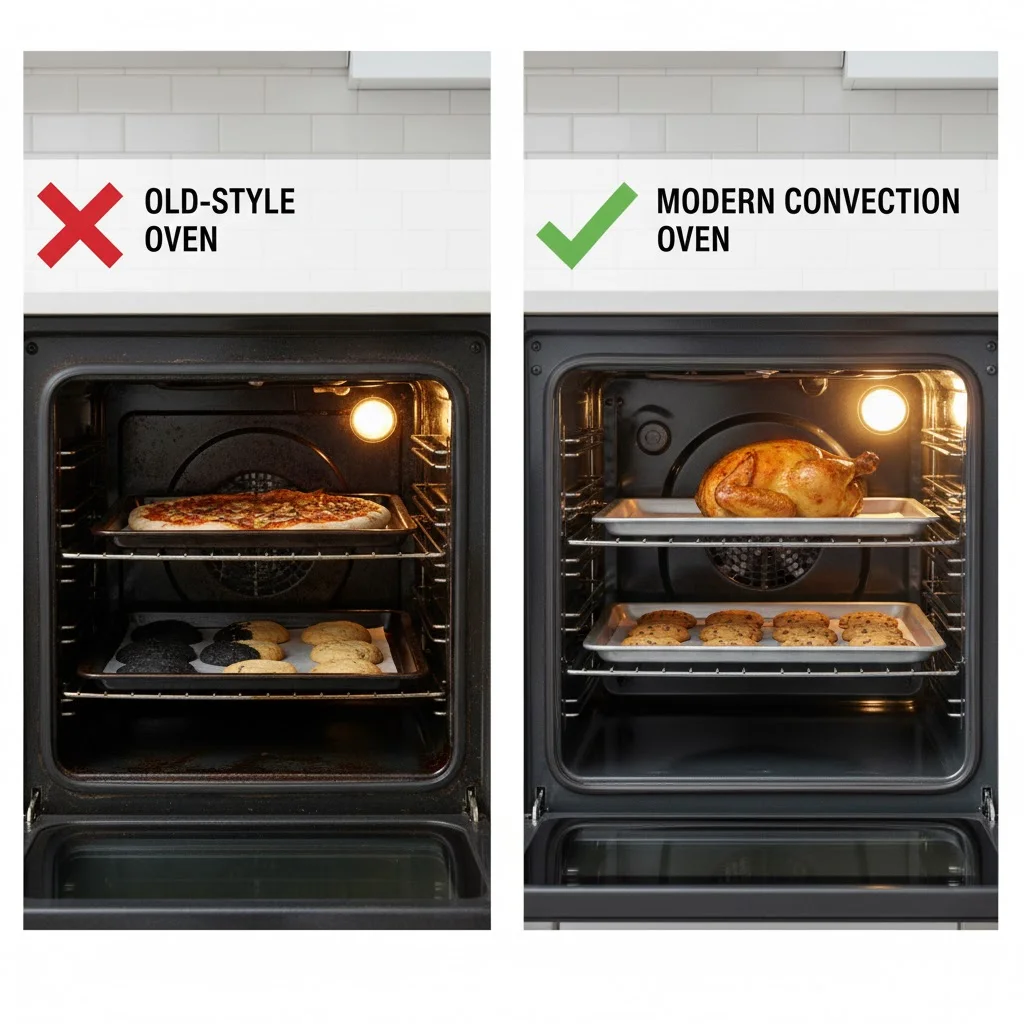
What it means: You may be experiencing normal behavior for that model.
Signs:
- Issues persist even after multiple fixes
- No convection option
- Known model-specific uneven heating problems
Troubleshooting Flowchart: What to Do When Your Oven Is Not Cooking Evenly
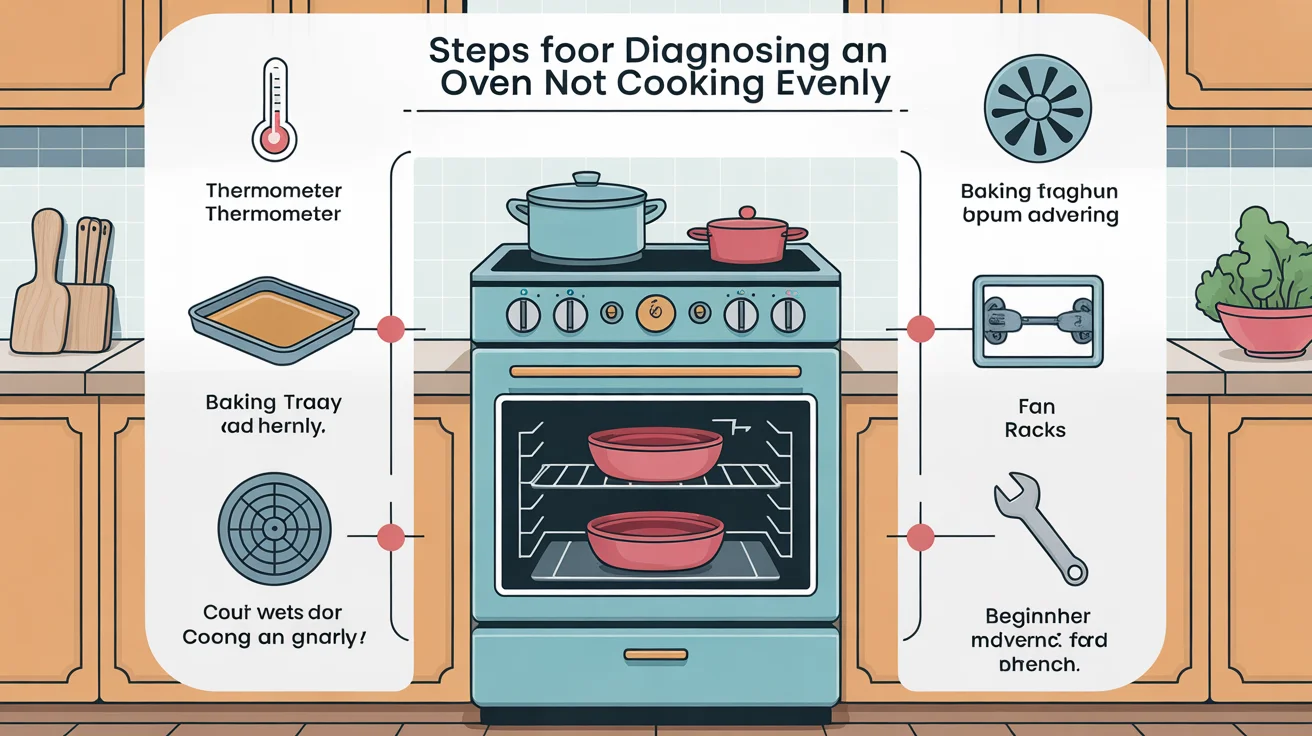
When your oven is not cooking evenly, following a simple decision path helps you quickly diagnose the issue and pick the right fix. Use this beginner-friendly flow to figure out what to do next.
- Start With a Quick Test
- Preheat the oven to 350°F (180°C).
- Place an oven thermometer on the center rack.
- Run a quick toast or cookie test to reveal hot and cold spots.
- If temperatures match and toast browns evenly: The issue may be cookware, rack placement, or overcrowding.
- If temperatures vary or toast burns in certain areas: Continue to the next step.
- Identify the Likely Cause
- Use what you observed:
- Burning on one side only? Likely a heating element or hot-spot issue.
- Top burns, bottom stays pale? Bottom element or rack height problem.
- Front cool, back hot? Door seal or airflow issue.
- Uneven results on multiple trays? Convection fan or overcrowding.
- Slow preheat or weak heat? Sensor or power problem.
- Try the Easy Fix First
- Before making repairs, try simple adjustments:
- Move to the center rack.
- Rotate pans halfway through cooking.
- Avoid overloading the oven.
- Switch cookware (use heavier pans).
- Clean the oven cavity and gasket.
- Recalibrate the temperature settings.
- If results improve: You found an easy, no-cost fix!
- Re-Test Your Oven
- Repeat the thermometer or toast test.
- If the oven now cooks evenly: You’re good to go move to long-term care tips below.
- If the problem persists: Continue to advance checks.
- Move to Advanced Checks or Repairs
- You may be dealing with:
- Faulty heating element
- Convection fan failure
- Damaged temperature sensor
- Door gasket leak
- Electrical or gas issue
- If you’re comfortable:
- Inspect the element
- Check the sensor
- Examine the gasket
- When to Call a Professional
- Stop and get help immediately if you see:
Red Flags
- Strong gas smell
- Yellow, flickering, or inconsistent gas flame
- Sparks, burnt wiring smells, or electrical popping
- Oven won’t reach temperature at all
- Control board errors
- Door won’t close properly after adjustments
If any of these occur, it’s safer and usually cheaper long-term to call a technician.
Tips to Keep Your Oven Cooking Evenly (Preventive Care)
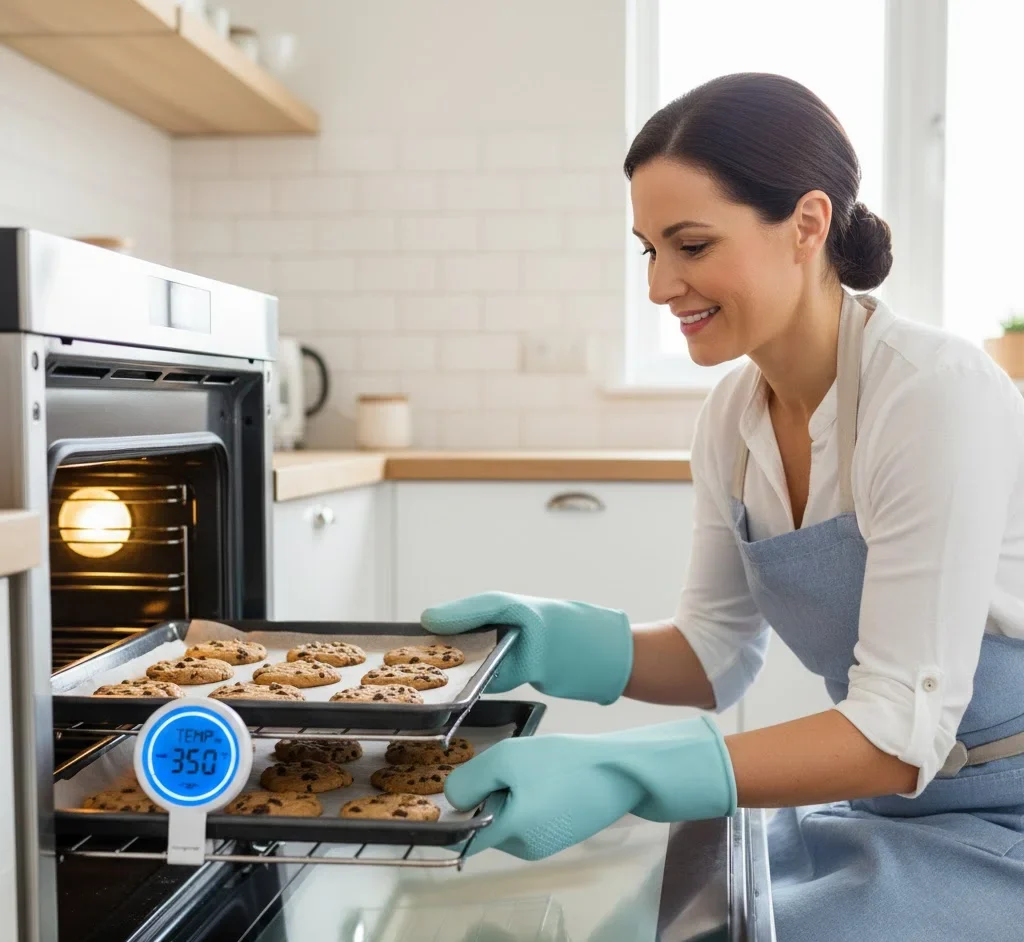
Once you’ve fixed the problem, these simple habits will help prevent your oven not cooking evenly again.
- Always Preheat Fully
- Many uneven cooking problems happen because food is placed inside before the oven reaches the correct temperature. Wait for the preheat signal + give it 5 extra minutes.
- Avoid Overloading
- Crowding the oven blocks airflow and traps moisture.
- Space items at least 1–2 inches apart.
- Don’t place more trays than the oven can circulate air around.
- Use the Center Rack for Most Baking
- The center rack provides the most even heat balance between the top and bottom elements.
- Move up or down only when a recipe specifically calls for it.
- Rotate pans halfway through baking when needed.
- Use an Oven Thermometer Regularly
- This simple tool helps you:
- Spot early signs of temperature drift
- Catch calibration issues before they become big problems
- Verify actual oven temperature (most ovens run 10–40°F off)
- Use the Right Cookware
- Better pans = better heat distribution.
- Choose heavy-duty pans or aluminum-core pans.
- Avoid very thin or warped pans.
- Avoid dark non-stick pans for delicate baking; they cook hotter.
- Clean the Oven Regularly
- Grease buildup can block airflow and cause hot spots.
- Wipe spills immediately once the oven cools.
- Clean the door window and gasket.
- Deep clean every 1–2 months if you bake frequently.
- Check Your Door Gasket Often
- A loose or damaged gasket lets heat escape, especially near the front.
- Look for cracks, looseness, or flattened sections.
- Replacing if worn out it’s a cheap and easy fix.
- Know When to Use Bake vs Convection
- Bake (no fan): Best for cakes, breads, casseroles, and gentle heat.
- Convection (fan): Best for roasting, crisping, and multi-tray baking because it boosts air circulation and evens out heat.
- Seasonal Maintenance Helps
- Every 6 months:
- Check the temperature sensor
- Inspect the heating element visually
- Clean the fan cover (if accessible)
- Re-check gasket
- Verify temperature accuracy with a thermometer
Common Mistakes (and How to Avoid Them)
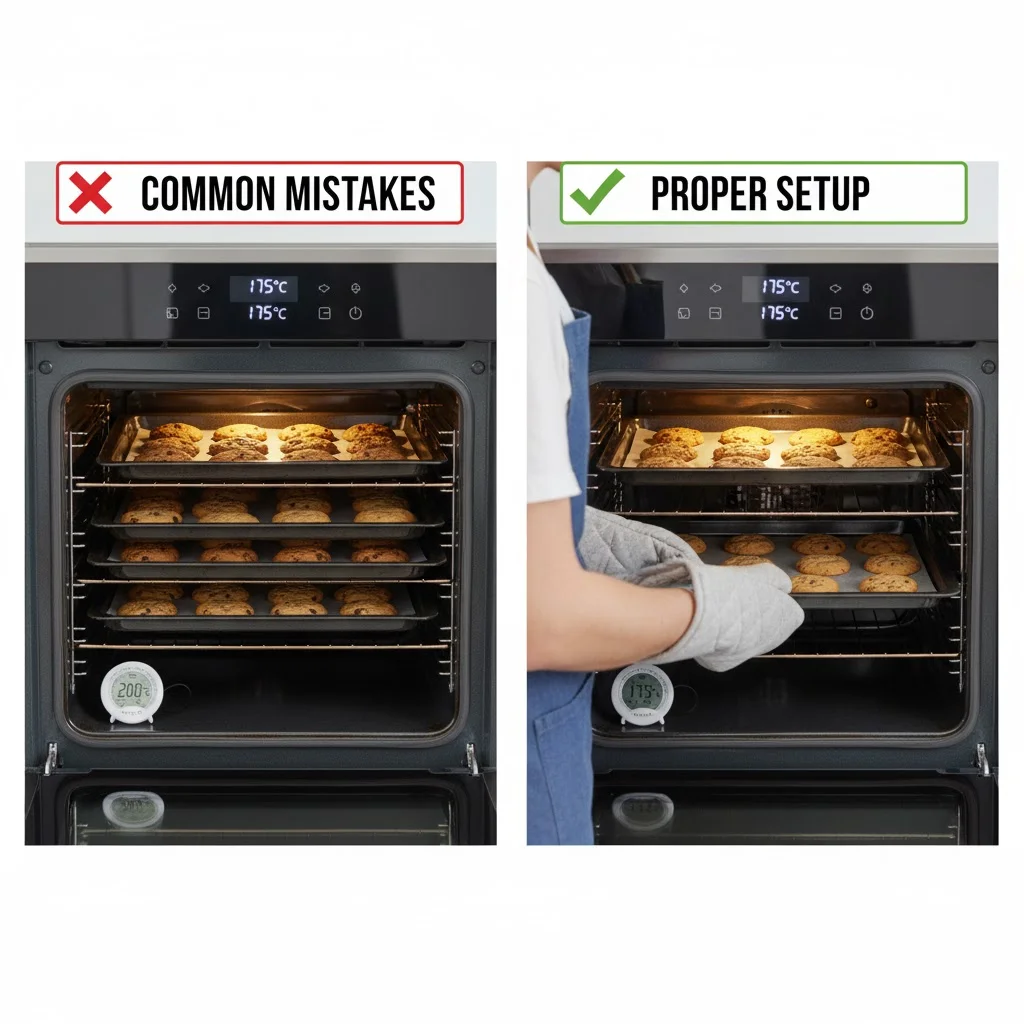
Even after you fix the issue, these everyday mistakes can make your oven not cooking evenly again. Avoiding them keeps your heat consistent and your results reliable.
- Trusting the Built-In Thermostat
- Most ovens run hotter or cooler than the displayed temperature.
- Why it causes uneven results: The oven may be 20–60°F off, which leads to undercooked centers or burnt edges.
- Fix: Use an oven thermometer to verify real temperature and adjust as needed.
- Overcrowding or Stacking Pans
- When trays sit too close together, airflow is blocked, a common cause of uneven heat.
- Why it causes uneven results: Hot air cannot circulate, creating hot and cold pockets.
- Fix:
- Space trays at least 1–2 inches apart.
- Bake fewer items per batch if needed.
- Not Rotating Pans Mid-Bake
- Even in a well-maintained oven, natural hot spots still happen.
- Why it causes uneven results: One side cooks faster, especially near the back or sides.
- Fix: Rotate pans halfway through cooking. Set a timer so you don’t forget.
- Using Damaged Racks or Warped Pans
- Bent racks or warped cookie sheets tilt your food, changing how heat hits it.
- Why it causes uneven results: Uneven contact with the heat source changes cooking speed.
- Fix: Replace bent racks or switch to heavy, even-bottom pans.
- Using Self-Clean Mode Too Often
- Self-clean cycles reach extremely high temperatures and can damage sensors or elements over time.
- Why it causes uneven results: A weakened sensor or element may fail to regulate heat properly.
- Fix: Spot-clean regularly. Save the self-clean cycle for deep cleaning only a few times a year.
- Ignoring the Door Gasket
- A loose or cracked gasket allows heat to leak every time the door closes.
- Why it causes uneven results: The front of the oven becomes cooler than the back.
- Fix: Check the gasket each month and replace it if it’s worn or loose.
Quick Reference: Fast Fixes for Common Symptoms
Use this quick guide to match what you’re seeing with the most likely cause and the simplest fix. This is especially helpful when dealing with an oven not cooking evenly and you need a fast solution.
| Symptom | Likely Cause | Quick Fix |
|---|---|---|
| 1. Uneven browning on top | Weak or failing top heating element | Test element, replace if unevenly glowing, or use broil for final 1–2 minutes |
| 2. Bottom burns while top stays pale | Too-low rack or overheating bottom element | Move food to center rack, use lighter pans, reduce temperature by 15–25°F |
| 3. Center raw but edges fully cooked | Hot spots or thin cookware | Lower heat, extend cooking time, use a baking stone or heavy sheet pan |
| 4. One side always cooks faster | Natural hot spot, weak fan, or failing element | Rotate pans midway, avoid placing food too close to one side |
| 5. Food near the front cooks slower | Door gasket leak or heat escaping through front | Inspect gasket; replace if loose, cracked, or flattened |
| 6. Multi-rack baking comes out uneven | Missing or weak convection airflow | Turn convection mode on, rotate trays, avoid overcrowding |
| 7. Oven takes too long to preheat | Failing element or temperature sensor | Test the sensor, check the elements, and replace faulty parts |
| 8. Oven temperature swings too much | Bad calibration or failing thermostat | Recalibrate the oven using an oven thermometer |
FAQs
Why is my oven not cooking evenly despite preheating?
Even if the preheat light turns on, the internal heat may not be spreading evenly. This can happen when:
- The oven has natural hot spots.
- The thermostat or temperature sensor isn’t reading correctly.
- The heating element isn’t producing consistent heat.
- The rack position is causing one side of the food to sit closer to the heat source. If you notice this happening often, it’s a classic sign of an oven is not cooking evenly.
How much temperature variance is acceptable in an oven?
Most ovens naturally fluctuate by +/- 15–25°F, which is normal. But if the temperature swings more than this, you’ll start noticing uneven results. This is usually a signal that your oven needs calibration or a sensor check, especially if it consistently runs too hot or too cool.
Can I fix uneven cooking in a gas oven myself?
Yes many uneven-heating problems in gas ovens are simple to fix:
- Inspect the burner for dirt or blocked holes.
- Check for a weak or inconsistent flame.
- Clean the bottom of the oven where food spills block heat flow. These steps often provide a quick uneven cooking oven fix. If the flame is yellow, flickering, or very weak, it’s time to call a technician.
Does convection always solve uneven baking?
Convection can help because the fan circulates hot air around your food. But it won’t fix everything. Convection may not help when:
- The fan is dirty or not spinning properly.
- The oven is overloaded with trays that block airflow.
- You’re using bakeware that restricts air circulation. So yes, convection helps but only when the oven itself is functioning correctly.
Will cleaning the oven improve evenness?
Absolutely. A dirty oven can trap heat, block vents, and stop air from moving properly. Cleaning improves:
- Heat flow
- Fan performance
- Hot spot control Wipe down the walls, clear crumbs from the bottom, and clean around the fan for the best results.
How often should I recalibrate an oven?
You usually only need to recalibrate when recipes start turning out undercooked or overcooked. Common signs include:
- Burning food at the recommended temperature
- Slow cooking
- Extra browning on one side Calibration once a year is enough for most homes, unless your oven is not cooking evenly often.
Can a baking stone or steel help with uneven ovens?
Yes, both tools help stabilize temperature. They work by absorbing heat and releasing it slowly, smoothing out temperature swings. They’re especially helpful in ovens with hot bottom elements. Place them on the middle or lower rack for the most balanced results.
When should I replace my oven?
You may need a new oven if:
- Repairs cost more than half the price of a new unit.
- Heating elements repeatedly fail.
- Temperature issues persist even after cleaning, calibration, or sensor replacement.
- You keep running into uneven cooking oven fix problems that don’t stay solved. Older ovens also use more energy, so upgrading can save money long-term.
Conclusion
Quick Recap of the Most Effective, Beginner-Friendly Fixes
If your oven is not cooking evenly, here’s a quick, easy checklist you can follow to get better results right away:
- Check if the oven is levelA tilted oven makes a heat pool to one side. Use a simple bubble level to confirm the appliance isn’t leaning backward, forward, or to the side.
- Adjust the rack placementMiddle rack = best all-around heat distribution.Top rack = browner tops.Bottom rack = crispier bottoms.Moving your food just one level can fix uneven results instantly.
- Test the temperature with an oven-safe thermometerYour oven’s display isn’t always accurate. Place a thermometer inside to see the real temperature and spot hot or cool zones that cause uneven cooking.
- Give the oven a quick cleanBuilt-up grease around the fan, vents, and walls can block airflow. A simple wipe-down often improves heat circulation dramatically.
- Try a basic calibrationIf your oven runs too hot or too cold, adjust the temperature setting using your model’s calibration feature. A small 10–20°F correction can make a big difference.
- Use convection when possibleThe fan inside convection mode pushes hot air around your food, reducing hot spots and helping everything cook more evenly especially when baking or roasting multiple items.