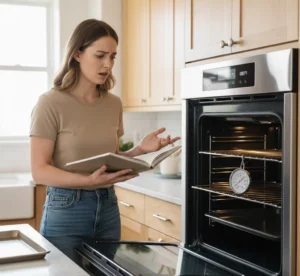
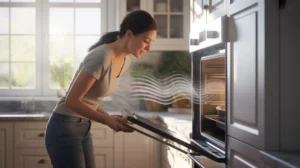
 If your oven smells like gas, it can be unsettling and for good reason. Gas odors in the kitchen should never be ignored, even if they seem faint or temporary. The smell may come from something as harmless as a new oven’s first use, or it could signal a real gas leak that needs urgent attention.
This guide will help you stay safe and handle the issue confidently. You’ll learn what to do right away, how to pinpoint the source of the gas smell from oven, and when it’s time to call a professional. Each step is written for beginners: simple, clear, and focused on safety first.
Here’s what you’ll learn:
- Immediate safety actions to take when your oven smells like gas
- Common causes of gas odors (from minor issues to serious leaks)
- A step-by-step troubleshooting checklist
- Preventive tips to stop gas smells in the future
- Answers to the most common questions about oven gas smells
Stay calm, follow the steps below, and let’s figure out why your oven smells like gas, safely and effectively.
How to Dehydrate Fruit in the Oven
Is It Dangerous if Your Oven Smells Like Gas?
Yes it can be dangerous if your oven smells like gas, depending on how strong and persistent the odor is. A faint smell that fades quickly after turning the oven on may not be serious, but a strong, lingering gas odor is a red flag that requires immediate action.
Natural gas and propane are actually odorless, but gas suppliers add a chemical called mercaptan to give them that distinctive “rotten egg” smell. This helps you detect leaks before they become life-threatening. So, if you notice that unmistakable odor, treat it seriously right away.
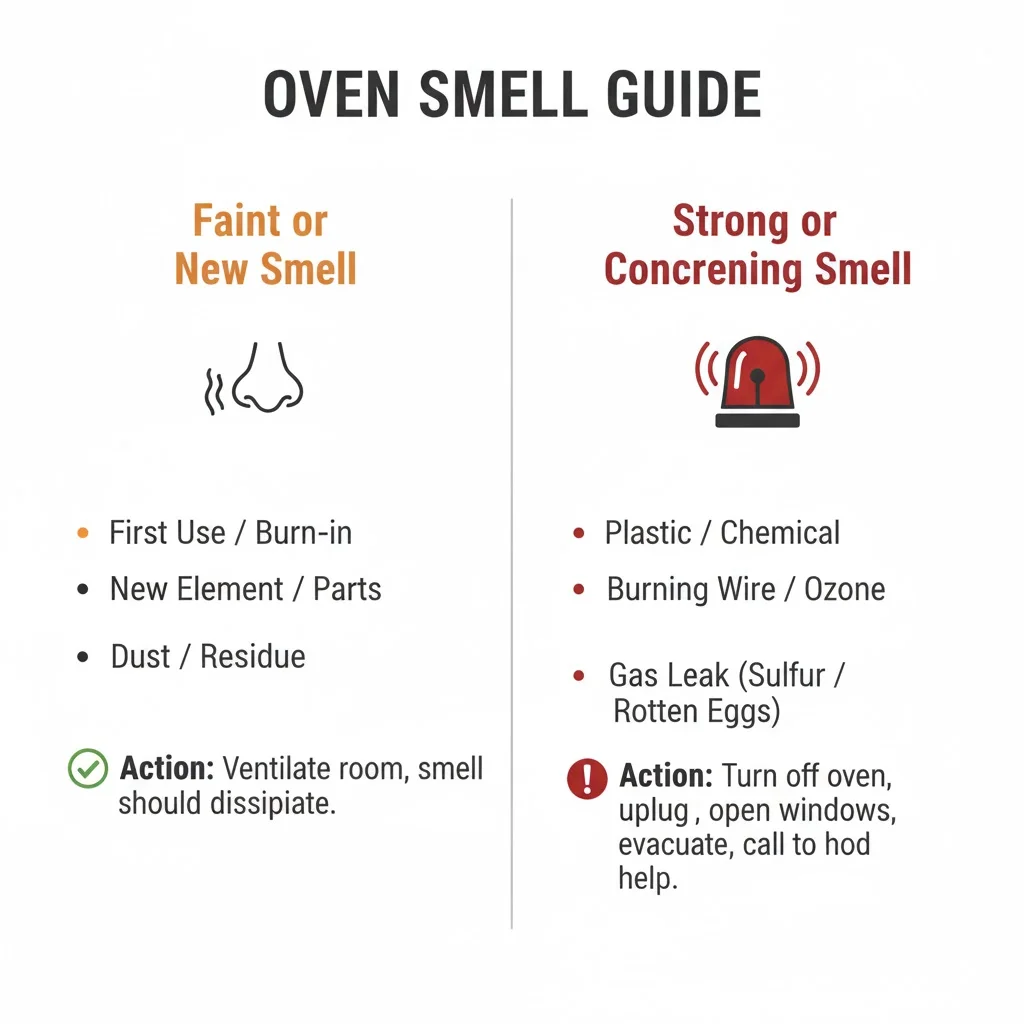
Here’s a simple way to gauge the risk:
- Faint, short-lived smell: Common during first use or after cleaning; ventilate the area and monitor.
- Strong, ongoing smell: Could indicate a gas leak or faulty ignition turn off the gas supply and leave the area.
- Smell accompanied by dizziness, headache, or nausea: Evacuate immediately and call your gas company or emergency services.
Never ignore it or assume the smell will go away. If your oven smells like gas, safety always comes first.
Quick Safety Checklist – What to Do Right Now
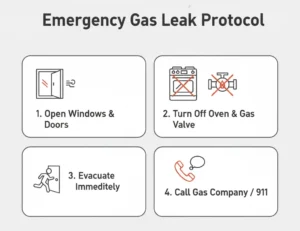 Immediate Actions (First 5 Minutes)
If your oven smells like gas, follow these safety steps right away:
- Do not panic, stay calm and move quickly but safely.
- Turn off the oven and, if possible, the main gas supply valve.
- Open all windows and doors to ventilate the kitchen and home.
- Avoid switching on or off any lights, fans, or electrical appliances.
- Evacuate everyone (including pets) if the smell is strong or anyone feels dizzy.
- Once outside, call your gas company or local emergency services to report a possible leak.
These actions help prevent potential ignition and protect everyone in the house.
What Not to Do
When your oven smells like gas, there are a few critical don’ts:
- Don’t light matches, candles, or use a lighter.
- Don’t use your phone inside the house, make calls only after stepping outside.
- Don’t try to locate or repair the leak yourself if you’re unsure.
- Don’t ignore a gas smell, even if it seems faint.
These small actions can prevent sparks or flames that might ignite gas in the air.
When It’s Safe to Perform Basic Checks
After you’ve ventilated the area and the gas company confirms it’s safe, you can begin basic checks to identify non-leak causes:
- Inspect the oven burners and ignition for dirt or blockages.
- Look for signs of spilled food or grease burning off.
- Turn the oven on briefly to see if the smell returns only after clearance from professionals.
If your oven smells like gas again after these steps, stop using it immediately and contact a licensed technician. It’s always better to be overly cautious with anything involving gas safety.
Common Causes of a Gas Smell from an Oven
There are several possible reasons why your oven smells like gas, ranging from harmless to hazardous. Understanding each cause helps you troubleshoot safely and decide when professional help is needed.
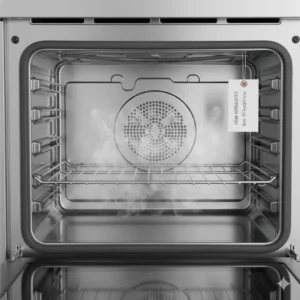 New Appliance “Off-Gassing” or Manufacturing Residues
When you first use a new oven, it’s normal to notice a slight chemical or gas-like odor. This happens as protective oils, coatings, and residues from the manufacturing process burn off. The smell usually disappears after a few uses.
Fix: Run the oven empty for 30–60 minutes at a high temperature with windows open to let the smell burn away safely.
Burnt Food, Grease, or Spilled Liquids
Baked-on food or grease can produce odors that sometimes resemble gas. Over time, these residues carbonize and give off sharp, acrid smells.
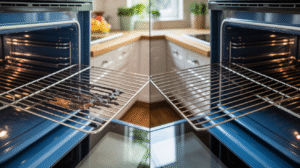
Fix: Once the oven is cool, clean the interior, racks, and drip trays thoroughly. Use a baking soda paste or a gentle oven cleaner to remove old buildup.
Pilot Light, Ignition, or Burner Problems
In gas ovens, the pilot light or electronic ignition might not ignite gas immediately, allowing unburned gas to escape for a few seconds. If this happens often, there could be a problem with the ignition system or burner alignment.
Fix: Check for consistent blue flames. Yellow or flickering flames indicate incomplete combustion and need professional adjustment.
Loose Gas Connection or Leak at Hose/Fitting
A partially loose gas line, cracked hose, or faulty fitting can cause a faint but continuous gas odor around the oven. This is one of the most serious issues.
Fix: Turn off the gas supply and do not try to tighten or replace fittings yourself. Call your gas company or a certified technician to inspect and repair the connection safely.
Faulty Oven Valves or Gas Control Components
Over time, control valves or regulators can wear out or fail to close completely, letting small amounts of gas escape even when the oven is off.
Fix: Have a technician test and replace defective valves or regulators. These parts are not safe for DIY repair.
Oven Vent or Internal Wiring Issues Mistaken for Gas
Sometimes electrical issues, like overheating wires or burning insulation, can mimic a gas smell. You might also notice a faint metallic or smoky odor.
Fix: Disconnect power immediately and contact a repair technician to check internal wiring and ventilation components.
Smells from Nearby Appliances or External Sources
The odor may not be coming from your oven at all. Gas water heaters, dryers, or even outdoor leaks can spread the smell through vents or shared lines.
Fix: Check other gas appliances for leaks and call your utility provider to perform a full home inspection if the smell persists.
If the smell returns after addressing these issues, stop using the appliance until it’s professionally inspected. Safety always comes first when dealing with any gas-related odor.
How to Identify Where the Smell Is Coming From
If your oven smells like gas, it’s crucial to pinpoint the source safely before using it again. The following checks will help you locate the odor without risking exposure or ignition.
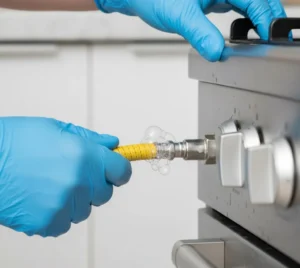 1. Simple Sniff Test Pattern
Start with a calm, methodical approach:
- Stand near the oven without turning it on.
- Move slowly around the appliance, check the oven door, back panel, and floor area around the gas line.
- Note where the smell is strongest. If it’s stronger near the floor or gas hose, it may be a connection issue.
- Open nearby cabinets or drawers that share a wall with the oven to detect trapped odors.
If the gas smell becomes overwhelming, stop immediately and leave the house and do not continue testing.
2. Verify Other Gas Appliances
Sometimes the gas odor may not come from the oven itself. Check nearby stovetops, water heaters, or dryers that share the same gas supply line.
- Turn off each appliance one by one and notice if the smell weakens.
- If the odor persists even when everything else is off, the problem is likely in the oven’s connection or valve area.
- If multiple appliances smell of gas, the leak might be in the main gas line, not a single unit.
3. Visual Checks – Flame Color, Soot, and Leaks
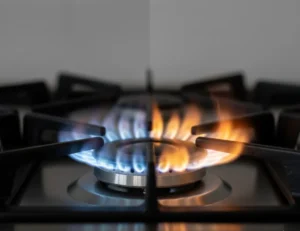
Once it’s safe to operate, turn on the oven briefly and observe the burner flame through the viewing window.
- A blue flame means clean combustion.
- A yellow, orange, or flickering flame suggests incomplete combustion and possible gas buildup.
- Look for soot deposits or scorch marks near vents; these often indicate a dirty burner or a ventilation issue.
If you see soot or discolored flames, turn the oven off and schedule a professional inspection before using it again.
4. Soap-and-Water Bubble Test for Connections
If you’re confident and conditions are safe (no strong smell or ignition risk), perform a simple soap test to check for leaks.
Step-by-step:
- Mix 1 part dish soap with 2 parts water in a spray bottle.
- Spray the solution on the gas hose, fittings, and connection points behind the oven.
- Watch closely if bubbles form or grow, gas is escaping.
- Do not tighten fittings yourself; turn off the gas supply and call a technician immediately.
Never do this test if the smell is strong or you suspect a major leak. Always ventilate the area before testing.
5. Use of a Gas Detector
A plug-in or portable gas detector can provide extra safety reassurance.
- These devices detect trace amounts of natural gas or propane.
- Keep one near the oven or in the kitchen for early warnings.
- Check that it’s rated for methane and propane detection (some only sense carbon monoxide).
While detectors are great for prevention, they should not replace physical inspections or professional testing if you smell gas.
Step-by-Step Troubleshooting Guide
Now that you’ve identified where the odor might be coming from, follow this practical, beginner-friendly sequence to handle the situation safely.
- Assess the strength of the smell.
Faint smell: Ventilate and observe.
Strong smell: Evacuate and call your gas provider. - Take immediate safety actions.
Turn off the oven and shut the gas valve if it’s safe to do so.
Open doors and windows for airflow. - Check that the oven is completely off.
Make sure the control knobs are set to “Off.”
If you have a pilot light, confirm it’s burning properly. - Inspect inside the oven.
Look for burnt food, grease, or residue that could mimic a gas odor.
Clean any buildup using mild cleaner or baking soda paste. - Inspect burners and ignition.
Observe if burners ignite promptly.
Check flame color blue is normal; yellow or orange means incomplete combustion. - Check visible gas connections and the flex hose.
Ensure the hose is not cracked, bent, or frayed.
Don’t move the oven roughly, as this could damage fittings. - Perform a soap-bubble test.
Only after airing out the space and ensuring no strong odor.
Spray soapy water on the connection bubbles mean a leak. - Check other gas appliances.
Turn off nearby gas stoves or heaters and note any change in smell. - If you can’t find the source, or the smell is strong:
Leave the house immediately and call the gas company or an HVAC technician.
Never try to repair gas components yourself. - After repairs, test and monitor.
Turn the oven on briefly in a ventilated space.
If no odor returns, it’s safe to resume normal use.
By following these steps, you can safely troubleshoot when your oven gives off a gas-like smell, without risking your home or health.
Temporary Fixes & When They’re Appropriate
When your oven smells like gas, safety is always the top priority. While long-term solutions should always be handled by professionals, there are a few temporary, low-risk actions you can take to reduce the odor and make your kitchen safe until help arrives.
 Short-Term Fixes You Can Safely Do
Clean Burner Ports and Igniters
Turn off the gas and power first. Remove any food particles, grease, or soot blocking the burners. Use a soft brush or toothpick to gently clear debris from ports. This helps gas ignite properly instead of lingering unburned.
Remove Spilled Food and Grease
Old food buildup can create smells that resemble gas. Wipe down the oven interior, racks, and door seals once cooled. Use a baking soda solution or gentle oven cleaner to remove residue.
Turn Off the Gas Supply Valve
If the smell persists, shut off the gas valve near the oven or at the main supply line. This prevents additional gas from entering the appliance until a technician checks it.
Ventilate the Area
Open windows, use fans, and allow the kitchen to air out. Avoid any open flames or electrical switches during ventilation.
Secure or Stabilize Loose Connections (Only if Confirmed Non-Pressurized)
If you notice a faint odor near a hose joint but no active leak was found in tests, gently secure the connector with minimal movement. Do not attempt tightening or using sealants; these are only short-term precautions to limit movement until a professional arrives.
When Temporary Fixes Are Not Appropriate
- The gas smell is strong, continuous, or worsening.
- You hear a hissing sound near the gas line or fittings.
- The flame turns yellow or orange instead of blue.
- Anyone in the home experiences headaches, dizziness, or nausea.
- The flex hose or fittings appear cracked, corroded, or damaged.
In any of these cases, leave the area immediately and call your gas company or local emergency line. Temporary fixes should never be used if there’s any chance of a pressurized gas leak.
When to Call a Professional (and Who to Call)
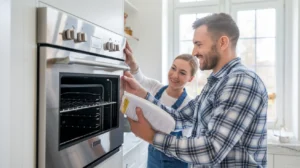
If your oven continues to emit a gas smell after cleaning and ventilation, it’s time to bring in the experts. Gas-related problems can be complex, and professional diagnostics ensure your home stays safe.
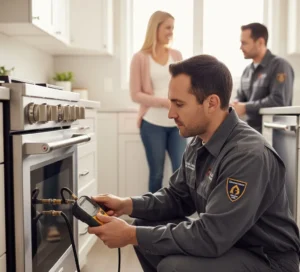 Gas Company vs. Licensed Technician vs. Plumber vs. Electrician
- Gas Company: Call them immediately if you suspect a leak. They’ll inspect, test the gas line, and shut off supply if necessary free of charge in most regions.
- Licensed Gas Appliance Technician: Best for diagnosing and repairing issues inside the oven, such as faulty valves, burners, or ignition systems.
- Certified Plumber (Gas-Safe Registered): Can safely replace damaged hoses, fittings, or external gas lines connecting the oven.
- Electrician: Needed only if the smell is accompanied by burning or electrical odors they’ll inspect wiring and ignition circuits.
Signs You Must Call Immediately
- Persistent or strong gas smell, even after turning off the oven.
- Hissing sounds from behind or beneath the appliance.
- Yellow or flickering flames (sign of incomplete combustion).
- Damaged flex hose or visible wear on fittings.
- Physical symptoms like headaches or dizziness while in the kitchen.
Even if you’re unsure, it’s better to call and confirm than to risk a hidden leak.
What to Tell the Technician or Gas Company
When help arrives, share clear details to speed up diagnosis:
- When the smell first appeared (during use, after cleaning, randomly).
- Whether it’s stronger near the floor or behind the oven.
- Steps you’ve already taken (cleaning, shutting off gas, ventilation).
- Description of flame color, ignition behavior, and whether other appliances are affected.
- Any recent maintenance, installation, or relocation of the oven.
This information helps technicians isolate the problem quickly and prevent unnecessary guesswork.
What to Expect from a Professional Inspection
A trained technician will:
- Test for leaks using a manometer or gas sniffer tool.
- Inspect ignition and burner assemblies for delayed ignition or faulty valves.
- Check the gas line and regulator for pressure issues.
- Replace or tighten faulty components such as valves, hoses, or connectors.
- Perform a combustion test to ensure efficient and safe operation.
- Run a safety check on all nearby gas appliances.
Common repairs include replacing control valves, burners, ignition electrodes, or flexible hoses. Most service calls for gas odor issues range from minor cleaning to complete valve replacements both of which are best left to professionals.
If your oven smells like gas, don’t delay temporary fixes only for immediate safety. A certified technician or your local gas provider should always handle the final repair to guarantee safe, leak-free operation.
Preventive Maintenance – Stop the Smell Before It Starts
Keeping your oven clean [How to Clean Oven] and well-maintained is the best way to prevent issues before they turn into safety hazards. If your oven smells like gas, regular care can dramatically reduce the chance of leaks, ignition failures, or buildup-related odors.
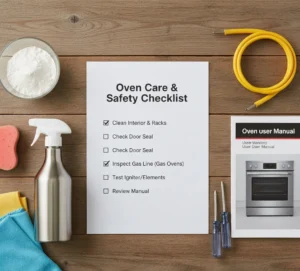 Regular Cleaning & Care
Food spills, grease, and grime not only affect cooking performance but can also mimic gas odors when heated.
Maintenance routine:
- Weekly: Wipe down oven interiors, racks, and door seals after cooling.
- Monthly: Remove burner caps and gently clean around the igniters with a soft brush.
- After major spills: Clean immediately once the oven is cool to prevent residue from burning and producing fumes.
Avoid harsh chemicals that can damage sensors or leave residue; mild soap, vinegar, or baking soda paste work best.
Annual Appliance Inspection Checklist
Have a qualified technician inspect your gas oven once a year. During this service, they should:
- Check for gas leaks or loose fittings.
- Clean and calibrate the burner and ignition system.
- Test the regulator and control valves.
- Inspect ventilation paths for blockages.
- Ensure flames burn evenly and blue.
Regular inspections catch early wear and prevent dangerous leaks before they happen.
Replace Flex Hoses Every Few Years
The flexible hose connecting your oven to the gas supply line doesn’t last forever. Over time, it can dry out, crack, or corrode, especially in humid kitchens.
General rule: Replace it every 5–7 years or sooner if any signs of wear appear.
Always hire a certified technician to replace it, never attempt to disconnect or install a gas line yourself.
Proper Ventilation & Use Tips
Good airflow keeps your oven safe and odor-free.
- Always use the range hood or exhaust fan while cooking.
- Leave a small gap between the oven and wall to allow air circulation.
- Don’t block vents or air inlets with foil or cookware.
- Keep nearby windows open slightly when baking for long periods.
Proper ventilation helps disperse natural gas and prevents buildup during use.
Safe Installation Reminders
- Ensure adequate clearance around your oven as specified in the manual.
- The shutoff valve should always remain accessible.
- Avoid placing items or cabinets too close to the gas outlet.
- Have all installations performed by a licensed gas technician.
These small precautions make a huge difference in both safety and performance.
Common Mistakes People Make
Even well-meaning homeowners can make dangerous mistakes when troubleshooting a gas smell. Avoid these common errors to stay safe.
- Using Matches or Lighters to “Check” for Leaks
Never use an open flame to find where gas is escaping; it can ignite instantly. Instead, rely on a soap-and-water solution or a gas leak detector. - Ignoring or Minimizing the Smell
A faint odor can become a serious leak over time. If your oven smells like gas, always investigate immediately. Waiting even a day can allow more gas to accumulate. - Attempting DIY Gas Repairs
Replacing valves, fittings, or burners without the proper training can worsen leaks or damage connections. Gas components must always be installed and sealed with professional tools and approved materials. - Misreading Smells
Burned food, melting plastic, or electrical overheating can sometimes mimic gas odors. If you’re unsure, turn off the oven and ventilate before inspecting the cause. Never assume the smell is harmless. - Leaving the Appliance Off Without Fixing the Cause
Turning the oven off stops the immediate danger but doesn’t solve the problem. If you suspect a leak, have the issue professionally diagnosed, don’t just ignore the smell or leave the appliance unused. - Over-Reliance on Uncalibrated Gas Detectors
Household gas detectors are helpful but not foolproof. Some devices lose sensitivity over time or only detect specific gases. Always pair detectors with regular inspections and manual leak checks.
Preventive maintenance and awareness go hand-in-hand. By keeping your oven clean, scheduling annual checkups, and knowing what not to do, you’ll protect your kitchen from gas hazards and enjoy peace of mind every time you cook.
FAQs – Common Questions About Oven Gas Smells
Does a faint gas smell mean a leak?
A faint gas odor doesn’t always mean there’s an active leak it could come from a weak pilot flame, minor residue from ignition, or unburned gas after cooking. However, any gas smell should be checked immediately to ensure safety. If your oven smells like gas when it’s off, shut it down, ventilate the kitchen, and inspect for leaks using soapy water or a detector.
How long should a new oven smell last?
It’s normal for a new oven to smell for the first few uses, as factory coatings and oils burn off. The odor should disappear after 2–3 heating cycles at high temperature. If the smell persists beyond that or smells like gas, contact your installer or gas company.
Can burned food smell like gas?
Yes, burned food or grease can sometimes create sharp, chemical-like odors that resemble gas. Always check for charred residue on the oven floor or burners before assuming a leak. Cleaning the oven often eliminates the smell.
Is it safe to use the oven if I smell gas faintly?
No, avoid using it until the cause is confirmed. Even a faint gas smell can be a sign of a slow leak or faulty ignition. Turn the appliance off, ventilate the area, and follow the troubleshooting checklist before using it again.
Should I turn off the main gas supply if I smell gas?
Yes, if you can smell gas strongly or continuously, shut off the main gas valve immediately. Then open all the windows and leave the house. Do not use electrical switches or flames, and call your gas supplier or emergency services from outside.
Can an electric oven smell like gas?
Surprisingly, yes though it’s not due to actual gas. Electric ovens can produce a “gas-like” odor from burning off food residue, trapped grease, or a faulty heating element. If the smell is strong or consistent, unplug the oven and have it inspected.
How can I test for a gas leak myself?
Mix a little dish soap with water and brush or spray it onto the suspected area (like around the hose connection). If you see bubbles forming, that’s a sign of escaping gas. Never use matches or flames for testing; it’s extremely dangerous.
What does a gas leak smell like?
Natural gas is odorless, but utility companies add a chemical called mercaptan, which smells like rotten eggs or sulfur. This strong odor helps you detect leaks early if you smell it, take immediate safety measures.
How much does a professional gas leak inspection cost?
In most areas, a professional inspection costs $50–$150, depending on the complexity and your location. Many gas companies offer free safety checks if you report a suspected leak it’s always worth calling first.
Conclusion
If your oven smells like gas, always treat it seriously. Start by turning off the appliance, ventilating your kitchen, and checking for visible issues like unlit burners or loose hoses. For strong odors, evacuate immediately and contact your gas supplier or emergency line.
Remember: prevention is key. Keep your oven clean, schedule yearly inspections, and never ignore even a faint gas odor. With these steps, you’ll keep your home safe, your kitchen worry-free, and your oven running efficiently.
Quick action plan:
- Strong smell? Turn off gas, leave immediately, and call for help.
- Mild smell? Ventilate, inspect, and follow your troubleshooting checklist.
- Regular care: Clean monthly and book a professional inspection every year.
If you’d like, I can create a printable safety checklist for quick reference perfect to keep near your oven or gas meter.